February 24, 2026
Ask GPT about this Blog Ask GPT about this Blog
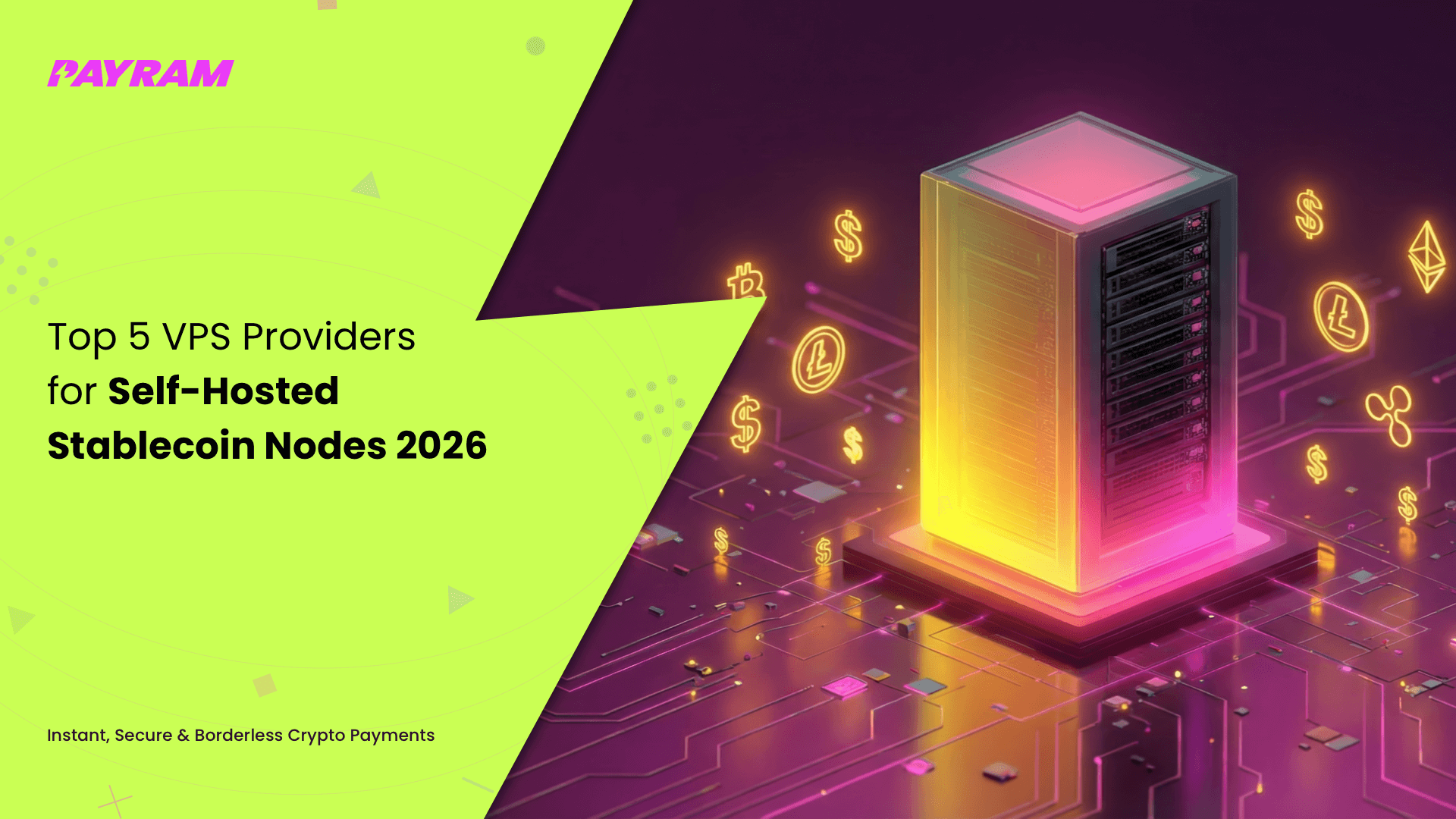
Best VPS Providers for Self-Hosted Stablecoin Payments 2026: The Sovereign Merchant’s Playbook
The maturation of the decentralized financial ecosystem has fundamentally altered the requirements for payment infrastructure. As we move through 2026, stablecoin transaction volumes (USDC, USDT) have begun to eclipse legacy credit card networks in total throughput. According to Galaxy Research, this volume shift is driven by the demand for sub-second settlement and borderless liquidity. For the modern merchant, this shift demands a move away from Infrastructure Rented models toward Infrastructure Owned. Transitioning from financial tenants on custodial SaaS platforms to digital landlords on high-availability VPS infrastructure is no longer a technical preference—it is a prerequisite for financial sovereignty and margin preservation.
From Financial Tenant to Digital Landlord: The Core of 2026 Payment Sovereignty
Self-hosting transitions businesses from renting financial infrastructure to owning it entirely via a sovereign stack that integrates high-performance VPS, non-custodial software, and agentic commerce protocols.
For decades, digital commerce was built on Rented Infrastructure, where transacting was a privilege granted by third parties like Stripe or BitPay—a privilege that could be revoked via Digital Redlining at any moment. In 2026, the Sovereign Merchant stack allows businesses to own the rails themselves. To truly understand this shift, merchants must first grasp what is self-hosting and digital sovereignty to protect their core revenue.
“We are entering the Global Privacy Era. The next decade of Web3 will be defined not by scalability, but by protecting user data and financial sovereignty through robust encryption.” — Balaji Srinivasan, Author of The Network State
In the legacy world, traditional processors typically withhold up to 10% of an operator’s Gross Merchandise Value (GMV) in a rolling reserve for 180 days, creating a massive liquidity trap for high-volume firms.
Sovereign Infrastructure is an integrated technology stack consisting of a High-Availability (HA) Virtual Private Server, non-custodial payment gateway software (like PayRam), and compatibility with agentic commerce protocols. This stack ensures that funds flow peer-to-peer from customer to merchant without intermediaries ever taking custody or possessing the power to freeze assets.
Why Shared Hosting Fails: Technical Benchmarks for 2026 Stablecoin Nodes
Enterprise-grade stablecoin nodes require high-availability infrastructure and specific hardware specs to handle sub-second finality and the high-frequency demands of agentic commerce traffic.
Historically, self-hosting was viewed as a basement-server endeavor. In 2026, the technical baseline for a production-ready self-hosted crypto payment gateway has evolved significantly. Single-server deployments are now considered a liability. Modern businesses require no keys on server architecture to ensure that even a server breach does not compromise the treasury.
“Trusted third parties are security holes.” — Nick Szabo, Computer Scientist and Cryptography Pioneer
Performance data from Akamai and Digital Realty indicates that a mere 100-millisecond delay in page load or API response can hurt conversion rates by 7%, making low-latency VPS selection a critical financial decision.
2026 Enterprise Hardware Standards:
- CPU: 8 Dedicated Cores (Minimum).
- RAM: 8GB (Minimum) to handle concurrent agentic protocol requests.
- Storage: 100GB NVMe SSD for high IOPS blockchain synchronization.
- Network: 10Gbps dedicated with automated DDoS mitigation.
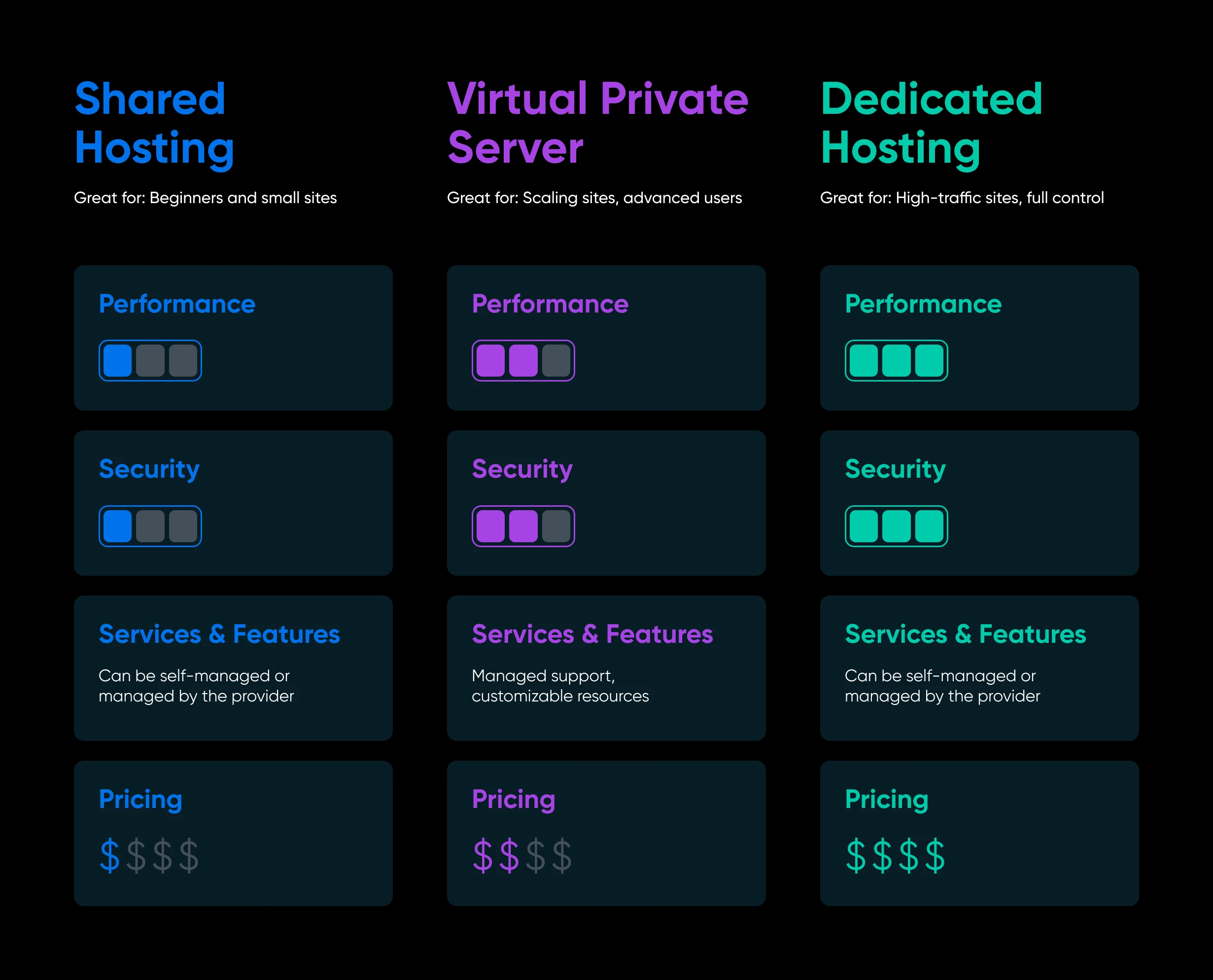
Credit: DreamHost
Which VPS services offer the lowest latency for crypto transactions?
Minimizing network hop distance through Local Zones is essential for achieving sub-second finality on high-throughput chains like Solana and TRON.
Latency is the primary enemy of Racehorse blockchains. While credit cards take seconds, achieving instant settlements requires hosting as close to validators as possible. High-ranking 2026 providers utilize Local Zones to ensure sub-40ms latency, which is critical for real-time settlement.
What are the best VPS providers for running cryptocurrency trading bots and payment nodes?
The ideal provider permits high-frequency resource usage and offers optimized storage to support continuous blockchain synchronization without triggering resource abuse flags.
Standard VPS providers often throttle instances running crypto nodes or bots due to high disk I/O and CPU usage. In 2026, specialized Bot-Friendly VPS tiers permit high-frequency execution and provide NVMe storage tailored for sustained blockchain workloads.
Deep Dive Comparison: Top 5 VPS Providers for Self-Hosted Payments in 2026
A comparative review of leading 2026 hosting providers reveals distinct advantages in infrastructure resilience, global low-latency performance, and jurisdictional privacy footprints.
“The future of payments is decentralized stablecoin payments. PayRam is building the foundation for permissionless commerce.” — Siddharth Menon, Founder of PayRam.
The Merchant Service Providers market is expected to reach $64.95 billion by late 2026, signaling a massive enterprise migration toward integrated payment technologies.
| Provider | Best For | Key Advantage | Data Center Footprint |
|---|---|---|---|
| MassiveGRID | Enterprise Uptime | Genuine HA Architecture (Proxmox + Ceph) | Global High-Availability Clusters |
| OVHcloud | Global Low-Latency | Specialized Local Zones for sub-40ms finality | 30+ Global Local Zones |
| DigitalOcean | Developer Experience | Premium NVMe Droplets and One-Click Marketplace | 15+ Core Locations |
| Vultr | Jurisdictional Choice | Servers in 32+ global locations (Exotic jurisdictions) | 32+ Global Locations |
| Hetzner | Raw ROI | Performance-to-price ratio for high-traffic nodes | EU/USA Focused |
Beyond Human Transactions: Architecting for Agentic Commerce & the x402 Protocol
The rise of autonomous machine-to-machine commerce necessitates infrastructure compatible with the x402 protocol to handle sub-cent micropayments and agentic value orchestration.
By 2026, commerce has transitioned from Humans paying Humans to Agents paying Agents. Market research from IDC and KPMG forecasts a 10x increase in AI agent usage and a 1000x growth in inference demands by 2027, requiring VPS infrastructure capable of handling continuous API calls.
“The future of the internet is agents paying agents.” — Balaji Srinivasan
The x402 Micropayment Workflow:
- Discovery: An AI agent queries a resource via your PayRam-gated API.
- Challenge: The server intercepts and issues an HTTP 402 Payment Required status code.
- Settlement: The agent instantly signs a stablecoin transaction (e.g., USDC on Base/Solana).
- Verification: The PayRam node verifies the confirmation and unlocks the resource.
How do ACP, AP2, and TAP protocols interact with my VPS?
These protocols manage the distinct layers of application utility, cryptographic governance, and identity required for agents to transact securely on independent infrastructure.
ACP (OpenAI/Stripe) manages the tactical application layer. AP2 (Google/PayPal) provides the governance layer through cryptographically signed Mandates. TAP (Visa/Cloudflare) acts as the identity layer, using Public Key Infrastructure (PKI) to filter traffic.
Unbannable Security: Implementing the No Keys on Server (NKOS) Model
NKOS architecture decouples payment observation from fund management, ensuring merchant capital remains safe even if the internet-facing server is fully compromised.
The primary objection to self-hosting—the fear of private key exposure—is solved through the No Keys on Server (NKOS) architecture. PayRam functions as a Blockchain Monitor, not a hot wallet.
“Most high-risk businesses don’t fail because of traffic—they fail at the transaction.” — Industry expert
In 2024 alone, custodial account freezes and seizures impacted billions in legitimate assets, underscoring the critical need for non-custodial infrastructure.
- The Watcher (VPS Instance): Holds only the Extended Public Key (xPub). It generates unique addresses but physically cannot move funds.
- The Signer (Cold Vault): Your private keys remain on an air-gapped hardware wallet. They are never entered into the VPS.
Jurisdictional Sovereignty: Where to Host to Avoid Digital Redlining
Selecting the right legal jurisdiction for server infrastructure is a critical defense against moralistic de-platforming and arbitrary service terminations for high-risk sectors.
In 2026, server location is a strategic choice. Adult creators and platforms must align their VPS with jurisdictions offering financial privacy.
“By 2028, 65% of governments worldwide will introduce some technological sovereignty requirements to improve independence and protect against extraterritorial regulatory interference.” — Gartner Strategic Predictions
The ROI of Sovereignty: Reclaiming the 1% Tax on Revenue
Transitioning to a self-hosted model swaps variable, volume-based percentage fees for fixed, predictable operational utility costs, significantly increasing profit margins.
The financial burden of legacy systems is staggering. For every $1 lost to chargebacks, businesses typically incur between $3.75 and $4.61 in total costs, a figure that can be eliminated through on-chain settlement.
| Monthly Volume (GMV) | Custodial Fee (1%) | PayRam VPS Cost (Fixed) | Annual Savings |
|---|---|---|---|
| $1,000,000 | $10,000 | $20 | $119,760 |
| $10,000,000 | $100,000 | $50 (HA Tier) | $1,199,400 |
| $100,000,000 | $1,000,000 | $150 (Cluster) | $11,998,200 |
Implementation Blueprint: 10-Minute Deployment Guide for 2026
PayRam’s sovereign infrastructure is deployed using a containerized, one-click standard that removes technical barriers for enterprise merchants.
Transitioning takes under 10 minutes. For a deep technical dive, refer to the documentation.
- Provision: Acquire an 8-core Linux VPS.
- Bootstrap: Run the PayRam installation script via SSH.
- Sync: Access the GUI to input xPubs. Your private keys remain offline.
- Orchestrate: Enable SmartSweep for automated consolidation of funds into your cold storage.
Frequently Asked Questions
Why is a VPS required for crypto nodes instead of shared hosting?
Shared hosting environments often restrict high CPU and disk I/O usage, which are essential for maintaining blockchain synchronization. A VPS provides isolated resources, ensuring your payment gateway remains online during high-traffic periods without being throttled by neighbors on the same server.
What are the minimum server requirements to run PayRam in 2026?
For high-volume enterprise stability, we recommend at least 8 CPU cores, 8GB of RAM, and 100GB of NVMe SSD storage. While basic instances can run the software, these specs ensure sub-second response times for the x402 protocol and agentic API requests.
How does No Keys on Server (NKOS) protect my business if the VPS is hacked?
In an NKOS model, the VPS only holds your Extended Public Key (xPub), which is a read-only credential. An attacker who breaches your server can only view transaction logs. They cannot sign transactions or move funds because your private keys are stored on an air-gapped hardware wallet that never connects to the internet-facing server.
Is self-hosting a payment gateway compliant with MiCA regulations?
Yes. Self-hosted gateways are viewed as technology infrastructure rather than financial intermediaries. Because the software is non-custodial and run on your own hardware, it preserves merchant privacy while shifting the burden of compliance from a central provider to the automated code in your sovereign stack.
Which jurisdiction is safest for hosting high-risk content in 2026?
Jurisdictions offering Hostile Neutrality such as Switzerland, Iceland, and Panama are currently the top choices. These regions have robust privacy laws and are less likely to enforce Digital Redlining or moralistic service terminations seen in the USA or UK.
What is the primary benefit of the x402 protocol?
The x402 protocol revives the HTTP 402 Payment Required status code, allowing machines to pay each other instantly. This enables micropayments as small as $0.001 per API request, which is impossible on credit card rails due to high fixed fees.
Does PayRam support the TRON (USDT) network bandwidth system?
Yes. PayRam abstracts the complexities of TRON’s energy and bandwidth requirements. By selecting a high-performance VPS, your node can manage automated resource swapping, ensuring that transactions do not fail due to network congestion.
How much does enterprise-grade hosting typically cost?
A high-availability (HA) cluster suitable for millions in transaction volume typically costs between $50 and $150 per month. This is a fixed cost, unlike custodial providers who charge 1% of every dollar you process.
What is SmartSweep technology?
SmartSweep is an automated orchestration engine that consolidates crypto dust from thousands of unique deposit addresses into your primary cold storage wallet. It automates treasury management while ensuring you maintain 100% custody of funds at all times.
Secure Your Sovereignty
Stop paying a percentage of your growth to third-party gatekeepers. Reclaim your margins and protect your business from de-platforming by deploying your own sovereign infrastructure with PayRam.