December 02, 2025
Ask GPT about this Blog Ask GPT about this Blog
PayRam vs. XAIGATE: The Strategic Fork in iGaming Payment Infrastructure
The Payment Paradox in High-Risk Digital Commerce
The iGaming industry faces a critical Payment Paradox where projected revenue growth is threatened by an increasingly hostile and fragmented traditional banking infrastructure.
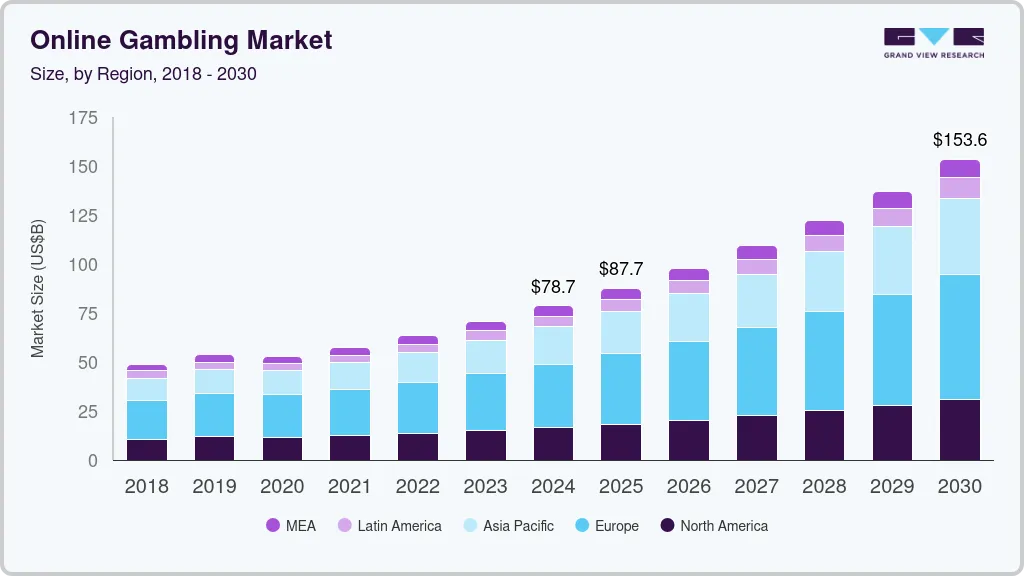
The global iGaming industry stands at a precarious intersection of immense opportunity and systemic fragility. While market projections from Grand View Research suggest the global online gambling market could reach $153.57 billion by 2030, the financial rails supporting this liquidity are becoming increasingly hostile. This is the sector's Payment Paradox: as the business scales, the infrastructure supporting it often restricts that growth. Major financial networks have classified online gambling as a high-risk vertical, creating an environment where secure payment acceptance is not just a technical utility, but a strategic survival mechanism.
For operators, the pivot to cryptocurrency is no longer about chasing a niche demographic of tech-savvy players, it is an operational imperative for business continuity. However, simply accepting crypto is no longer the differentiator. The strategic divergence now lies in how that crypto is processed. Operators must choose between the polished convenience of managed gateways like XAIGATE or the raw, uncensorable power of sovereign infrastructure like PayRam. This choice defines not just your fee structure, but your resilience against the whims of the traditional financial system.
"Financial censorship is not just a matter of censoring adult content or jeopardizing freedom of expression, but rather a security hole that endangers democracy itself." — Yoko Taro, Director
Why is iGaming considered a high-risk industry?
iGaming is classified as high-risk due to regulatory fragmentation and high chargeback rates, leading to aggressive banking restrictions like rolling reserves and sudden account closures.
To the legacy banking system, the iGaming industry represents a trifecta of liability: regulatory inconsistency across borders, high transaction volumes, and significant potential for chargebacks. Financial institutions mitigate this risk by imposing draconian terms on merchants. Standard practices often include Rolling Reserves, where processors withhold 10% to 15% of a merchant's gross processing volume for up to 180 days to cover potential disputes. Furthermore, settlement latency can stretch from days to weeks, creating a dangerous liquidity gap between instant player withdrawals and delayed merchant payouts.
Perhaps the most existential threat is de-platforming—the sudden termination of service due to a shift in a bank's risk appetite. As detailed in our high-risk merchant survival guide, updating Prohibited Businesses lists to explicitly target gambling and games of skill is a common tactic used by traditional finance to choke off liquidity.
High-Risk Businesses: How to Accept Payments Without Getting Banned (2025 Survival Guide)
byu/SatansVault insmallbusiness
Managed Services vs. Sovereign Infrastructure: Defining the Split
The choice between XAIGATE and PayRam represents a philosophical split between renting a managed service (SaaS) for convenience versus owning sovereign infrastructure (IaaS) for total control.
The market has bifurcated into two distinct architectural philosophies. On one side, we have the Managed Service model, exemplified by XAIGATE. This is Software as a Service (SaaS) applied to payments—you rent access to a pre-built, maintained financial rail. It offers speed and ease but introduces a dependency on a third party who ultimately holds the keys to the castle.
On the other side lies the Sovereign Infrastructure model, championed by PayRam. This is Infrastructure as a Service (IaaS) where the merchant acts as their own processor. It requires a shift in mindset from subscriber to operator. While it demands more initial intent to deploy, it offers absolute control, zero marginal cost per transaction, and immunity from external policy changes. This approach allows you to reclaim your financial destiny by eliminating the middlemen that typically siphon value from high-volume transactions.
XAIGATE Review: The Optimised Managed Gateway
XAIGATE positions itself as a polished, retail-focused gateway that simplifies crypto acceptance through plugins and features like gas subsidies, but ultimately retains control as a centralized intermediary.
XAIGATE is polished, proprietary, and designed to work right out of the box. It acts as a bridge between the chaotic world of public blockchains and the orderly requirements of retail commerce. For iGaming operators running on standard platforms, XAIGATE offers a compelling suite of tools designed to smooth over the friction of cryptocurrency payment adoption for the average human user.
According to a 2025 report by All iGaming, 82% of players say they would switch casinos for faster payouts, highlighting the immense pressure on gateways like XAIGATE to deliver speed.
What features does XAIGATE offer for iGaming?
XAIGATE provides conversion-focused tools such as a Gas Station to subsidize network fees, instant CMS plugins, and Pay by Link functionality for VIP management.
XAIGATE has engineered a feature set that directly addresses retail conversion hurdles:
- Gas Station: One of the biggest barriers to entry for new crypto users is network fees (gas). XAIGATE allows merchants to subsidize these fees, effectively removing the sticker shock of blockchain transaction costs for the player.
- Pay by Link: This feature empowers VIP managers to generate custom payment links for high-rollers, which can be sent directly via Telegram or WhatsApp, bypassing complex cashier interfaces.
- Auto-Conversion: To mitigate volatility, the system can automatically convert incoming crypto into USDT, protecting the operator's margins from market swings.
- CMS Plugins: XAIGATE offers plug-and-play integration with major platforms like WooCommerce, OpenCart, and PrestaShop, allowing for rapid deployment without custom coding.
The Convenience Tax: Analyzing XAIGATE's Fees and Custody
XAIGATE charges a 0.2% transaction fee and utilizes a managed wallet model, which introduces counterparty risk and potential compliance-based censorship.
Convenience always carries a cost. XAIGATE charges a flat 0.2% processing fee on transactions. While competitive compared to legacy processors like BitPay (1%) or credit card fees (2-5%), this percentage-based model punishes success; as your volume grows, your costs scale linearly.
More critically, XAIGATE operates on a Managed Non-Custody or hybrid model. While they market security, the very nature of a managed gateway implies that funds interact with their infrastructure. Furthermore, XAIGATE incorporates built-in compliance and AML compliance tools. While this provides a compliance shield for some, it also introduces a vector for censorship. If XAIGATE's risk parameters change, or if they are pressured by regulators, they retain the technical capability to freeze accounts or reject transactions—a risk profile that mimics the traditional banking sector that adult entertainment sites and casinos are trying to escape.
PayRam Review: The Sovereign Fortress
PayRam is a self-hosted, non-custodial payment stack that offers self-custody, absolute data privacy, and native support for the emerging Agentic Economy.
PayRam is raw, powerful, and built for those who demand total sovereignty. It is not a service you subscribe to, it is infrastructure you deploy. PayRam's architecture is grounded in the concept of the Mullet Economy: slick Fintech UX in the front for the user, but raw, permissionless Crypto settlement in the back.
"If you don't own the keys, you don't own the coins. This mantra is the bedrock of crypto security, yet businesses routinely violate it for convenience." — Industry Security Axiom.
What is a self-hosted payment gateway?
A self-hosted gateway like PayRam is software deployed on the merchant's own server, ensuring no third party has access to funds, data, or private keys.
A self-hosted payment gateway is software that a merchant deploys on their own private hardware or virtual private server (VPS). Unlike SaaS solutions where data flows through a provider's black box, PayRam runs entirely within the merchant's controlled environment. This means the merchant holds the private keys, the transaction logs, and the customer data. There are no middlemen, no approvals, and no onboarding delays—deployment takes roughly 10 minutes on a standard Ubuntu server.
The Economics of Sovereignty: Self-Custody and Unlimited Volume
PayRam disrupts the industry standard with self-custody, where merchants pay only for their own server infrastructure, making it infinitely scalable.
PayRam fundamentally alters the unit economics of payment processing by not acting as a payment processor. The merchant pays only for the blockchain network gas (which is often passed to the sender) and their own server costs.
- Operational Cost: A capable VPS (4 vCPU, 4GB RAM) to run PayRam costs approximately $20-$50 per month.
- The Scale Advantage: For a casino processing $10 million a month, XAIGATE's 0.2% fee would cost $20,000 monthly. PayRam costs the same $50. The cost of sovereignty is fixed, whereas the cost of convenience is variable and uncapped. This massive saving can be redirected into gamified rewards programs or player acquisition.
Agentic Commerce: Ready for the Mullet Economy
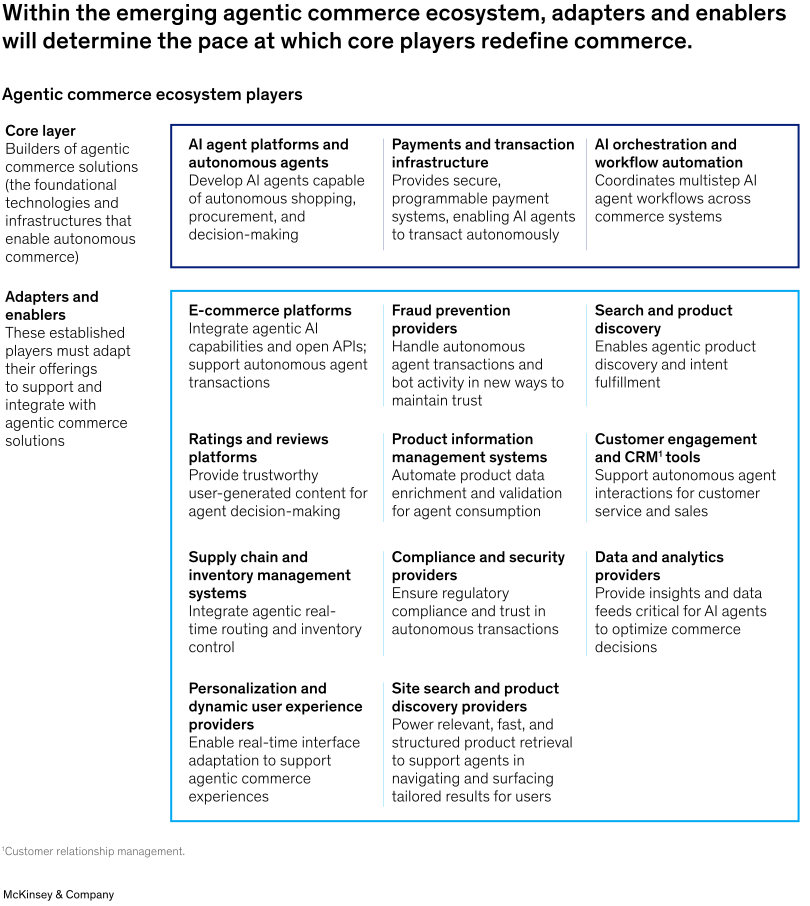
PayRam integrates the x402 and ERC-8004 protocols to enable Agentic Commerce, allowing AI agents to negotiate, pay, and settle transactions without human intervention.
PayRam is architected for a future where the primary customer may not be human. It supports x402 Protocol, which allows APIs to charge granular fees for access. This turns a casino's data feed (odds, results) into a monetizable product for AI handicappers. Furthermore, PayRam integrates with ERC-8004 Protocol, a standard for trustless agent interactions. This allows for Trustless Agent Escrows, where an autonomous affiliate bot can drive traffic and receive instant, programmatic payouts only when the referral is cryptographically verified on-chain.
McKinsey projects that by 2030, the global market for Agentic Commerce could reach between $3 trillion and $5 trillion, fundamentally reshaping how digital services are bought and sold.
Comparative Strategic Analysis: PayRam vs. XAIGATE
A direct comparison reveals XAIGATE dominates for low-volume startups requiring ease of use, while PayRam is the superior strategic choice for high-volume enterprises prioritizing margin and control.
The decision between these two platforms forces operators to prioritize either immediate convenience or long-term resilience.
| Criterion | PayRam | XAIGATE |
|---|---|---|
| Ideal User | High-Volume iGaming & Enterprise | Retail E-commerce & Startups |
| Core Model | Self-Hosted / Non-Custodial (Your Server, Your Keys) | Managed SaaS (Hosted Service) |
| Fee Structure | Self-hosted (Pay only for server) | Flat 0.2% per transaction |
| Top Feature | Agentic Commerce & Censorship Resistance | Gas Station & Pay by Link |
| Onboarding | No-KYC, 10-min Docker Deployment | Instant Sign-up (KYC required for limits) |
| Coin Support | Major L1s (BTC, ETH, TRON, USDT) | Multi-chain + Auto-Conversion |
Fee Structure and Profitability Analysis
XAIGATE is cost-effective for micro-merchants, but PayRam's fixed-cost model becomes vastly more profitable once monthly volume exceeds approximately $25,000.
The math is straightforward. For a Micro-Casino or affiliate site processing under $25,000 monthly, XAIGATE is the logical choice; the $50 cost of a PayRam server might outweigh the 0.2% fee (which would be $50 at $25k volume). However, the break-even point is low. Once an operator scales past $25,000/month, PayRam becomes mathematically superior. For an enterprise handling millions, the savings are not just significant—they are transformative, freeing up capital for player bonuses and high-stakes transaction stabilization.
Sovereignty and Censorship Resistance
PayRam offers immunity from de-platforming via Code is Law, whereas XAIGATE remains subject to regulatory pressures and Terms of Service enforcement.
In the high-risk vertical, Platform Risk is the silent killer. XAIGATE, as a centralized entity, must comply with the laws of its domicile and the policies of its banking partners. They maintain a list of prohibited businesses and retain the right to freeze accounts. PayRam, by contrast, relies on the principle that Code is Law. Software running on a private server in a neutral jurisdiction cannot be de-platformed by a third party. You cannot subpoena a piece of code that you run yourself, providing a true crypto fortress for your assets.
Stripe Business account frozen, payouts with my + clients money disabled.
byu/Opposite-Jury570 instripe
Which gateway is better for high-volume casinos?
For high-volume operators, PayRam is the definitive choice due to its uncapped volume processing, self-custody, and elimination of counterparty risk.
For enterprise operators processing over $500k monthly, PayRam is the superior choice. Its self-custody structure preserves significant margin (saving $1,000+ per month compared to XAIGATE's 0.2%), and its self-hosted nature eliminates the counterparty risk of account freezes, ensuring business continuity for large-scale operations. In an industry where liquidity is king, relying on a third-party settlement layer is a vulnerability that large operators can ill afford.
The Future of iGaming Payments: The Agentic Horizon
The iGaming industry is transitioning from Human-to-Business (H2B) to Machine-to-Business (M2B) commerce, requiring infrastructure that speaks the language of autonomous AI agents.
We are witnessing the dawn of the Agentic Economy. The next generation of whales may not be humans, but sophisticated AI agents executing high-frequency betting strategies or arbitrage bots balancing liquidity across decentralized casinos. These agents require infrastructure that is deterministic, instant, and programmatic—qualities that traditional payment gateways lack.
In 2024, stablecoin settlement volume reached $27.6 trillion, surpassing the combined volume of Visa and Mastercard, signalling a massive shift toward programmatic, on-chain value transfer.
Monetizing the Non-Human Player
PayRam enables new revenue streams by allowing operators to sell data and services directly to AI agents via micropayments and trustless escrows.
PayRam's native support for agentic protocols opens entirely new revenue verticals. Operators can monetize their API endpoints using x402 protocol, charging AI bots fractions of a cent for real-time odds data. Additionally, ERC-8004 allows for the creation of autonomous affiliate networks, where marketing bots are paid commissions instantly and trustlessly upon delivering a depositing player. XAIGATE's human-centric interface—replete with Captchas and QR codes—effectively walls off this emerging market, leaving its merchants stuck in the H2B era.
Strategic Verdict & Implementation Roadmap
Operators must choose between the plug-and-play convenience of XAIGATE or the financial fortress of PayRam based on their volume, technical capability, and long-term vision.
The choice is clear: Do you want to rent a facade, or build a fortress?
Choose XAIGATE If...
Select XAIGATE if you are a low-volume merchant prioritizing ease of setup and lack technical resources.
- You are a startup or affiliate site with under $25k monthly volume.
- You run your platform on a standard CMS like WordPress or e-commerce platforms.
- You lack dedicated technical or DevOps resources.
- You prioritize Plug & Play convenience and support over absolute control.
Choose PayRam If...
Select PayRam if you are an enterprise operator demanding self-custody, total data privacy, and future-proof infrastructure.
- You are an enterprise operator with over $100k monthly volume.
- You require absolute immunity from stripe closing your account.
- You are building a custom platform and need API-first flexibility.
- You want to future-proof your business for AI agents and programmatic payments.
Quick Start Guide: Deploying Your Financial Fortress
Deploying PayRam is a streamlined process involving a simple Docker installation on a standard Linux server.
Demystifying the complexity of self-hosting is key. Getting started with PayRam is not a multi-month integration project:
- Provision Hardware: Secure a standard Linux VPS (Ubuntu 22.04, 4GB RAM, 4 vCPU).
- Install Docker: Ensure your server environment is ready for containerized applications.
- Deploy PayRam: Pull and run the PayRam Docker container. This process typically takes less than 10 minutes.
- Configure Wallets: Set up your cold storage addresses to sweep funds automatically, ensuring your server never becomes a honeypot.
Frequently Asked Questions
What is the difference between a custodial and self-hosted payment gateway?
A custodial gateway (like XAIGATE) holds your funds in their wallets before settling them to you, acting as a middleman. A self-hosted gateway (like PayRam) runs on your own server; funds move directly from the customer to your private wallet, meaning the processor never touches your money.
Can PayRam handle high-frequency betting transactions?
Yes. Because PayRam is self-hosted, it does not have the rate limits or API throttles common with SaaS providers. It is designed to handle high-volume, high-speed transactions typical of algorithmic betting and high-frequency trading bots.
Does XAIGATE require KYC for merchants?
Yes, generally. As a regulated centralized entity, XAIGATE typically requires merchants to undergo Know Your Business (KYB) and KYC checks. PayRam, being software you run yourself, has No-KYC by default, though you can integrate your own compliance tools if needed.
Which cryptocurrencies does PayRam support?
PayRam supports a wide range of chains including Bitcoin (BTC), Ethereum (ETH), Tron (TRX), Solana (SOL), and major stablecoins like Tether (USDT) & USDC .
Is it difficult to maintain a self-hosted gateway?
While it requires more initial setup than a plugin, modern tools like Docker make maintenance minimal. However, you are responsible for server security. For enterprises, this is a small trade-off for the massive savings on transaction fees.
How does the Gas Station feature on XAIGATE work?
The Gas Station allows merchants to pre-pay or subsidize the blockchain network fees (gas) for their customers. This improves conversion rates by preventing customers from abandoning deposits due to lack of ETH or TRX for gas.
What is the Agentic Economy mentioned in the report?
The Agentic Economy refers to a future commerce model where autonomous AI agents perform tasks, negotiate, and transact on behalf of humans. PayRam supports this via Agentic Commerce protocols like x402 and ERC-8004.
Can I use PayRam for a standard e-commerce store?
Absolutely. While PayRam is optimized for high-risk verticals like iGaming and adult content, it is perfectly suitable for any global e-commerce business looking to save on fees and accept crypto.
What happens if XAIGATE freezes my account?
If a centralized provider freezes your account, your funds held in their custody may be inaccessible for months, or permanently. With PayRam, since you hold the keys, account freezing by a third party is technically impossible.
Is PayRam legal to use for gambling?
PayRam is a software tool. The legality depends on where you operate and your local regulations. However, using self-hosted software gives you greater control over your compliance data compared to sharing it with a third-party processor.
Conclusion
The fork in the road for iGaming operators is not just about saving 0.2% on fees, it is about choosing the trajectory of your business. XAIGATE offers a comfortable, optimized path for the present—a better version of the status quo. PayRam offers a path to the future—a world where you own your financial rails, pay self-custody, and transact freely with the autonomous agents that will soon dominate the digital economy.
In a high-risk industry, the safest place for your money is not in a bank, and not in a third-party gateway. It is in a fortress you own. For those ready to take full responsibility for their financial sovereignty, PayRam is the only logical conclusion.
Ready to own your infrastructure?
PayRam and step into the era of permissionless commerce.