December 12, 2025
Ask GPT about this Blog Ask GPT about this Blog
Self-Hosted vs. Third-Party Crypto Payment Gateways
Introduction: The Structural Shift in Global Payments
The transition from traditional banking rails to blockchain-based settlement is redefining the merchant-customer relationship, moving from intermediated trust to cryptographic verification. We are witnessing the maturation of cryptocurrency from a speculative asset class into a critical utility for global settlement, driven primarily by the explosive adoption of stablecoins.
From Speculation to Settlement: The Rise of Stablecoins
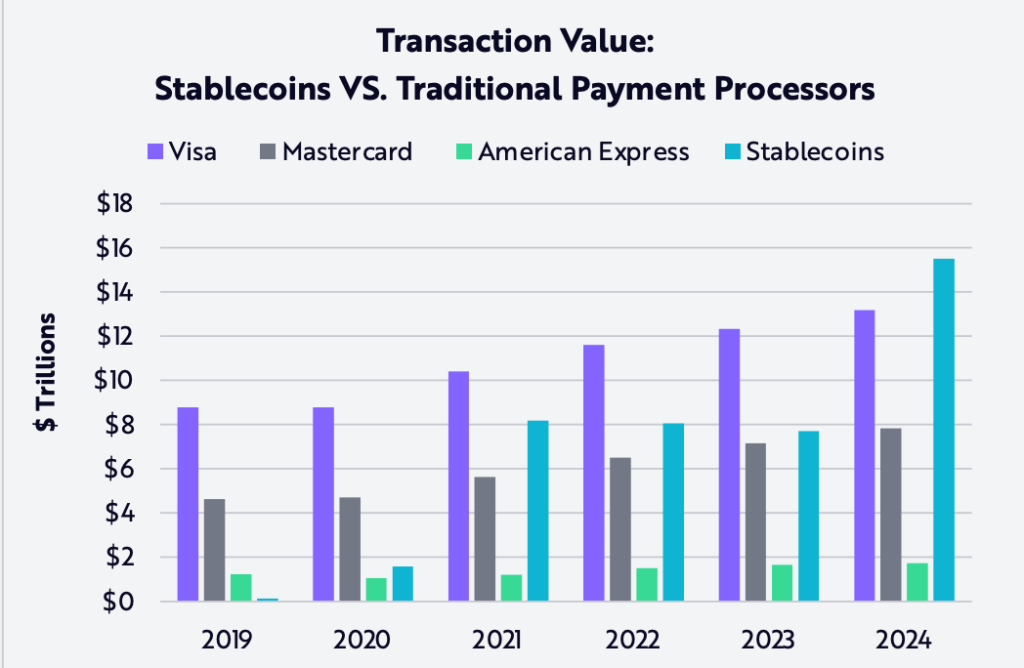
Stablecoins have evolved from a trading tool into a global settlement layer, fundamentally altering how businesses transact across borders. As of 2025, stablecoin settlement volume has surpassed that of Visa, signaling a paradigm shift where digital assets are no longer just traded but are actively used as the foundation of a new global economy. This shift is underpinned by emerging regulatory clarity, such as The GENIUS Act and the full implementation of the EU’s MiCA (Markets in Crypto-Assets). These frameworks have legitimized the 72 billion dollar tsunami of stablecoin liquidity while simultaneously erecting high compliance barriers for custodial intermediaries.
"Stablecoins are the killer app of crypto. They are dragging the rest of the ecosystem into the mainstream by providing a product that people actually want: digital dollars that move at the speed of the internet." — Nic Carter, General Partner at Castle Island Ventures.
According to recent data from Visual Capitalist, stablecoins processed over $18.4 trillion in transaction volume in 2024, eclipsing Visa's $15.7 trillion, cementing their status as a superior rail for high-velocity global commerce.
What is the difference between custodial and self-hosted payment gateways?
The core distinction lies in control: custodial gateways rent you access to their infrastructure and hold your funds, while self-hosted gateways empower you to own the infrastructure and control your keys.
- Custodial Payment Gateway: Acts as a digital middleman (e.g.,BitPay, Coinbase Commerce, Stripe). They process the payment, take possession of the funds, deduct fees, and settle the remainder to your bank account. You rely on their permission to transact.
- Self-Hosted Payment Gateway: Is software that runs on your own server (e.g., PayRam, BTCPay Server). It connects directly to the blockchain to monitor transactions and confirms payments without ever taking custody of the funds. The money moves from the customer's wallet directly to your non-custodial wallet.
Regulatory Headwinds: The Cost of Compliance in 2025
As regulations tighten globally, the operational and privacy costs of using custodial intermediaries are rising, making self-hosted crypto payment gateways an attractive shelter for compliant autonomy.
The Risks of Third-Party Custodians (Coinbase, BitPay, Stripe)
Custodial processors are regulated as financial institutions, forcing them to impose strict surveillance, rigorous KYC/AML checks, and potential account freezes on merchants. The enactment of the GENIUS Act has established a federal framework for payment stablecoins in the US, imposing heavy compliance burdens on money transmitters.
This classification mandates strict FATF (Travel Rule) compliance, not just for the merchant, but increasingly for the payer. We see this manifested in BitPay’s requirement for BitPay ID, where consumers must verify their identity to complete transactions, introducing friction and privacy erosion. Furthermore, these providers create a "walled garden" where your ability to transact is dependent on their API uptime and policy enforcement.
"Debanking can therefore be used as a tool or weapon systemically wielded by specific political actors or agencies against private individuals or industries without due process." — a16z Crypto Regulatory Brief.
In 2024, Operation Choke Point 2.0 tactics resulted in the closure of banking access for hundreds of crypto-native businesses, forcing a migration toward sovereign, censorship-resistant rails.
The Sovereign Advantage: Why PayRam is Treated as Software, Not a Bank
Self-hosted gateways operate as technology infrastructure rather than financial intermediaries, exempting them from direct custody regulations and preserving merchant privacy. Because the software is non-custodial—running on the merchant's own infrastructure and never possessing the private keys to the funds—it is treated as a technology provider rather than a financial intermediary.
This software-as-infrastructure distinction allows merchants using PayRam to retain a higher degree of privacy and autonomy, as the compliance obligation rests on the merchant's local jurisdiction rather than the surveillance mandates imposed on centralized US custodians. This is particularly vital for navigating complex frameworks like Europe's MiCA regulation.
Custody and Control: Owning vs. Renting Your Infrastructure
True financial sovereignty requires a technical architecture that prevents any third party from accessing or freezing funds, a capability unique to self-hosted systems.
The No Keys on Server Architecture Explained
PayRam’s architecture separates the payment observation layer from the fund management layer, ensuring that a compromised server never leads to loss of funds. This unbannable gateway architecture is critical for security:
- Private Keys are Air-Gapped: The internet-facing server never stores the private keys required to spend funds.
- xPub Utilization: The server uses Extended Public Keys (xPubs) to generate fresh deposit addresses for every order. It can see funds arrive but cannot touch them.
- Secure Signing: Spending or sweeping funds requires a signature from a separate, secure environment (e.g., a hardware wallet or local mobile app).
- Compromise Resistant: Even if the server is hacked, the attacker cannot steal the merchant's funds.
"Not your keys, not your coins." — Andreas Antonopoulos, Bitcoin Advocate and Author.
According to Chainalysis, over $12.6 billion in illicit funds have been seized or frozen by centralized intermediaries and law enforcement, highlighting the vulnerability of custodial funds.
Why is self-custody important for high-risk businesses?
For industries like iGaming, crypto casinos, and adult entertainment, self-custody is the only defense against the existential threat of de-platforming by risk-averse banking partners.
Mainstream processors maintain aggressive Prohibited Business lists that ban these categories outright. Relying on a custodial provider means your revenue stream can be severed overnight by a policy update—a scenario detailed in our guide on what to do if Stripe closes your account. PayRam allows these businesses to operate with impunity. Because the merchant controls the software, there is no Terms of Service to violate. The software is neutral code, ensuring absolute business continuity.
The Economics of Payments: Fee Structures Compared
The economic divergence is stark: custodial models tax revenue with percentage-based fees, while self-hosted models offer flat-cost efficiency that scales perfectly with volume.
The Tax on Revenue Model (Stripe, Coinbase, BitPay)
Legacy processors charge percentage fees that punish growth, costing high-volume merchants hundreds of thousands of dollars annually. Incumbents monetize by taking a percentage of every transaction.
- Coinbase Commerce: Coinbase charges a flat 1% transaction fee.
- BitPay: Utilizes a tiered structure, generally 1% to 2% + 25¢ per transaction.
- Stripe: Stripe charges 1.5% for stablecoin transactions.
For a business processing $1 million monthly, Coinbase Commerce fees alone amount to $10,000/month ($120,000/year).
PayRam's Service-Based Pricing Model
PayRam disrupts the industry standard by offering self-custody processing for core payments, monetizing only through optional, value-add PayFi orchestration tools.
PayRam is self-hosted software you run on your own server, so no processor takes a cut of your volume. A merchant can process $10 million in USDT with funds settling straight to a wallet they control. The costs are structural:
- Infrastructure: ~$20/month for a VPS.
- Optional Services: Fees apply only if you use advanced features like Fund Orchestration or Automated Sweeping to manage crypto volatility.
This model allows enterprise merchants to cap their costs, treating payments as a fixed utility rather than a variable tax.
"If you owe your bank a hundred pounds, you have a problem. But if you owe a million, it has." — John Maynard Keynes. In the crypto world, if you hold your own keys, the bank has no power over you at all.
Merchants can save an average of 80-90% on payment processing costs by switching from a 2.9% credit card fee model to a self-hosted crypto model with near-zero network fees.
Technical Deep Dive: Integration and Readiness
The technical landscape has shifted, with legacy providers regressing on native crypto support while modern self-hosted solutions simplify deployment and embrace next-gen protocols.
The Regression of Coinbase Commerce (Native Bitcoin Support)
In 2024, Coinbase Commerce deprecated support for native Bitcoin (BTC) payments for self-managed accounts, forcing a migration to their EVM-centric Onchain Payment Protocol. This means merchants who wish to hold their own keys can no longer accept native BTC directly through the platform; they are forced to use the Managed (custodial) service. This is a critical regression for merchants serving crypto-native audiences who prioritize Bitcoin dominance.
Dockerized Deployment: Setting up PayRam in 10 Minutes
Modern containerization technology has lowered the barrier to entry, allowing non-technical merchants to deploy sovereign infrastructure via simple scripts. PayRam utilizes Docker to remove the technical complexity historically associated with self-hosting.
How to install PayRam:
- Provision a Linux VPS (Ubuntu 22.04 recommended).
- Install Docker and Docker Compose.
- Run the PayRam installation script via terminal.
- Configure admin credentials and connect wallets via the GUI.
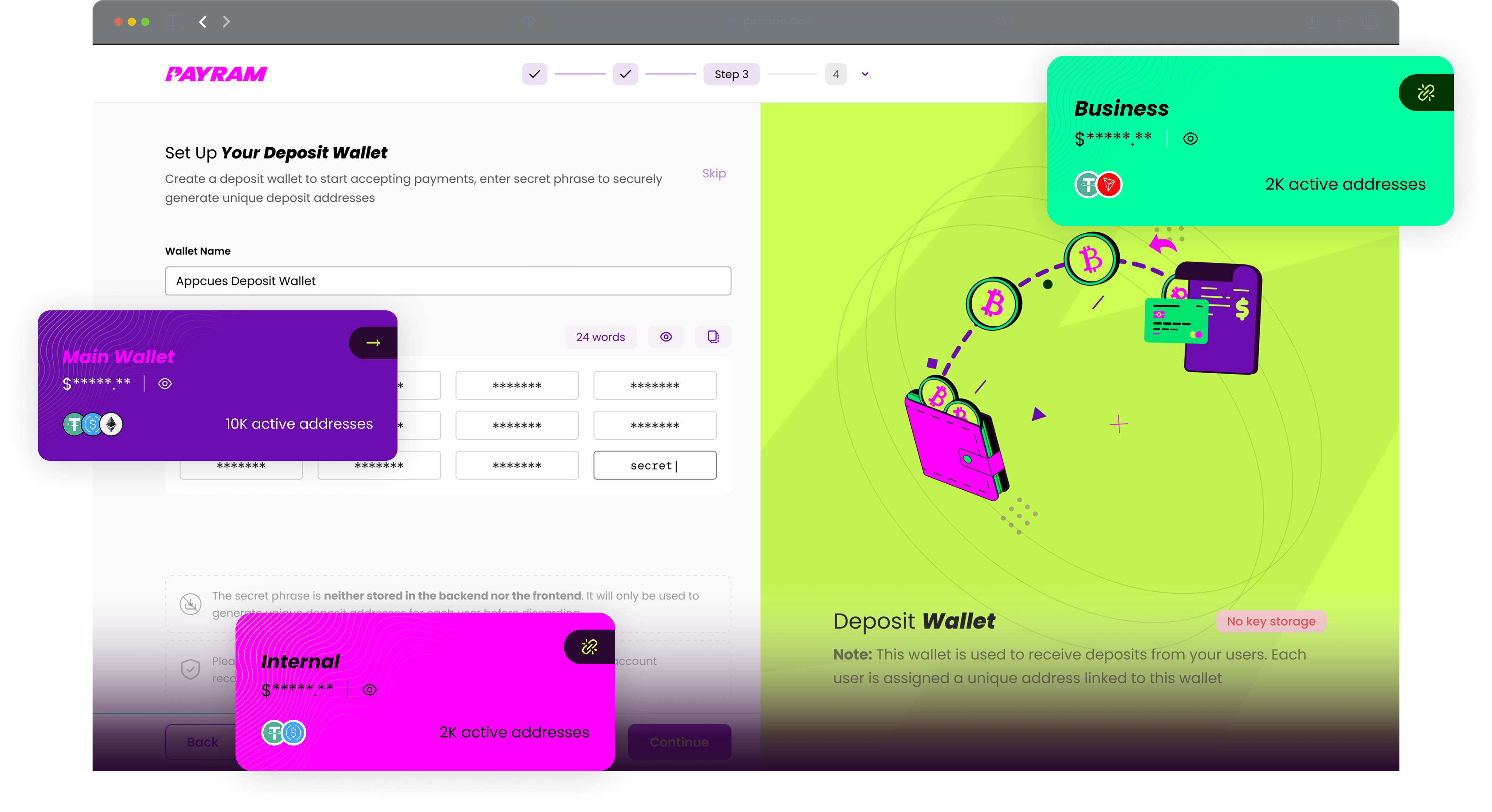
This process takes under 10 minutes and provides a robust, multi-chain gateway supporting Ethereum (ETH), Tron (TRX), Solana (SOL), and Base out of the box.
Preparing for the Agentic Economy (x402 & ERC-8004)
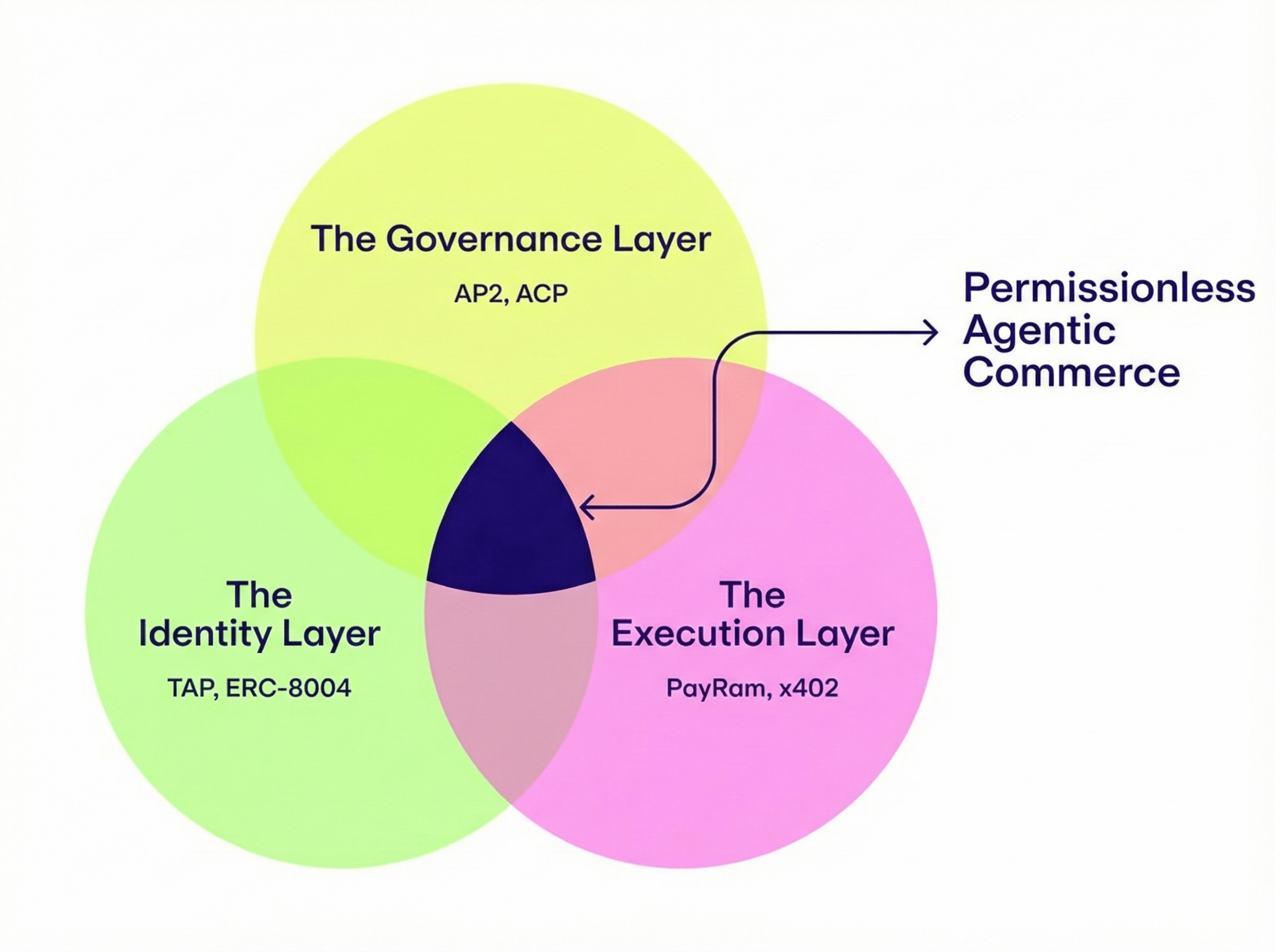
PayRam is future-proofing commerce by integrating protocols that allow autonomous AI agents to negotiate and pay for services without human intervention. We are entering the era of Agentic Commerce, where AI agents autonomously transact. PayRam is actively integrating:
- x402 Protocol: A protocol reviving HTTP 402 (Payment Required) to allow API resources to be gated by micropayments.
- ERC-8004 Protocol: A standard for Trustless Agents that enables on-chain reputation verification for non-human actors.
This positions PayRam not just as a payment gateway, but as the transactional layer for the AI internet.
"The future of the internet is agents paying agents. If you're building payment rails that require a human to click a button, you're building for the past." — Balaji Srinivasan, Author of The Network State.
By 2026, it is estimated that 20% of all B2B digital transactions will be initiated by autonomous AI agents, necessitating programmable payment rails like x402.
Strategic Decision Tree: When to Choose Self-Hosted?
Choosing the right gateway isn't just about fees; it's a strategic calculation involving risk tolerance, technical capability, and long-term business goals.
Which Crypto Gateway is Right for You?
This decision logic provides a clear path for merchants to self-qualify based on their specific industry risks, volume, and technical resources.
Is your business in a High-Risk category (Adult, iGaming, CBD)?
- YES: STOP. You must use PayRam or BTCPay Server. Custodial solutions (Stripe, BitPay) present an unacceptable risk of fund seizure.
- NO: Proceed to next step.
Is your monthly crypto processing volume > $50,000?
- YES: Choose PayRam. The 1% fee on $50k is $500/month. A self-hosted VPS costs ~$20/month. The ROI is immediate.
- NO: Proceed to next step.
Do you require native Bitcoin (Layer 1) support while maintaining self-custody?
- YES: Choose PayRam or BTCPay Server. (Coinbase Commerce removed this feature for self-managed accounts).
- NO: Proceed to next step.
Are you building for Agentic Commerce (AI-to-AI payments)?
- YES: Choose PayRam. You need programmable, permissionless rails like x402.
- NO: Traditional hosted gateways may suffice if volume is low.
2025 Ecosystem Comparison: PayRam vs. The Field
A side-by-side analysis reveals that while competitors offer convenience, PayRam stands alone in offering a combination of self-custody, sovereignty, and advanced features.
Detailed Feature Comparison
This comprehensive table synthesizes the operational realities of the leading gateways, contrasting sovereignty against convenience.
| Gateway | Type | Core Fee | KYC Required? | Custody | Censorship Risk | Ideal For |
|---|---|---|---|---|---|---|
| PayRam | Self-Hosted | Self-hosted | No (Never) | Merchant | Zero | High-Risk, Enterprise, & Privacy-First |
| BTCPay Server | Self-Hosted | 0% | No | Merchant | Zero | Bitcoin Maximalists & Developers |
| Coinbase Commerce | Hosted | 1% | No (Basic) / Yes (Managed) | Managed/Custodial | High | Small Low-Risk Startups |
| Stripe | Custodial | 1.5% | Yes (Strict) | Third-Party | Very High | Standard E-commerce (No High Risk) |
| BitPay | Custodial | 1% - 2.9% | Yes (Payer & Merchant) | Third-Party | High | US-Based Regulated Corp |
| B2BinPay | Enterprise Wallet | 0.25% - 0.5% | Yes (Strict/Regulated) | Custodial | Medium | Large Regulated Forex/Brokers |
| Payment Cloud | High-Risk Processor | Variable (High) | Yes (Underwriting) | Third-Party | Medium | Traditional High-Risk (Fiat Focus) |
| XAIGate | Managed Gateway | ~0.2% - 1% | Optional | Managed Non-Custody | Medium | iGaming Startups |
| CoinRemitter | Gateway | 0.23% (Withdrawal) | No (Basic) | Managed | Medium | Low Volume Merchants |
| Cryptomus | Gateway/Wallet | 0.4% - 2% | Optional | Managed | Medium | General E-commerce |
| CoinPayments | Custodial | 0.5% - 1% | Yes (For Features) | Custodial | Medium | Legacy Crypto Users |
| NOWPayments | Hybrid | 0.5% | No (Unless Fiat) | Non-Custodial | Low | Small Business / Altcoin Focus |
| CoinGate | Hosted | ~1% | Yes (Strict) | Custodial | High | Merchants needing Fiat Settlement |
Conclusion
The 2025 landscape demands a choice between the convenience of rented infrastructure and the resilience of owned sovereignty. The choice of a crypto payment gateway is no longer a simple matter of comparing transaction fees; it is a strategic decision about the nature of the business itself. Coinbase Commerce, BitPay, and Stripe have evolved into highly regulated, walled gardens suitable for low-risk, mainstream merchants who view crypto merely as an alternative rail for fiat settlement. They offer convenience at the cost of sovereignty, privacy, and long-term economic efficiency.
PayRam represents the crystallization of the Crypto 2.0 thesis: that payments should be sovereign, permissionless, and programmable. By combining the absolute control of self-hosting with the usability of modern Dockerized software, PayRam renders the technical barriers of the past obsolete. For high-volume enterprises, high-risk industries, and innovators building the agentic economy, PayRam is not merely an alternative; it is the superior architectural imperative.
Frequently Asked Questions (FAQ)
Is PayRam safe to use for high-volume transactions?
Yes, PayRam is architected with a No Keys on Server security model. This means your private keys are never stored on the internet-facing server, eliminating the risk of funds being stolen via a server hack. You retain full custody, making it safer than custodial alternatives that hold your funds.
How does PayRam's pricing work?
PayRam is self-hosted software you run on your own server, so no processor takes a cut of your volume. PayRam charges fees only for optional, value-added services like Fund Orchestration (automated swapping) and Smart Sweeping (consolidating funds), which save merchants significant time and network fees.
Do I need to complete KYC to use PayRam?
No. Because PayRam is self-hosted software that you run on your own infrastructure, there is no central entity to enforce KYC/AML on your business. You are the operator, and you are responsible for complying with your local regulations.
Can I accept USDT on the Tron network?
Yes, PayRam supports Tron (TRX) and USDT (TRC-20) natively. This is a critical feature for high-volume merchants due to Tron's low transaction fees and high speed, a feature often lacking in Bitcoin-centric gateways like BTCPay Server.
What happens if my server goes down?
If your VPS goes down, your payment page will be temporarily inaccessible, but your funds remain safe on the blockchain. Once you restart the server or redeploy the Docker container, the system will resume tracking payments immediately.
Is PayRam legal for high-risk industries like adult or iGaming?
Yes. Using software to process payments is legal. Self-hosting your gateway removes the Terms of Service restrictions imposed by private companies like Stripe or PayPal, which often ban legal high-risk industries. PayRam provides the neutral infrastructure you need to operate.
How does PayRam compare to CoinPayments?
CoinPayments is a custodial service that charges 0.5% - 1% fees and holds your private keys. PayRam is a non-custodial, self-hosted solution with self-custody where you hold the keys. PayRam offers superior security and censorship resistance compared to CoinPayments.
Can I convert my crypto to fiat currency automatically?
PayRam focuses on on-chain settlement (crypto-to-crypto). However, through PayFi integrations and stablecoin settlements, you can easily move funds to an exchange or OTC desk for fiat conversion, or pay expenses directly in USDC/USDT.
How difficult is the installation process?
PayRam uses a Dockerized deployment script that automates the complex setup. Most users with basic technical knowledge can get a node running in under 10 minutes.
HDoes PayRam support enterprise features?
Yes, PayRam includes enterprise-grade features such as multi-user management, detailed reporting, and programmatic API access, making it a viable alternative to expensive enterprise solutions like B2BinPay.
Ready to reclaim your financial sovereignty?
Deploy your own PayRam instance today and stop paying a tax on your own revenue.