January 23, 2026
Ask GPT about this Blog Ask GPT about this Blog
How to Accept Payments on Polygon Network with PayRam: The Complete Guide to Self-Hosted Crypto Processing
This comprehensive guide details how merchants can leverage PayRams self-hosted infrastructure to accept payments on the Polygon network, bypassing custodial intermediaries to achieve lower fees and complete financial sovereignty.
The Strategic Shift: Why Modern Merchants Choose Polygon for Payments
The Polygon network has evolved from a simple Ethereum scaling solution into a dominant commerce layer, offering merchants significantly lower fees and faster settlement times compared to traditional banking rails and Layer 1 blockchains.
In the high-stakes world of digital commerce, the infrastructure you choose to process payments is as critical as the product you sell. For years, merchants have been forced to choose between the slow, expensive rails of traditional banking (SWIFT/ACH) and the volatile, high-fee environment of Ethereum Layer 1. The Polygon network has emerged as the superior alternative, functioning not just as a blockchain, but as a high-efficiency settlement layer for the global economy.
The metrics driving this shift are undeniable. While credit card processors strip away 2.9% plus transaction fees from every sale, the average transaction cost on Polygon hovers between $0.001 and $0.01. For high-volume merchants, this difference isnt just savings—its pure profit margin. Furthermore, Polygon offers deterministic finality in approximately 2 seconds, rivaling the speed of a credit card swipe but with irreversible settlement that allows you to permanently eliminate fraudulent chargebacks.
"We know payments and stablecoins are a multi-trillion-dollar market — and Polygon is one of the top three ecosystems there." — Sandeep Nailwal, Co-founder of Polygon Labs
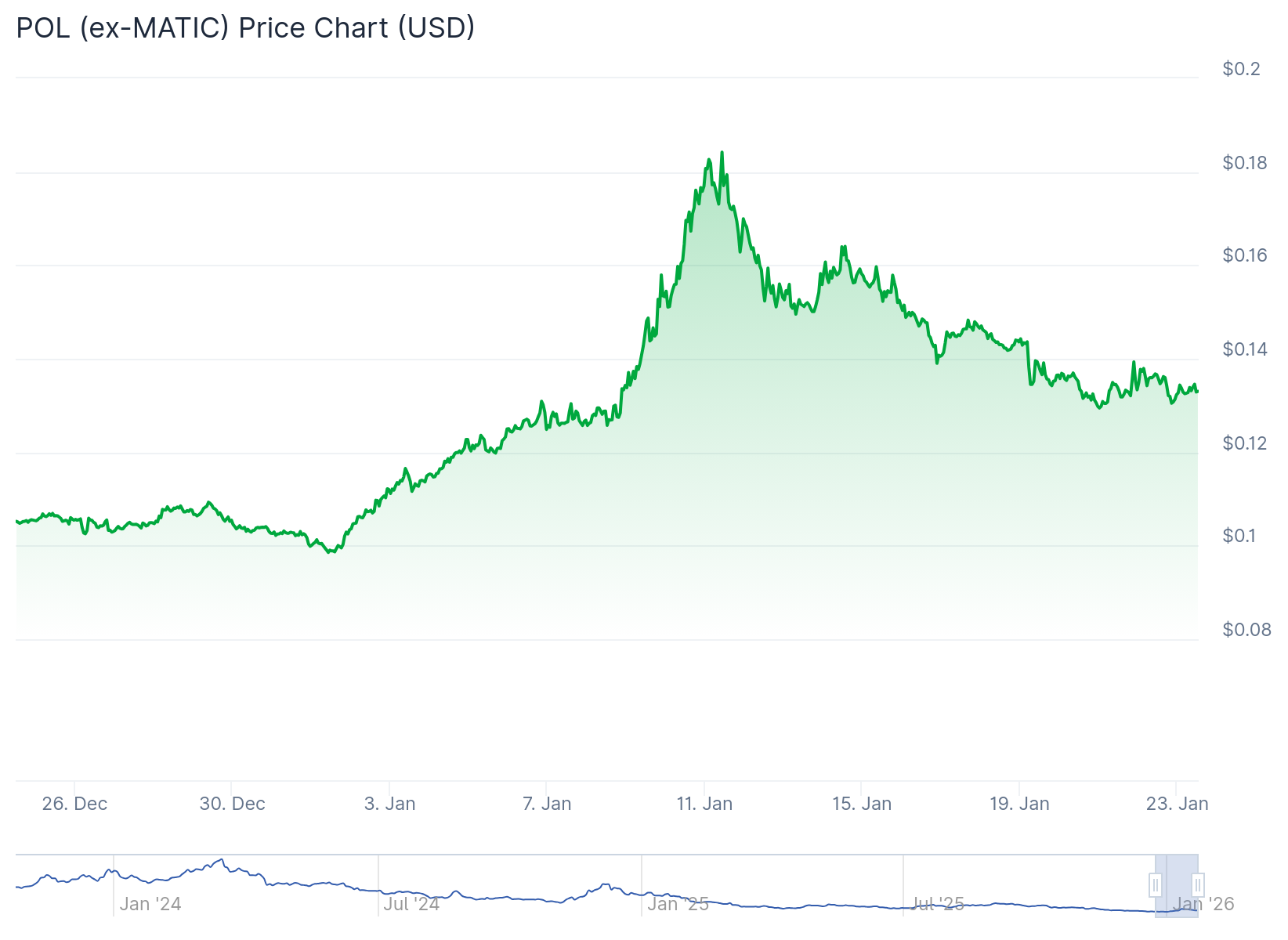
Crucially, the network has recently undergone a major evolution. On September 4, 2024, the native gas token of the Polygon PoS network migrated from MATIC to POL. This upgrade positions POL as the hyper-productive fuel for an aggregated network of blockchains, ensuring that merchants integrating blockchain payments today are future-proofed for the next generation of Web3 infrastructure.
Beyond the Hype: The Real Utility of Stablecoins on Polygon
Merchants prefer stability over volatility, making Polygon the ideal rail for accepting deep-liquidity stablecoins like USDC and USDT, effectively allowing businesses to operate a borderless digital bank account.
The primary hesitation for merchants accepting crypto is volatility, no business wants to sell a product for $100 and have those funds worth $90 by the time they settle. This is why the Digital Dollar thesis is central to the Polygon ecosystem. The network hosts over $3 billion in stablecoin supply, primarily dominated by USDC (Circle) and Tether (USDT).
By accepting stablecoins on Polygon via PayRam, merchants gain the best of both worlds: the speed of blockchain and the stability of the US dollar. This setup creates a borderless bank account experience. A customer in Japan can pay a merchant in Brazil using USDC, and the funds settle instantly with zero foreign exchange fees and zero volatility risk. PayRam natively supports these assets, allowing you to automate crypto-to-stablecoin swaps to shield your business from market fluctuations while settling in digital cash.
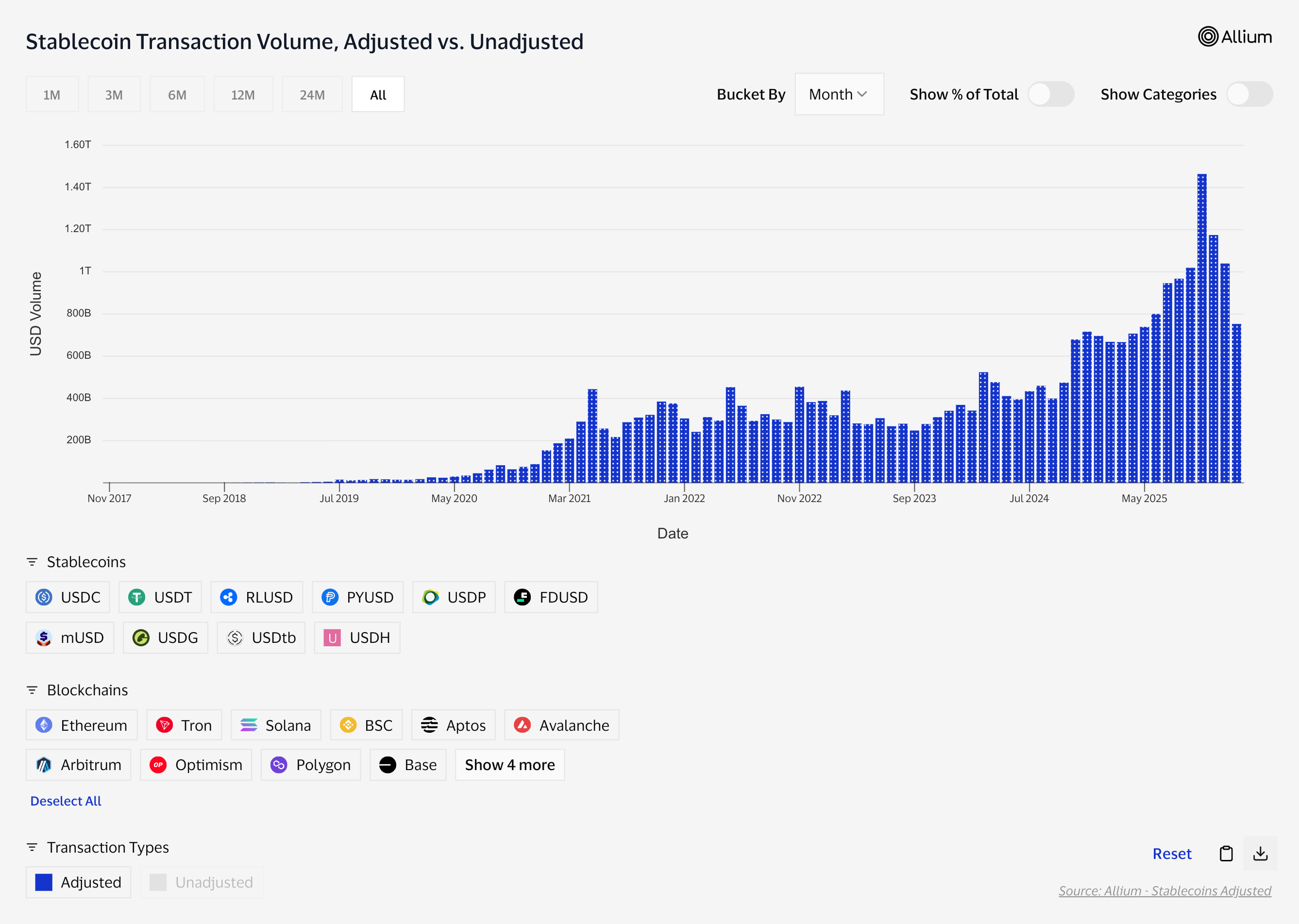
According to Visas Onchain Analytics, stablecoin settlement volume reached $5.7 trillion in 2024, challenging traditional settlement networks like Visa itself.
The Rent vs. Own Dilemma: Why Self-Hosted Gateways Are Winning
This section contrasts the expensive, permissioned model of custodial payment processors with the cost-effective, censorship-resistant model of self-hosted gateways like PayRam.
The current market for crypto payments is split into two camps: Custodial (Renting) and Self-Hosted (Owning). Custodial gateways like BitPay or Coinbase Commerce operate like traditional banks. They process your payment, hold the funds in their wallets, and charge a tax on your revenue—typically 1% of transaction volume. For a business processing $10 million annually, that is $100,000 leaking out of the business every year.
More dangerously, custodial gateways introduce Counterparty Risk. If the processor decides your business vertical is high risk—common in iGaming, adult entertainment, or dropshipping—they can freeze your account and seize your funds, just like PayPal.
PayRam flips this model. It is a self-hosted payment gateway, meaning it is software you run on your own infrastructure. PayRam doesn’t act as a payment processor because it doesnt touch your money. You pay only for your server hosting and the negligible Polygon network gas. By owning the gateway, you eliminate the middleman entirely, ensuring that no third party can ever freeze your assets or de-platform your business. This is the core advantage when comparing Payram vs BitPay.
What is PayRam?
PayRam is a non-custodial technical bridge that facilitates direct wallet-to-wallet transactions, ensuring merchants retain full control over their funds without third-party interference.
PayRam It is a self-hosted, non-custodial cryptocurrency payment gateway that allows businesses to accept digital assets directly into their own wallets. Unlike traditional processors that act as a wallet-in-the-middle, PayRam acts as a technical bridge. It generates payment addresses, monitors the blockchain for confirmations, and updates your order status via API.
Because PayRam is software, not a bank, it physically cannot freeze your funds. The money moves directly from Customer Wallet A to Merchant Wallet B. Even if PayRam (the company) were to disappear tomorrow, your funds would remain safe in your private wallet, and your gateway would continue to process payments as long as your server is running. This architecture is vital for merchants navigating complex regulations like the FATF (Travel Rule) without relying on third-party compliance officers.
Under the Hood: PayRams SmartSweep Architecture on Polygon
PayRam addresses security concerns associated with self-hosting through its SmartSweep technology, which uses smart contracts to automatically forward funds to cold storage, keeping private keys off internet-connected servers.
The primary objection to self-hosting is usually security: "If I host the gateway, arent my private keys at risk?" PayRam solves this with its proprietary SmartSweep architecture. This is a critical feature for businesses securing high-value bankrolls.
In a standard setup, a server needs a private key to move funds, making it a target for hackers. PayRam uses a family of smart contracts on the Polygon network to orchestrate fund movements. When a customer pays, the funds land in a temporary contract address. PayRam then triggers a function to sweep those funds directly to your pre-defined Cold Wallet (like a Ledger or Trezor).
Crucially, the private keys required to spend from your main Cold Wallet are never stored on the PayRam server. Even if an attacker compromised your server, they would find no keys to steal and no funds to drain, as the revenue has already been swept to safety. This creates an unbannable gateway that is resilient against both cyber attacks and censorship.
"If you dont own your private keys, you dont own your money. Its that simple. Self-custody is the only way to opt-out of the fragility of the traditional banking system." — Andreas Antonopoulos, Bitcoin Advocate
Run a private payment gateway on Polygon.
— Polygon | POL (@0xPolygon) January 21, 2026
Easy onchain payments with $USDC, $USDT, or $POL. https://t.co/d6pnQcNYx1
Technical Walkthrough: Deploying Your Private Polygon Gateway
This section provides a high-level walkthrough of deploying PayRam on a VPS, demonstrating that the process is accessible via a simple Docker installation script.
Deploying financial infrastructure sounds complex, but PayRam has streamlined the process into a 10-minute install using Docker. You do not need to be a blockchain engineer to run this stack, making it an accessible alternative to Coinbase Commerce for technical merchants.
- Prerequisites: You need a basic Linux VPS (Virtual Private Server). Providers like Hetzner, DigitalOcean, or Vultr offer suitable instances (4 CPU cores, 4GB RAM) for roughly $20/month.
- The One-Liner: Connect to your server via SSH and run PayRams installation script:
bash <(curl -fsSL https://payram.com/setup_payram.sh)
- Configuration: Once the GUI is live, navigate to the admin panel.
- Node Connection: Input a Polygon RPC URL. You can use public endpoints or obtain a high-performance one from providers like Alchemy or Infura to ensure high uptime for your e-commerce payments.
- Wallet Setup: Enter your merchant xPub (Extended Public Key). This allows PayRam to generate endless unique deposit addresses for your customers without exposing your private key.
Handling the MATIC to POL Migration in PayRam
Merchants must be aware that the native gas token for Polygon is now POL, and PayRams architecture supports this transition for seamless operations.
For merchants setting up today, the transition from MATIC to POL is a key operational detail. As of September 4, 2024, POL is the native gas token of the Polygon PoS network.
While many tools still use the ticker MATIC for backward compatibility, your operational wallet (the one paying for the sweep gas fees) needs to hold POL. PayRams architecture is updated to recognize this migration, ensuring that smart contract interactions and gas estimations remain accurate on the upgraded network. This upgrade is part of a broader trend we analyze in our state of stablecoins 2026 report.
Future-Proofing: Agentic Commerce and the x402 Protocol
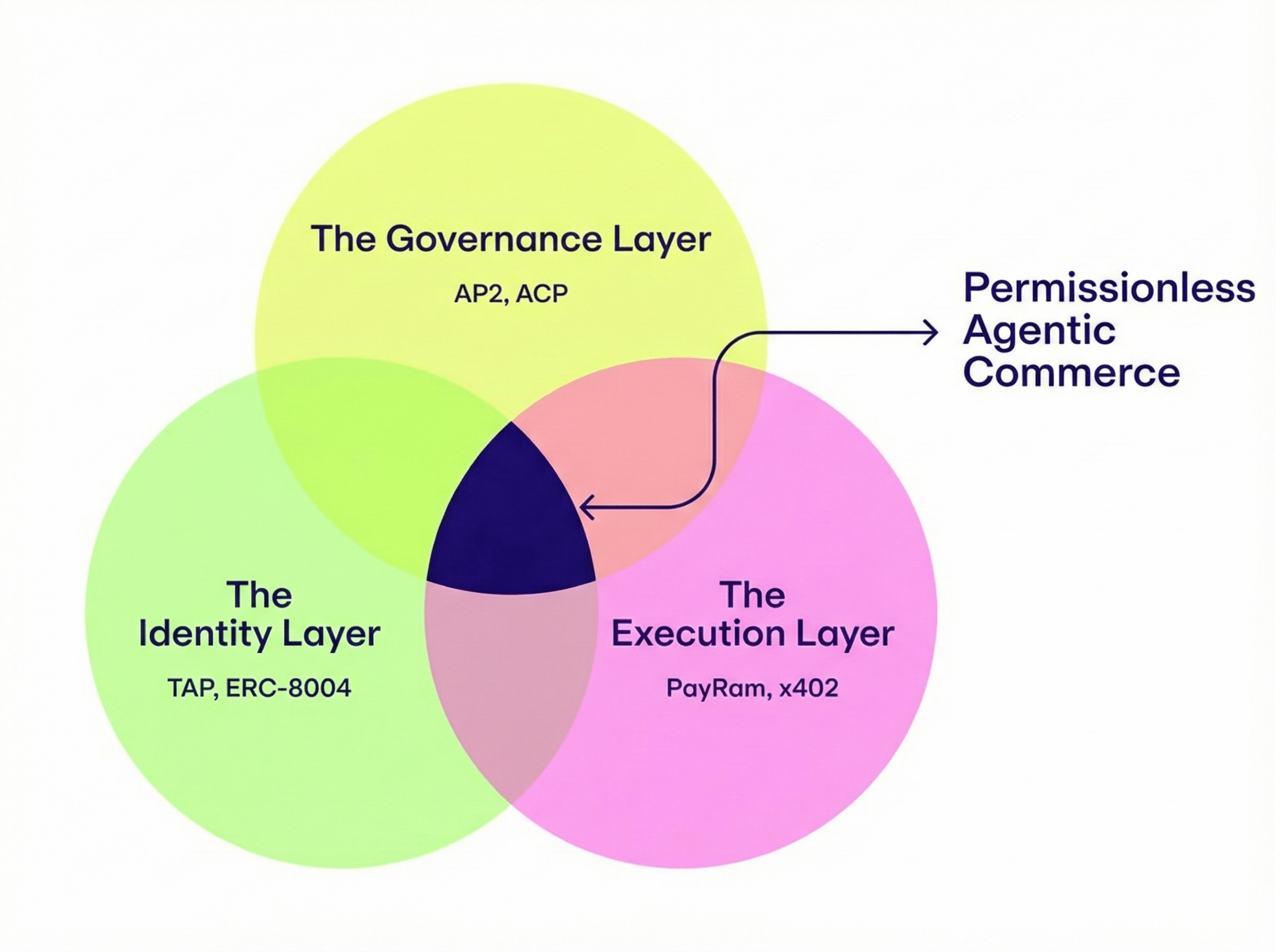
PayRam positions merchants at the forefront of the Agentic Economy by integrating the x402 protocol and ERC-8004, enabling autonomous AI agents to make instant micropayments for services.
The future of commerce isnt just human-to-business, its machine-to-machine. We are entering the era of Agentic Commerce, where AI agents autonomously negotiate and pay for resources. Traditional credit card rails—which require names, billing addresses, and CVVs—are incompatible with AI agents.
PayRam is built to serve this new economy by supporting x402, an open standard that utilizes the HTTP 402 Payment Required status code.
- The Workflow: An AI agent requests data from your API. PayRam intercepts the request and sends back a 402 error with a Polygon payment address. The agent pays instantly in USDC. PayRam verifies the transaction on-chain and unlocks the resource. Read more about the x402 Protocol.
- Trustless Execution: Through ERC-8004 Protocol, PayRam facilitates Trustless Agent Escrow, allowing funds to be locked and only released when an agent cryptographically proves it has completed a task. This allows you to monetize APIs and digital services for the booming AI market today.
By 2030, the US B2C retail market alone could see up to $1 trillion in orchestrated revenue from agentic commerce (Source: McKinsey Agentic Commerce Report).
FAQ: Accepting Polygon Payments with PayRam
This section answers common user queries regarding gas fees, fiat conversion, enterprise scalability, and asset support to improve search engine visibility.
Do I need to pay gas fees when using PayRam?
PayRam doesn’t act as a payment processor, but you (or the customer, depending on configuration) must pay the Polygon network gas fee to process the transaction on the blockchain. Because Polygon is a high-efficiency Layer 2 network, these fees are typically negligible—often a fraction of a cent ($0.001 - $0.01). Learn more about optimizing fees in our transaction optimization playbook.
Can PayRam convert Polygon (POL) to fiat currency automatically?
PayRam is a crypto-native tool that settles in stablecoins. To convert to fiat, you would move funds from your cold wallet to an exchange. This separation ensures you maintain custody at all times. For a deeper comparison of how this differs from other gateways, read our Payram vs Coingate.
Is PayRam suitable for high-volume enterprise merchants?
Yes. Because PayRam is self-hosted, there are no artificial rate limits, volume caps, or tiered pricing structures often found with SaaS providers. The system scales with your server infrastructure, making it ideal for high-volume enterprise use cases like marketplaces and global e-commerce platforms.
Which stablecoins are supported on Polygon via PayRam?
PayRam provides native support for the most liquid assets on the Polygon network, including:
How does PayRam handle chargebacks on Polygon?
Blockchain transactions on Polygon are irreversible, which means fraudulent chargebacks are technically impossible. Once the funds are in your wallet, they are yours. This is a massive advantage for high-risk merchants compared to traditional card processors.
Do I need to code to install PayRam?
No. While PayRam is self-hosted, it uses a simple installation script that requires basic familiarity with a terminal. You do not need to write smart contracts or complex backend code. See our installation guide for a step-by-step tutorial.
Is KYC required to use PayRam?
PayRam itself is software and does not require KYC to download or install. However, depending on your jurisdiction and business model, you may need to implement compliance checks for your users. PayRam offers pluggable compliance modules for this purpose. Read more in our guide to accept crypto payments without kyc.
Can I use PayRam for a subscription model?
Yes, PayRam supports recurring billing logic. Combined with the low fees of Polygon, it is highly effective for subscription services, membership sites, and adult content platforms.
What happens if the Polygon network is congested?
PayRam monitors the blockchain mempool and can adjust gas fees dynamically or alert the customer if network conditions are unfavorable. However, Polygons high throughput generally prevents the severe congestion often seen on Ethereum Layer 1.
How secure is the SmartSweep feature?
SmartSweep is audited and designed to ensure that your main private keys never touch the internet-connected server. Funds are swept to your cold storage automatically, minimizing the "hot wallet" risk profile. For advanced security setups, check our crypto fortress guide.
Conclusion: Owning Your Financial Infrastructure
The article concludes by reinforcing the value of financial sovereignty and encouraging users to deploy PayRam to future-proof their payment stack.
The transition to Polygon for payments represents a move toward speed and efficiency, but moving to PayRam represents a move toward sovereignty. By decoupling your business from custodial gatekeepers, you eliminate the tax on your revenue and immunize your operations against arbitrary censorship.
In a world where digital commerce is becoming increasingly automated and agentic, owning your payment rails is no longer just a technical preference—it is a strategic imperative. Dont just accept crypto, own the infrastructure that processes it.
Ready to reclaim your financial destiny?
See our Documentation and deploy your gateway today.