December 05, 2025
Ask GPT about this Blog Ask GPT about this Blog
The Sovereignty Stack: How to Accept Payments for Adult Content (No-KYC, No Bans)
The Architecture of Exclusion: Why Traditional High-Risk Processing is a Dead End
The traditional banking system utilizes mechanisms like rolling reserves and retroactive policy changes to systematically extract value from and destabilize adult content businesses.
The Economics of Rolling Reserves: A Tax on Growth
The financial model of legacy payment processing is designed to penalize success in high-risk verticals. For the uninitiated, a rolling reserve might sound like a prudent risk management tool. In reality, it is a mechanism that turns your revenue into an interest-free loan for your processor. In the high-risk adult sector, processors typically withhold 5% to 15% of your gross processing volume for a period ranging from 90 to 180 days to cover potential chargebacks.
"The classification of 'high-risk' is often less about actual financial risk and more about 'reputational risk' for banks. It allows them to charge premium fees for standard services while holding merchant capital hostage." — Data from Merchant Maverick
Let's look at the math of this liquidity trap. If your platform processes $100,000 monthly with a 10% reserve held for six months, you will have $60,000 of your own capital trapped in a non-interest-bearing account by month six. This is "dead capital"—money that cannot be used to pay talent, upgrade servers, or acquire users. In an industry where liquidity dictates speed to market, surrendering the Time Value of Money (TVM) to a gatekeeper is a massive competitive disadvantage. To understand how to escape this cycle, read our high-risk merchant survival guide.
%2520copy.jpeg)
The Compliance Treadmill: Visa/Mastercard's Moral Policing
Even if you accept the fees, your existence on legacy rails remains precarious. The card networks, operating as a global duopoly, enforce Acceptable Use Policies (AUP) like the Visa Acquirer Monitoring Program (VAMP) . These policies often force payment processors to act as moral censors, requiring platforms to implement intrusive identity verification systems that degrade the user experience.
The ultimate threat is the Terminated Merchant File (TMF), also known as the MATCH list. If a processor bans you—whether for a spike in chargebacks or a retroactive policy change—you land on this centralized blacklist. Once listed, you are effectively barred from opening a merchant account with any major provider for up to five years, potentially annihilating your business overnight. For a deeper dive into the mechanics of these bans, see our analysis on high risk merchant survival guide.
The Illusion of Approval: Why High-Risk Merchant Accounts Fail
A quick search for adult content payment processors yields dozens of providers claiming 99% approval rates. This is largely a marketing illusion. In the high-risk sector, "approval" often comes with crippling caveats:
- Tiered Acceptance: You may be approved for a starter tier capped at $5,000/month, which is useless for a scaling platform.
- Deferred Rejection: Many accounts are approved by sales teams to capture setup fees, only to be closed by risk underwriting weeks later after the first batch of transactions.
- Predatory Pricing: While crypto network fees are often negligible, legacy high-risk processors charge 5-15% per transaction plus setup and monthly gateway fees.
The Sovereignty Solution: Self-Hosted Payment Gateways
A self-hosted payment gateway fundamentally shifts the power dynamic by allowing merchants to run their own payment infrastructure and process funds directly to their private wallets without third-party custodians.
What is a Self-Hosted Payment Gateway?
A self-hosted payment gateway is software that you install and run on your own infrastructure—akin to running your own mail server rather than using Gmail. Unlike API-based processors like Stripe or PayPal, where the service provider controls the ledger, a self-hosted solution like PayRam operates as a technical bridge between your website and the blockchain. It generates payment addresses derived directly from your Extended Public Key (xPub), ensuring that the software manages the data of the transaction while you alone control the value.
"Not your keys, not your coins. If a third party can freeze your account, you don't own a business; you have a revocable license to operate." — Andreas Antonopoulos
To understand the architectural differences, compare Payram vs Coinbase Commerce to see why self-hosting is critical for sovereignty.
Custodial vs. Non-Custodial: The Mechanics of Zero-Custody
The distinction between custodial and non-custodial models is the difference between asking for permission and exercising a right.
- Custodial (Third-Party): The customer sends money to the processor's wallet. The processor deducts fees, holds the remainder, and eventually settles it to you.
Risk: The processor can freeze your funds at any moment. See our comparison of Payram vs NOWPayments for a real-world example of this risk.
- Non-Custodial (Sovereign): The customer sends money directly to a wallet address that you own. The gateway detects the transaction and updates the order status, but it never touches the funds.
Risk: Zero counterparty risk regarding the flow of funds.
Censorship Resistance: Eliminating the Terminated Merchant File Risk
In a self-hosted architecture, the concept of a banned account becomes technically impossible. Because there is no central administrator holding your private keys, there is no one with the authority to hit a "suspend" button. You are relying on the immutable logic of the blockchain rather than the fluid policies of a bank's risk department. This is the unbannable gateway architecture—infrastructure that adheres to the principle that Code is Law.
Stablecoins: The New Settlement Layer for Adult Content
Stablecoins like USDT and USDC allow adult platforms to combine the price stability of fiat currency with the instant settlement and borderless nature of cryptocurrencies.
| Criterion | PayRam (Sovereign) | Legacy High-Risk Processor |
|---|---|---|
| Transaction Fees | 0% (Network Gas Fees Only) | 5% - 15% + Fixed Fee |
| Settlement Speed | Instant (T+0) | T+7 Days to T+30 Days |
| Rolling Reserve | None | 5% - 10% held for 180 Days |
| Censorship Risk | Zero (Code is Law) | High (Bank/Card Network Policy) |
| Custody | Merchant Holds Funds | Processor Holds Funds |
| Privacy | High (Pseudonymous) | Low (Bank Statements) |
USDT vs. USDC: Stability Meets Velocity
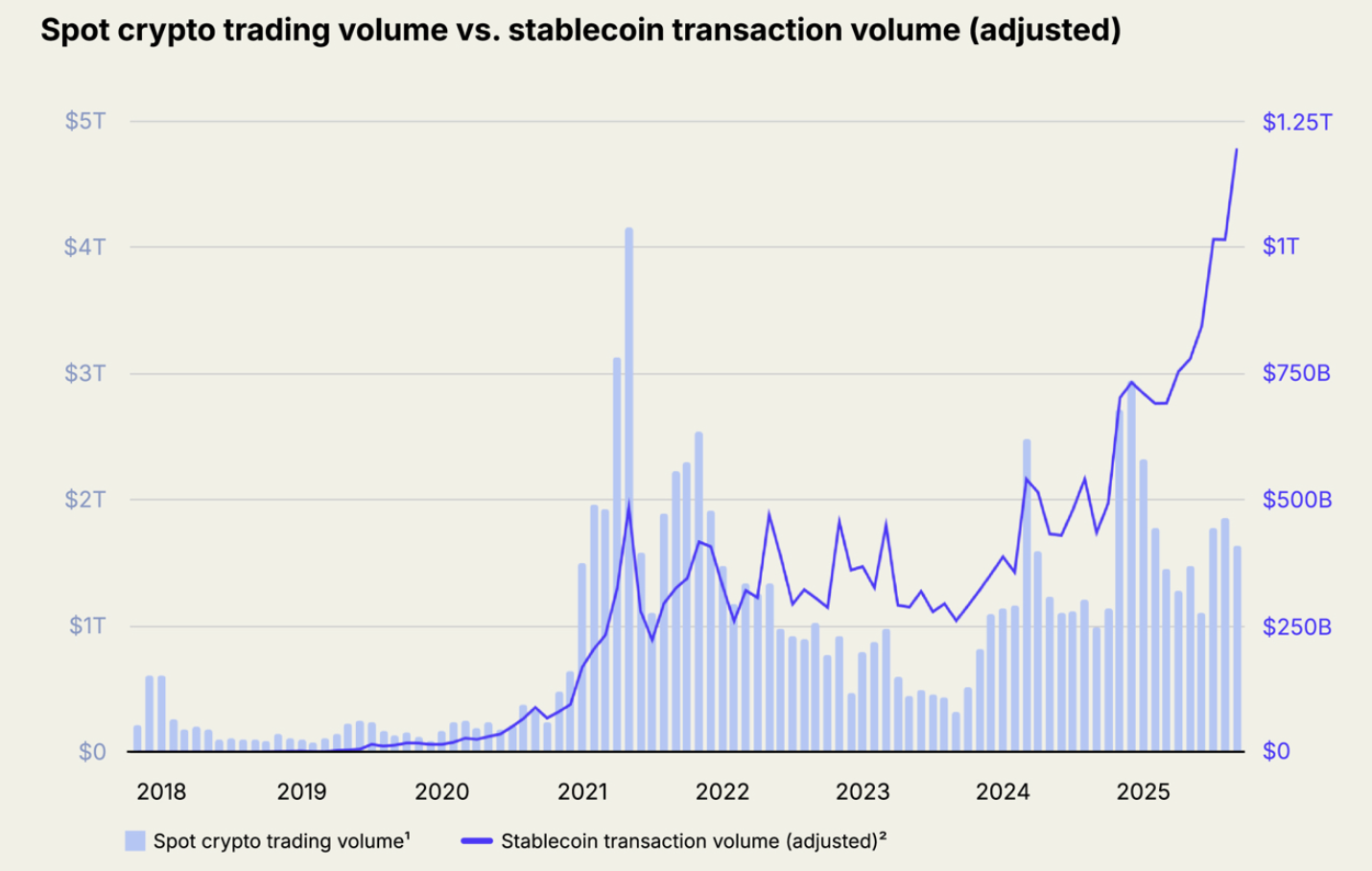
For years, the volatility of Bitcoin made it a hard sell for subscription businesses. Stablecoins (fiat-pegged tokens like Tether (USDT) and USDC ) have solved this. The killer feature here is settlement velocity. A credit card transaction takes T+2 to T+7 days to settle into your bank account. A stablecoin transaction on a high-performance chain like Solana or TRON settles in seconds (T+0).
According to Visa's own data, stablecoin transaction volume reached $2.5 trillion in Q1 2024 alone, signaling a massive shift in how global value moves.
This instant liquidity allows platform operators to pay models daily or even in real-time, a massive incentive for attracting top talent. For a detailed breakdown of which token suits your needs, read our guide on USDC vs USDT.
The Privacy Paradox: Anonymity on the Ledger
Privacy is a premium product in the adult industry. Subscribers are often deterred by the paper trail risk of explicit billing descriptors appearing on their bank statements. Stablecoins solve this via the privacy paradox: while the blockchain ledger is public, the identity attached to it is pseudonymous. A user's bank statement only shows a transfer to a crypto exchange (e.g., Coinbase), not to Adult Site. This discretion significantly reduces cart abandonment. Learn more about private stablecoin payments.
Global Reach: Bypassing Cross-Border Fees and Restrictions
The adult entertainment industry is global, but banking is local. Sending a wire transfer to a creator in Colombia or Nigeria can cost $30-$50 and take days. Stablecoins eliminate these borders. A transfer of USDC from New York to Bogota costs fractions of a cent and arrives instantly, bypassing the correspondent banking network entirely. This allows platforms to onboard unbanked creators in emerging markets who may not have access to traditional USD accounts.
PayFi: Unlocking the Time Value of Money (TVM)
PayFi (Payment Finance) is a new Web3 primitive that combines the mechanics of payment settlement with the yield-generating capabilities of DeFi to maximize capital efficiency.
What is PayFi?
PayFi creates a new paradigm where money is never idle. In traditional finance, money in transit (clearing) or in reserve is dead capital. PayFi leverages programmable money to ensure that funds are productive the moment they are received. It focuses on optimizing the Time Value of Money (TVM), allowing merchants to access future revenue today or earn yield on floating capital.
"PayFi is about creating new financial markets around the time value of money. On-chain finance enables new financial primitives... that traditional finance cannot offer." — Lily Liu, President of the Solana Foundation
Invoice Factoring & Instant Payouts for Creators
One of the most potent applications of PayFi for adult platforms is on-chain invoice factoring. Platforms often wait 30-60 days for ad revenue or affiliate payouts. PayFi protocols allow platforms to tokenize these future receivables and borrow against them instantly from on-chain liquidity pools. This enables streaming payments, where creators are paid the second a user views their content, rather than waiting for a monthly cycle. Understanding the difference between Payfi- vs Defi is crucial for implementing these strategies.
The Buy Now, Pay Never Model: Yield-Based Subscriptions
PayFi enables a radical new subscription model: Buy Now, Pay Never. In this scenario, a user deposits a principal amount (e.g., $1,000 USDC) into a yield-generating vault linked to the adult platform. The yield generated (e.g., 5-10% APY) is automatically diverted to pay for the monthly subscription. The user gets access to the content for free (paid by the yield), and they retain their principal. This transforms the user from a customer into a capital provider, drastically reducing churn. For implementation details, refer to our CFO guide to stablecoin yield.
.png)
Agentic Commerce: The Next Trillion-Dollar Opportunity
Agentic Commerce refers to the emerging economy where autonomous AI agents transact and negotiate on behalf of human users, requiring a new, trustless payment infrastructure.
The Trust Gap: Why AI Agents Can't Use Credit Cards
Traditional payment rails are hostile to AI Agents. If an autonomous agent attempts to make 50 micro-transactions in a minute (e.g., tipping cam models based on performance criteria), fraud detection algorithms at Visa or Mastercard will immediately flag the activity as bot behavior and block the card. Furthermore, AI agents lack legal personhood, making them unable to pass traditional KYC (Know Your Customer) checks required to open bank accounts.
McKinsey projects that Agentic Commerce could facilitate up to $5 trillion in global transaction volume by 2030, fundamentally altering e-commerce.
Protocols: ERC-8004 and AP2 (Agent Payments Protocol)
New standards are emerging to bridge this gap. ERC-8004 Protocol is a proposed protocol that creates a Trust Layer for agents, allowing them to verify their reputation and discover services on-chain without a centralized gatekeeper. Meanwhile, Google's Agent Payments Protocol (AP2) introduces Mandates—cryptographically signed permissions that authorize an agent to spend a specific budget. These protocols are building the driver's license and wallet for the AI workforce. Explore the landscape of Agentic Commerce protocols.

How PayRam Enables the Unbanked Agent Economy
While tech giants build closed agent ecosystems, PayRam for the unbanked agent economy. High-risk agents—such as those curating adult content or managing gambling bankrolls—will likely be banned from proprietary rails like Stripe's agent toolkit. PayRam allows these agents to execute USDC settlements programmatically via API, filling the payment-shaped hole in protocols like ERC-8004. This positions PayRam as a leader in permissionless commerce.
Technical Implementation: Building the Sovereign Stack
Implementing a sovereign payment stack requires a robust security architecture involving non-custodial nodes, cold storage, and smart contract automation.
Wallet Infrastructure: Cold Storage and Multi-Sig Setup
Security begins with key management. Your Sovereign Bank should use a tiered wallet structure. The PayRam node uses a hot wallet to receive funds and automate initial sorting. However, significant capital should be auto-swept into Cold Storage (hardware wallets like Ledger/Trezor) that are never connected to the internet. For business treasury, a Multi-Signature (Multi-Sig) wallet (like Safe) is essential, requiring approval from multiple team members to move funds, preventing internal theft. Read our guide to securing $10M+ in crypto for a detailed setup.
Integration Flow: Connecting PayRam to OnlyFans Clones
For operators running scripts like OnlyFans clones, integration is often plug-and-play. The workflow involves deploying the PayRam node (often via Docker), configuring Webhooks to listen for blockchain confirmations, and mapping user IDs to unique payment addresses. When the blockchain confirms a transaction, the webhook signals your database to auto-unlock the premium content. Review the adult tech stack guide for specific integration points.
Solving the Subscription Challenge: Smart Contracts & Push Payments
Crypto is inherently a push technology (the user sends money), which complicates recurring pull subscriptions. Solutions are evolving:
- Manual Loop: Automated email reminders prompt the user to sign a transaction each month.
- Smart Contracts: Newer standards on EVM chains and Solana allow users to approve a smart contract to withdraw a specific amount of stablecoins periodically, mimicking a direct debit. Learn more about programmatic payments.
Regulatory Reality Check: Compliance Without Capitulation
Sovereign payments do not imply lawlessness; they require Self-Sovereign Compliance where the merchant enforces legal obligations without relying on third-party censors.
The No-KYC Nuance: User Privacy vs. Merchant Responsibility
It is vital to distinguish between payment privacy and business compliance. While the PayRam protocol does not require user ID to process a payment, legitimate adult businesses must still adhere to regulations like 2257 compliance (age verification for creators). The best practice is to decouple these data streams: use third-party tools for age gating that do not store PII on your servers, keeping your payment data pseudonymous and your compliance data secure.
Sanctions Screening: Using Oracles for AML Compliance
To prevent your platform from becoming a haven for illicit funds, self-hosted gateways can integrate with on-chain Oracles (like Chainalysis or Elliptic). These APIs screen incoming wallet addresses against global sanctions lists (OFAC) in real-time, allowing you to block tainted funds automatically without needing a bank's compliance department. See our risk management guide.
Tax and Reporting: Automated On-Chain Bookkeeping
Far from being a tax evader's tool, the blockchain is the ultimate transparent ledger. Every transaction is time-stamped and immutable. PayRam nodes typically offer CSV exports that are compatible with crypto tax software, making it easier to generate audit-ready financial statements than wrangling CSVs from multiple high-risk processors.
Frequently Asked Questions (FAQ)
Is accepting crypto legal for adult content sites?
Yes, accepting cryptocurrency for legal adult content is lawful in most jurisdictions. The high-risk label comes from banking policies, not laws. Using a self-hosted gateway ensures you bypass these banking policies while remaining legally compliant.
Can I set up recurring billing with crypto?
Yes, but it works differently than credit cards. You can use programmatic payments via smart contracts to "pull" funds with user permission, or automated email invoicing for push payments.
How do I protect my platform from chargebacks?
Crypto transactions are immutable, meaning chargeback fraud is impossible. Once funds are confirmed on the blockchain, they cannot be reversed by a bank or customer.
Does PayRam work with OnlyFans clone scripts?
Yes, PayRam's API can be integrated into most custom scripts and CMS platforms used for adult sites (like WordPress, React/Node apps). It replaces the standard Stripe/PayPal modules.
What are the fees compared to CCBill or Segpay?
Legacy processors charge 10-15% + rolling reserves. PayRam doesn’t act as a payment processor (you only pay network gas fees). This saves you thousands of dollars monthly.
Do I need to KYC my subscribers?
Generally, you do not need to KYC subscribers for payments, but you may need to age-verify them depending on your jurisdiction. PayRam does not enforce subscriber KYC at the protocol level.
Can AI agents really pay for content?
Yes. Protocols like ERC-8004 Protocol allow AI agents to hold crypto wallets and execute payments autonomously, a massive emerging market for adult content curation.
Is PayRam secure against hacks?
PayRam uses a no keys on server architecture. Your private keys stay on your cold storage; the server only watches the blockchain. This makes it highly resistant to server-side hacks.
How do I handle taxes with crypto payments?
PayRam provides exportable CSVs of all transactions. You can import these into crypto tax software (like Koinly) to generate reports for your accountant.
Can I accept USDT and USDC?
Yes, PayRam supports major stablecoins like Tether (USDT) and USDC on multiple networks (TRON, Ethereum, Solana), ensuring low fees and price stability.
Conclusion: The Inevitability of the Migration
The adult industry is the canary in the coal mine for the digital economy. The pressures that are forcing adult platforms to seek sovereignty—censorship, extractive fees, and the need for agentic readiness—will eventually touch every vertical. But for now, the Sovereign Stack is the only viable path forward for the high-volume adult creator.
By replacing the bank account with a multi-sig wallet, the processor with a self-hosted node, and fiat with stablecoins, you are not just saving 15% on fees; you are fireproofing your business against the whims of moralizing gatekeepers.
Implementation Roadmap
- Phase 1 (Hybrid): Integrate PayRam alongside your existing card processor. Offer a 20% discount for crypto payments to incentivize user migration.
- Phase 2 (Treasury): Begin holding working capital in USDC/USDT. Implement PayFi strategies to earn yield on your idle treasury.
- Phase 3 (Agentic): Deploy a /.well-known/agent-pay manifest to make your catalog and payment addresses discoverable by AI agents.
- Phase 4 (Sovereign): Once crypto volume surpasses 50%, evaluate deprecating high-risk card processing to eliminate rolling reserves entirely.
Don't wait for the ban. Get PayRam today!