December 30, 2025
Ask GPT about this Blog Ask GPT about this Blog
Architecting Stablecoin Micro-economies within Telegram Mini Apps
The Convergence of Social Signaling and Economic Settlement
Telegram is transforming from a messaging app into a robust economic ecosystem (super-app) where social interactions and financial transactions occur seamlessly side-by-side.
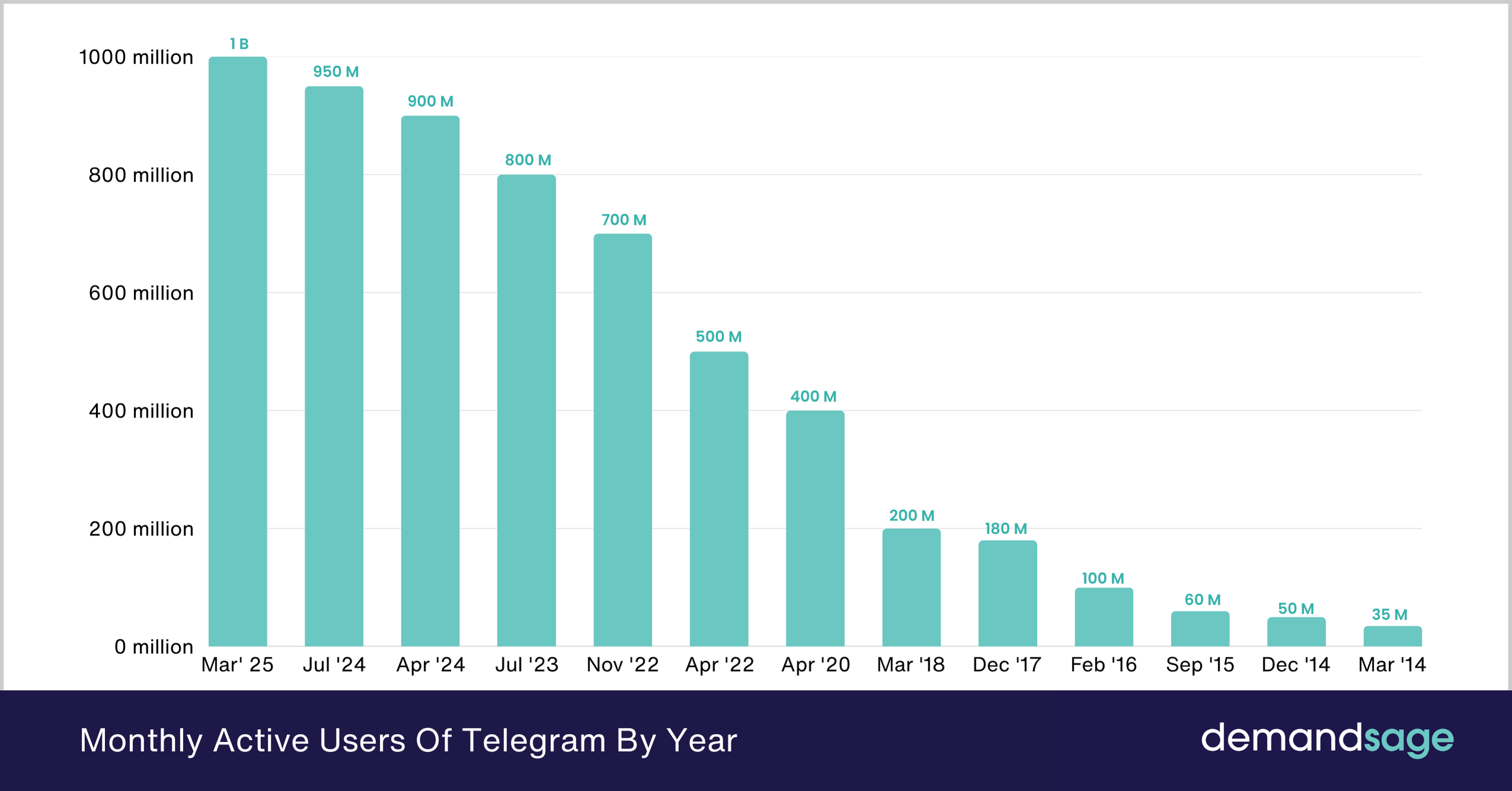
The digital landscape is undergoing a tectonic shift, moving away from siloed applications—where you chat in one app and pay in another—toward integrated super-apps where communication and commerce coexist. At the forefront of this revolution is Telegram, which has evolved from a privacy-centric messenger into a robust runtime environment for decentralized applications (dApps). With over 950 million monthly active users, Telegram offers a fertile ground for ChatFi and SocialFi, ecosystems where seamless value transfer is as effortless as sending a text message.
The introduction of Telegram Mini Apps (TMAs) allows developers to embed web-based applications directly within the chat interface. This innovation solves the context switching problem, traditionally, a user wanting to buy a digital item or tip a creator had to leave the social environment, navigate to a payment gateway, and authorize a transaction—a process fraught with friction and drop-off. TMAs eliminate this barrier, embedding the economic layer directly into the social layer.
"We are seeing the convergence of social graphs and economic graphs. The next generation of commerce won't happen in a store; it will happen in a chat window." — Balaji Srinivasan, Author of The Network State.
Telegram’s user base has surged past 950 million monthly active users, with projections to hit 1.5 billion by 2030, representing a massive, untapped market for embedded commerce.
What are Telegram Mini Apps (TMAs)?
Telegram Mini Apps are lightweight, web-based applications embedded within the Telegram messenger that leverage its API to provide native-like experiences for e-commerce, gaming, and services without requiring users to leave the app.
Telegram Mini Apps are essentially web applications (built with HTML, CSS, and JavaScript) that run inside Telegram's in-app browser. Unlike chatbots of the past, which relied on clunky text commands, TMAs offer full graphical user interfaces that look and feel like native apps. They leverage the Telegram API to access user data (such as theme preferences and basic identity) and interact with native UI elements like the "Main Button" or haptic feedback. This creates a seamless bridge between the user's social identity and external services, from e-commerce stores to crypto wallets.
The Economic Case for Stablecoin Micro-transactions
This section argues that traditional payment rails make micro-transactions economically unviable due to high fixed fees, whereas stablecoins on high-throughput blockchains enable low-cost, high-frequency payments that unlock new business models.
The true catalyst for the TMA economy is not just the interface, but the settlement rails. Traditional financial infrastructure imposes a fee floor—typically a fixed cost (e.g., $0.30) plus a percentage (e.g., 2.9%) per transaction. This structure renders micro-transactions economically irrational; selling a digital item for $0.50 results in a loss of over 60% of revenue to intermediaries.
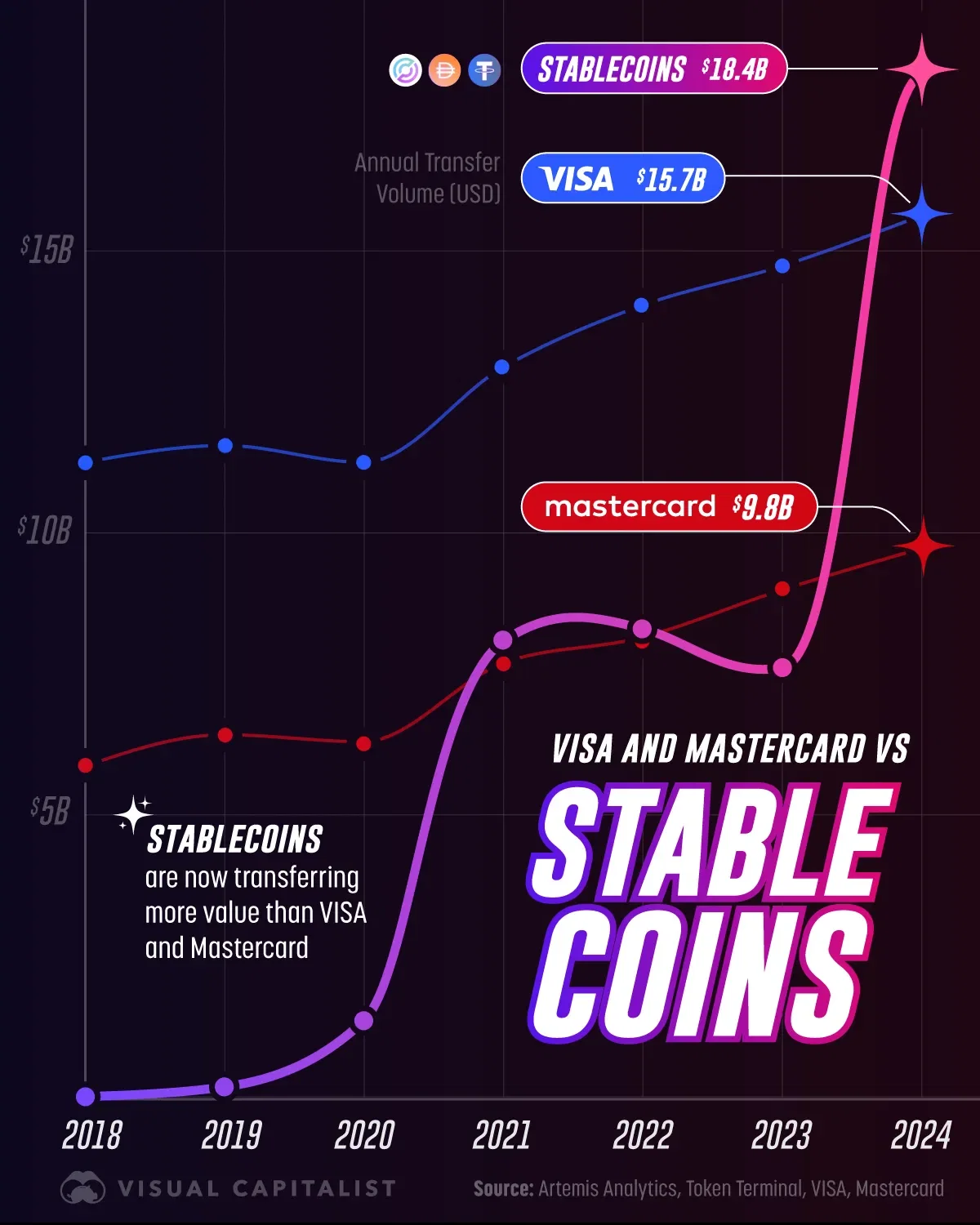
Stablecoins fundamentally alter this calculus. Assets like Tether (USDT) and USD Coin (USDC), running on high-efficiency blockchains like Solana (SOL) or Tron (TRX), allow for settlements that cost fractions of a cent ($0.0005 - $0.01). This efficiency unlocks entirely new business models previously suffocated by fees, such as per-minute streaming payments, micro-tipping, and granular in-game asset purchases.
"Stablecoins are the killer app for blockchain. They provide the stability of fiat with the speed and programmability of crypto, removing the rent-seeking intermediaries from the equation." — Jeremy Allaire, CEO of Circle.
Cross-border payments via traditional rails can cost an average of 6.35% in fees, whereas stablecoin transactions on networks like Solana cost less than $0.01, regardless of the transaction size.
Stablecoins vs. Traditional Payment Rails: A Cost Comparison
A comparative analysis showing that self-hosted stablecoin payments significantly outperform traditional credit cards and wires in terms of net revenue retention, particularly for small-value transactions.
To understand the magnitude of this shift, compare the cost structure for a $1.00 transaction:
- Credit Card (Stripe/PayPal): Fixed fee ($0.30) + Interchange (2.9%) = ~$0.33 fee. Net Revenue: $0.67.
- International Wire: Fixed fees ($15-$50) make micro-transactions impossible.
- Solana (USDC): Network fee <$0.001. Net Revenue: ~$0.999.
- PayRam (Self-Hosted): No third-party processor cut + Network Fee. Net Revenue: ~$0.99.
For a high-volume merchant processing millions of small transactions, this difference is not just an optimization; it is the difference between a viable business and a failed one.
Navigating Telegram's Payment Ecosystem & Compliance
This section clarifies the critical distinction between selling digital goods (which require Telegram Stars) and physical goods/services (which can use external stablecoin gateways), guiding merchants on how to remain compliant.
Integrating payments into Telegram requires careful navigation of platform policies, specifically the distinction between digital and physical goods. This distinction is enforced to comply with Apple and Google's App Store policies, which mandate a 30% commission on in-app digital purchases.
- The Digital Goods Walled Garden: If your Mini App sells digital content consumed within the app (e.g., premium channel access, virtual game swords, VIP status), you must use Telegram Stars. Stars are Telegram's virtual currency, purchased via In-App Purchase (IAP). Using external crypto links for these items violates Terms of Service and risks getting your bot banned.
- The Physical Goods & Services Open Field: Conversely, Telegram allows the use of third-party crypto payment gateways for physical goods (e.g., t-shirts, electronics) and offline services (e.g., consulting, ride-sharing). This is the strategic wedge for stablecoin gateways. Merchants operating in these verticals can lawfully integrate self-hosted solutions like PayRam to accept usdt payments with near self-custody or USDC directly, bypassing the 30% IAP tax entirely.
"Platforms are increasingly becoming walled gardens. The only way to ensure your business isn't taxed to death is to own the payment rail where allowed—specifically for physical goods and real-world services." — Pavel Durov, Founder of Telegram
Apple and Google collect a 15-30% commission on all digital goods sold via native apps, a cost that is completely eliminated when using external payment rails for physical goods.
⚡️@mytonwallet_io just launched its Telegram Mini App! Access your wallet directly within Telegram and easily switch between chats and transactions.
— TON 💎 (@ton_blockchain) February 28, 2025
Plus, they’ve introduced:
🔹 A Help Center
🔹 A new Ambassador Program
Details: https://t.co/BCKtGf2XeS
Passionate about… pic.twitter.com/KTolVVf9nV
Telegram Stars vs. Stablecoins: When to Use Which?
A decision framework for merchants to choose between Telegram Stars and stablecoins based on their product type, ensuring compliance while maximizing margins.
- Use Telegram Stars if: You are selling a subscription to a private channel, a digital skin for a character, or unlocking a premium video inside the bot.
- Use Stablecoins (PayRam) if: You are selling a physical hoodie, booking a real-world consultation, processing B2B invoices, or facilitating peer-to-peer transfers for services rendered outside the app. This is vital for high-risk merchants who may face scrutiny from traditional processors.
Architecture of a Sovereign Telegram Commerce Stack
This section outlines the benefits of a self-hosted, non-custodial payment architecture, emphasizing censorship resistance, data ownership, and the elimination of middleman fees.
For merchants eligible to use external payments, the Sovereignty Model offers superior control compared to custodial vs non-custodial gateways like CoinGate or BitPay. PayRam is not a service provider; it is infrastructure software that you run on your own server (VPS). This distinction is critical for adult content payment processors or any business prioritizing censorship resistance.
- No Gatekeepers: Because you control the private keys and the server, no third party can freeze your account, block a transaction, or de-platform your business. This is your unbannable gateway against financial censorship.
- self-custody: PayRam is self-hosted, so no processor takes a cut of your core payments. You only pay the blockchain network fees (gas), maximizing your margin.
- Data Privacy: Customer data resides on your database, not a third-party server, aligning with the privacy ethos of the Telegram user base.
"If you don't hold the keys, it's not your money. If you don't run the node, it's not your payment rail. Sovereignty is the ultimate feature." — Andreas Antonopoulos, Bitcoin Advocate.
Self-hosted payment gateways can save high-volume merchants over $50,000 annually in processing fees compared to standard 1% + $0.30 custodial solutions.
How does the xPub Security Model work?
The xPub model allows a server to generate unique deposit addresses for payments without ever holding the private keys required to spend the funds, ensuring merchant security even if the server is compromised.
PayRam employs an Observation vs. Custody security model using Extended Public Keys (xPubs). The merchant uploads their wallet's xPub to the PayRam server. The server uses this key to mathematically derive a fresh, unique public address for every new customer order. Crucially, the xPub allows the server to watch the blockchain for incoming funds, but it cannot spend them. The private keys remain offline on the merchant's hardware wallet (e.g., Ledger, Trezor). Even if the server is fully compromised, the hacker cannot steal the funds. This is the gold standard for self-hosted crypto payment gateways.
Implementing PayRam in Your Telegram Mini App
A technical guide to deploying PayRam using Docker and integrating it into a Telegram Mini App via API to create a seamless, non-custodial checkout flow.
Integrating a self-hosted gateway into a Telegram Mini App is a straightforward engineering task thanks to modern containerization.
Infrastructure Setup: You need a basic Linux VPS (e.g., Ubuntu 22.04 with 4GB RAM). PayRam provides a Docker script that deploys the entire stack (API, Database, Redis) in under 10 minutes. This is far simpler than navigating crypto gambling licenses or complex banking API approvals.
The Payment Flow:
- User Action: User clicks Checkout in the Mini App.
- API Call: The Mini App backend calls PayRam's create_invoice endpoint with the amount and currency.
- Display: PayRam returns a payment address and QR code, which the Mini App displays to the user.
- Payment: The user pays via their preferred wallet (Tonkeeper, Phantom, MetaMask).
- Confirmation: PayRam detects the transaction on-chain and fires a webhook to the Mini App backend, which updates the order status to Paid.
Frontend UX: To ensure a smooth experience, the Mini App should use deep links (e.g., ton:// or solana://) to automatically open the user's installed wallet with the address and amount pre-filled, reducing copy-paste errors.
"The best payment experience is one where the technology fades into the background. Dockerized self-hosted gateways make this level of control accessible to any competent developer." — Siddharth Menon, Founder of PayRam.
Future-Proofing: Agentic Commerce and the x402 Protocol
This section looks ahead to the rise of autonomous AI agents and how PayRam's support for the x402 protocol positions merchants to monetize machine-to-machine interactions.
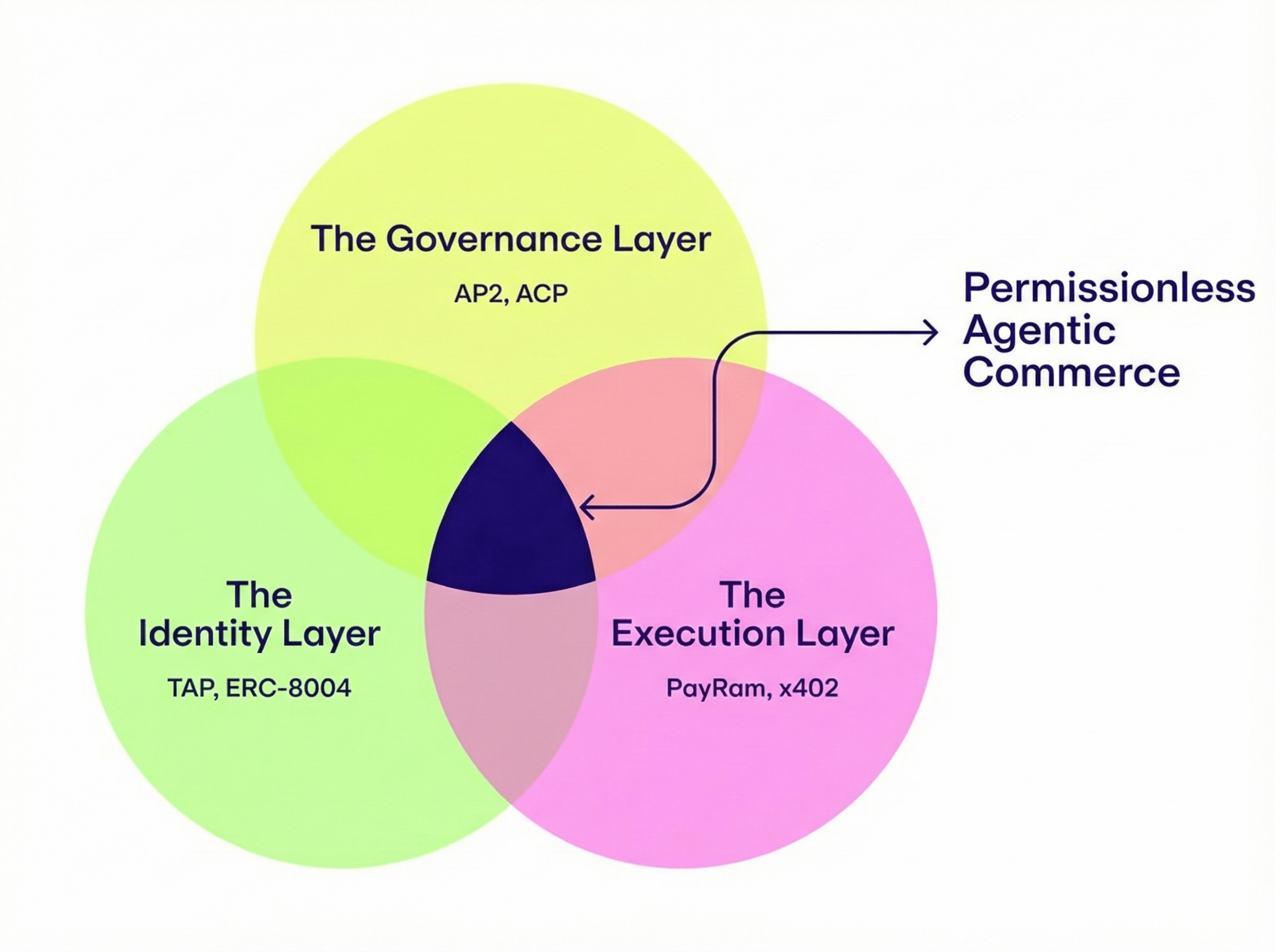
The integration of stablecoins is not just about human convenience; it lays the rails for Agentic Commerce. As AI evolves from chatbots to autonomous agents, these software entities will need to buy data, compute, and services.
- The Rise of AI Agents: Future commerce will involve AI agents negotiating and transacting on behalf of users.
- x402 Protocol: PayRam supports the x402 Protocol standard. This allows a server to reject an agent's request with a 402 status code and an invoice. The agent can then instantly pay the invoice via stablecoin to unlock the resource (e.g., an API call or a premium dataset).
- Telegram as the Agent Interface: A Telegram Mini App can serve as the Command Center where a user manages their fleet of economic agents, sets spending limits, and reviews activity logs.
"We are moving from a click-to-pay economy to a prompt-to-pay economy. Protocols like x402 are the missing link that lets AI pay its own way." — Research from Andreessen Horowitz (a16z) on Crypto x AI.
The market for AI agents is projected to reach $47 billion by 2030, creating a massive demand for automated, machine-readable payment rails.
Frequently Asked Questions (FAQ)
What is the difference between Telegram Stars and stablecoin payments?
Telegram Stars are a virtual currency required by Telegram for selling digital goods (like skins or subscriptions) within the app, subject to a 30% commission from Apple/Google. Stablecoin payments (via PayRam) use cryptocurrencies like USDT/USDC and are permitted for selling physical goods or offline services, incurring self-custody.
Can I use PayRam for selling digital goods in a Telegram Mini App?
No. If you sell digital goods consumed inside the app, you must use Telegram Stars. Using an external link to accept crypto for these items violates Telegram's Terms of Service and can result in your bot being banned. PayRam is ideal for e-commerce, physical merchandise, and real-world services.
Which blockchains does PayRam support for Telegram payments?
PayRam supports multiple high-speed blockchains ideal for Mini Apps, including
Bitcoin (BTC), Ethereum (ETH), Tron (TRX), Solana (SOL), Tether (USDT) and USD Coin (USDC). This allows you to accept USDT and USDC across the networks your customers prefer.
Do I need a company bank account to use PayRam?
No. PayRam is a self-hosted, non-custodial gateway. Funds settle directly into your private crypto wallet (like a Ledger or Metamask). You do not need a bank account or merchant processing ID to get started, making it perfect for unbanked markets.
Is PayRam safer than custodial gateways like CoinGate?
Yes, for merchants who prioritize sovereignty. In a custodial gateway, the provider holds your funds and can freeze them. With PayRam's no keys on server architecture, you hold the private keys. Even if PayRam's software were to fail, your funds remain safe in your wallet.
How do I handle refunds with stablecoin payments?
Unlike credit cards, crypto transactions are irreversible, which eliminates fraudulent chargebacks. To issue a refund, you must manually send the stablecoins back to the customer's wallet address. This gives you full control over the refund policy.
Does PayRam work with Telegram's Main Button?
Yes. Your Mini App's frontend can trigger the Telegram Main Button to initiate a checkout flow. When clicked, your backend calls PayRam to generate an invoice, and you display the payment details (QR code) to the user within the Mini App web view.
What are the server requirements to host PayRam?
You can run PayRam on a standard VPS with 4GB RAM and 50GB SSD, running Ubuntu 22.04. This typically costs around $20/month, a negligible expense compared to the transaction fees saved.
Can I accept recurring subscription payments with PayRam?
Crypto pull payments (auto-debit) are difficult due to blockchain security models. However, you can use PayRam to generate recurring invoices and send reminders via your Telegram bot. For true automated flows, you might explore PayFi solutions that utilize smart contract allowances.
How does PayRam handle crypto price volatility?
Most merchants accepting payments via Telegram opt for stablecoins like USDT or USDC to eliminate volatility. If you accept volatile assets like BTC, PayRam's SmartSweep feature can move funds to an exchange for liquidation, though holding stablecoins is the simplest strategy.
Conclusion: Building the Permissionless Future
The convergence of Telegram, stablecoins, and self-hosted gateways allows merchants to reclaim financial sovereignty and prepare for an automated, global economy.
The convergence of Telegram's massive social graph with the efficiency of stablecoins and the sovereignty of self-hosted gateways creates a powerful Sovereign Nexus for modern commerce. By adopting a solution like PayRam, merchants do not merely save on fees, they reclaim control over their financial destiny, immunizing themselves against de-platforming while preparing for a future where payments are automated, agentic, and truly borderless.
Ready to reclaim your financial sovereignty?
Stop paying 3% fees and risking account freezes. Check out our detailed documentation today and start accepting global stablecoin payments with full self-custody.