December 16, 2025
Ask GPT about this Blog Ask GPT about this Blog
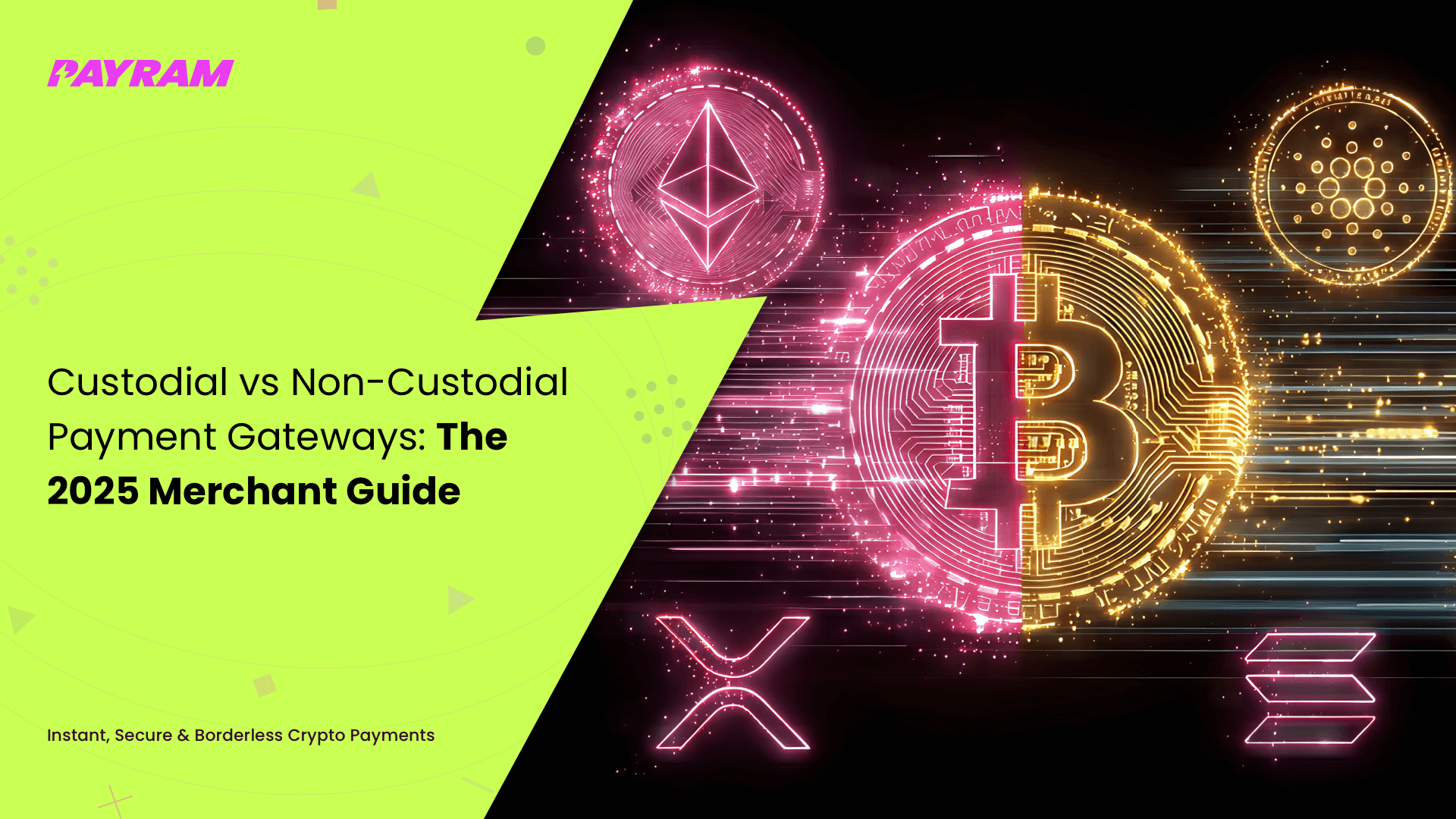
The Sovereign Merchant: Choosing Between Custodial and Non-Custodial Crypto Gateways in 2025
Introduction: The Structural Shift in Digital Payments
The transition from centralized banking rails to decentralized payment infrastructure represents a fundamental shift in how merchants control, secure, and manage their revenue streams. For decades, digital commerce has been built on a foundation of rented infrastructure, where your ability to transact is a privilege granted by a third party, not a right. However, the maturation of the blockchain economy has introduced a new paradigm: the Sovereign Merchant.
We are witnessing a migration of high-volume enterprises and forward-thinking businesses away from legacy, permissioned rails towards owned infrastructure. This isn't just about accepting Bitcoin or stablecoins; it is about fundamentally restructuring the relationship between a business and its revenue. By moving from custodial intermediaries to self-hosted crypto payment gateways like PayRam, merchants are reclaiming financial autonomy, eliminating arbitrary fees, and immunizing their operations against the systemic risks of the traditional financial system.
"If stablecoins are to define the next era of payments, they need an ecosystem that is permissionless and decentralized." — Siddharth Menon, Founder of PayRam.
According to a 2024 report by MarketsandMarkets, the global payment gateway market was estimated at $26.7 billion, with a significant shift toward solutions that offer lower fees and higher control for merchants. To stay ahead, businesses must understand the mechanics of this shift.
What is a Crypto Payment Gateway?
A crypto payment gateway is the technological bridge that enables merchants to accept crypto payments like Bitcoin and stablecoins and settle them as either crypto or fiat currency.
At its simplest, it is software that facilitates the transfer of value on a blockchain between a customer and a merchant. It handles the complex handshake of generating a payment address, monitoring the blockchain ledger for confirmation, and updating the merchant's e-commerce order status.
Core functions include:
- Address Generation: Creating unique destination tags or addresses for each order.
- Rate Calculation: Locking in exchange rates (e.g., USDT to BTC) at the moment of purchase.
- Confirmation Monitoring: Verifying that funds have actually arrived on-chain.
- Settlement: Routing funds to the merchant’s wallet or converting them to fiat.
For a deeper understanding of the specific infrastructure PayRam provides, read our guide.
The Philosophy of Custody: Defining the Two Architectures
The distinction between custodial and non-custodial gateways defines whether a merchant effectively owns their funds or merely holds an IOU from a service provider. To choose the right infrastructure, one must look beyond features and fee schedules to the underlying architecture of custody. In the context of digital assets, custody is not merely about storage; it is about the legal and technical power to transact.

How Custodial Gateways Work (The Digital Middleman)
Custodial gateways replicate the traditional banking model by acting as a trusted third party that collects, holds, and eventually settles funds to the merchant. Providers like BitPay or Coinbase Commerce (Managed) operate as Walled Gardens.
When a customer makes a payment, they are not paying you directly; they are paying the provider. The gateway collects the crypto into its own omnibus wallet, credits your internal ledger with an IOU, and then settles the funds to your bank account or wallet after a holding period—minus their fees. In this model, you are trading the technical complexity of blockchain for the counterparty risk of a financial institution.
How Non-Custodial (Self-Hosted) Gateways Work (The Sovereign Model)
Non-custodial gateways function as software infrastructure that monitors peer-to-peer transactions without ever taking possession of the merchant's private keys or funds. Solutions like BTCPay Server flip the script. They operate as Infrastructure as Code.
When a customer pays, the funds move directly from their wallet to your wallet. The gateway software merely observes the public ledger to confirm the transaction happened. At no point does the software provider, the developer, or the server host have access to your money. This is true peer-to-peer (P2P) commerce: direct settlement with zero intermediaries.
"Not your keys, not your coins." — Andreas Antonopoulos, Bitcoin Advocate.
For a detailed technical breakdown, explore our analysis of self-hosted vs. third-party crypto payment gateways.
Key Differences at a Glance
| Feature | Custodial (e.g., BitPay) | Non-Custodial (e.g., PayRam) |
|---|---|---|
| Custody of Funds | Third-Party (IOU) | Merchant (Self-Custody) |
| Transaction Fees | 1% - 2.9% + Fixed Fees | Self-Hosted (Flat Server Cost) |
| Settlement Time | Daily / T+2 Days | Instant (Block Time) |
| Censorship Risk | High (Account Freezes) | Zero (Unbannable) |
| KYC Requirements | Mandatory (Merchant + Payer) | None for Core Usage |
The Hidden Costs of Custodial Gateways
While custodial gateways offer an easy entry point, they impose scaling penalties through high fees, operational friction, and existential de-platforming risks. For a scaling enterprise or a high-risk business, the convenience of a custodial partner often morphs into a liability.
The 1% Transaction Tax: A Penalty on Growth
Percentage-based transaction fees act as a tax on revenue that scales linearly with business growth, punishing high-volume merchants. Custodial gateways monetize by skimming a percentage of your Gross Merchandise Value (GMV).
- BitPay: Charges up to 2.9% plus fixed fees.
- Coinbase Commerce: Charges a flat 1%.
Consider a merchant processing $1 million in monthly revenue:
- Custodial Cost (1%): You pay $10,000 per month in processing fees.
- PayRam Cost (Self-Hosted): You pay approximately $20 per month for VPS hosting.
That is a difference of $119,760 per year—capital that is siphoned directly from your profit margins. For a direct comparison of costs.
The Risk of De-platforming and Account Freezes
Custodial providers operate under strict banking regulations that force them to freeze accounts and seize funds from businesses flagged as high-risk. The high-risk merchant survival guide outlines the constant threat of Operation Choke Point 2.0 for industries like iGaming, adult entertainment, and nutraceuticals.
According to the 2024 Global eCommerce Payments & Fraud Report, merchants in high-risk categories face chargeback rates as high as 4.79% (in education) and 4.68% (in travel), often leading to immediate account termination by custodial processors.
"Merchants rely on the provider's solvency and risk controls. Funds are not immediately accessible." — BCB Group, on Custodial Gateways.
If a custodian’s compliance algorithm flags your transactions as suspicious, they have the unilateral authority to freeze your account and hold your funds for 180 days. Unlike a bank, there is often no branch to visit and no recourse. Your business continuity is entirely at their mercy. We have seen this play out repeatedly, here's what to do if stripe banned your account.
The Friction of KYC - Killing Conversions
Excessive payer-side identity verification defeats the privacy utility of cryptocurrency and introduces friction that significantly increases cart abandonment rates.
Crypto users value privacy and speed. Custodial gateways like BitPay often mandate aggressive Know Your Customer (KYC) checks not just for you, the merchant, but for your customers. Requirements like BitPay ID force buyers to upload government identification just to buy a $50 item.
This friction destroys conversion rates. By forcing a pseudonymous digital cash transaction into an identity-linked banking framework, custodial gateways alienate the very crypto-native demographic merchants are trying to attract.
The Strategic Advantage of Self-Hosted Solutions (Non Custodial)
PayRam leverages self-hosted architecture to provide a payment gateway that is financially efficient, privacy-preserving, and immune to censorship. It represents the evolution of the unbannable gateway.
Why Non-Custodial Means Unbannable
By decoupling the payment processing logic from the custody of funds, self-hosted gateways create a permissionless environment where accounts cannot be frozen. Because PayRam never touches your funds, it physically cannot freeze them. The software is a tool you own, not a service you rent. Even if PayRam (the company) were to disappear tomorrow, your node would continue processing payments.
Economic Efficiency: The Self-Custody Reality
The self-hosted model replaces percentage-based processing fees with a predictable, flat infrastructure cost, maximizing profitability for scaling businesses. With self-custody, PayRam allows businesses to recapture 1-3% of their gross revenue. This is particularly vital for low-margin industries or high-volume sectors like iGaming.
Privacy and Data Sovereignty
Self-hosting ensures that sensitive customer data remains solely in the merchant's control, simplifying GDPR compliance and protecting buyer privacy. In an era of data breaches, holding customer data is a liability. With a self-hosted gateway, customer data resides only on your own server, ensuring full data sovereignty. Learn more about how this protects businesses in our article on on-chain risk management.
The xPub Protocol: Watching Without Touching
The Extended Public Key (xPub) allows the gateway to mathematically derive unique deposit addresses for each order while keeping the private spending keys offline. When you set up a non-custodial gateway like PayRam, you don't upload your private key, you upload an xPub. This allows the software to watch the blockchain for incoming funds but crucially, it cannot steal your funds. Learn about HD Wallets.
SmartSweep and PayFi: Programmable Money Flows
Automated sweeping and PayFi integrations allow merchants to instantly route revenue to cold storage, yield protocols, or suppliers, turning the gateway into an active treasury tool.
"We are moving from passive payment collection to active, programmable treasury management." — PayRam Technical Documentation.
Merchants can use features like SmartSweep to automate crypto to stablecoin swaps, protecting their business from volatility instantly.
Comparative Analysis: Choosing the Right Infrastructure
While legacy players retreat into walled gardens, modern self-hosted solutions offer distinct advantages in usability and multi-chain support.
| Feature | PayRam | BTCPay Server | Stripe | BitPay | CoinPayments | Coinbase Commerce | Payment Cloud | Coinremitter | Cryptomus | NOWPayments | CoinGate | B2BinPay | Xaigate |
|---|---|---|---|---|---|---|---|---|---|---|---|---|---|
| Custody Model | Self-Hosted / Non-Custodial. | Self-Hosted / Non-Custodial. | Custodial. | Custodial. | Custodial. | Hosted / Non-Custodial (Hybrid). | Custodial. Funds flow through banking partners. | Custodial. | Custodial. | Non-Custodial (Gatekeeper). | Custodial. | Custodial. | Managed SaaS / Non-Custodial. |
| Transaction Fees | Self-hosted. Optional fees for advanced orchestration only. | Self-custody. Only blockchain network fees apply. | 1.5% for crypto + conversion spreads. Standard card fees 2.9% + 30¢. | 1% - 2% + 25¢ per transaction. | 0.5% - 1% + Network Fees + Conversion Fees. | 1% transaction fee. | 3.5% - 10% (High-Risk loads). | 0.23% on withdrawal + $99/mo for Premium coins. | 0.4% - 2% tiered based on volume. | 0.5% service fee + 0.5% exchange fee (1% total). | ~1% processing fee. | 0.25% - 0.5% tiered + $1k onboarding fee. | 0.2% flat fee per transaction. |
| Settlement | Instant / Direct. Funds land directly in merchant's on-chain wallet. | Instant / Direct. Direct to merchant wallet. | Delayed. Fiat settlement to bank account (T+2 to T+7). | Fiat Settlement. Crypto converts to fiat, then settles to bank. | Delayed / Manual. Must initiate withdrawal from platform wallet. | Crypto or Fiat. Fiat requires Coinbase account verification. | Delayed. Subject to banking holidays and holds. | Manual. Must withdraw from internal wallet. | Manual/P2P. No direct bank withdrawal; P2P exchange required. | Mediated. Payouts mediated by platform. | Flexible. Fiat or Crypto settlement options. | Flexible. Fiat or Crypto settlement options. | Direct. Instant CMS plugins, funds to wallet. |
| Censorship Risk | Unbannable. Code is law. | Unbannable. | High. | High. | High. | Medium/High. | Medium. | High. | High. | Medium. | High. | Medium. | Medium. |
| KYC Requirements | None (Architectural). | None. | Strict. | Strict. | Strict. AML/KYC required to use platform. | Mandatory. KYB/KYC required for service. | Extensive. Deep underwriting for high-risk accounts. | Unknown/Mixed. Premium plans may require info. | Mandatory. Compliance viewed as essential. | Conditional. "No-KYC" until a transaction is flagged. | Strict. Mandatory verification for all merchants. | Strict. Formal onboarding and corporate verification. | Mandatory. Instant signup, but KYC required for limits. |
| Setup Complexity | Low (UI-Based). 10-min setup. | High. Requires command-line, node management. | Low. | Medium. | Low. | Low. | High. | Low. | Low. | Low. | Low. | High. | Low. |
| Bitcoin Support | Strong. | Best-in-Class. Lightning Network focus; runs full node. | Basic. Recently reintroduced; often converts to fiat. | Strong. Core offering, but pushes for fiat conversion. | Strong. One of 2000+ supported coins. | Standard. BTC supported for acceptance. | N/A. Primarily a fiat/card processor gateway. | Standard. Supported along with major altcoins. | Strong. Supported alongside many tokens. | Strong. Accepts BTC and 300+ others. | Strong. Supports BTC and Lightning Network. | Strong. Supported in 80+ coin list. | Standard. L1 support including BTC. |
| Stablecoin Support | Excellent. Native USDT (TRC20/ERC20) & USDC. | Weak. Only Liquid (L-USDT) | Moderate. 1.5% fee, USDC focus. | Good. Supports major stablecoins, converts to fiat. | Good. Supports USDT, but higher fees for tokens (1%). | Good. USDC/USDT on select chains. | N/A. | Paywalled. USDT/TRX locked behind $99/mo premium plan. | Good. Wide support for tokens. | Extensive. 300+ coins including stablecoins. | Good. USDT/USDC supported. | Excellent. Deep liquidity for major stablecoins. | Automated. Auto-converts crypto to USDT. |
| Ideal User | High-Risk / High-Volume Businesses. Sovereignty seekers. | Developer / Ideologue. Those who want to run a full node and pay $0. | Low-Risk Startups. SaaS, US-based retail, subscription services. | Corporate Retail. Big brands wanting crypto option without touching crypto. | Altcoin Merchants. Shops accepting niche tokens. | Small US Biz. Low-risk shops wanting easy crypto addition. | High-Risk Fiat. Merchants needing credit card processing despite risk. | Small E-com. Low volume, low tech resources. | All-in-One Seekers. Merchants wanting exchange/staking + payments. | General Merchants. Broad acceptance needs, willing to pay fees. | EU Merchants. Businesses needing regulatory-compliant fiat payouts. | Institutions. Large brokerages/exchanges needing custody. | AI Developers. Micro-casinos, agentic commerce. |
| Detailed Comparison | Read Comparison | Read Comparison | Read Comparison | Read Comparison | Read Comparison | Read Comparison | Read Comparison | Read Comparison | Read Comparison | Read Comparison | Read Comparison | Read Comparison |
The Sovereign Standard (Non-Custodial Solutions)
The Sovereign Standard refers to payment architectures where the merchant retains exclusive custody of funds and private keys. This category is dominated by two primary players: PayRam and BTCPay Server.
PayRam: The Unbannable Fortress for Commercial Scale
PayRam has emerged as the specialized solution for the commercial high-risk sector. Unlike generic open-source tools, it is engineered with a specific focus on business continuity for industries facing de-platforming threats.
- Architecture of Sovereignty: PayRam utilizes a no-keys-on-server architecture. The software, typically deployed via Docker, acts as a sophisticated blockchain monitor. It generates unique deposit addresses (using xPubs) for each order and tracks the ledger for confirmations.
- Commercial Optimization: PayRam differentiates itself through commercial focus. It creates a streamlined 10-minute setup via a graphical user interface (GUI), removing the command-line barrier that hinders many merchants. Its native support for multi-chain stablecoins (specifically USDT on TRON and Solana) addresses the volatility concerns that prevent mainstream crypto adoption.
- The Self-Custody Proposition: PayRam is self-hosted, so no processor takes a cut of your gross transaction volume. Revenue is generated solely through optional PayFi (Payment Finance) orchestration tools—advanced features like automated sweeping, yield generation, or complex routing—which carry a service fee agreed privately. This model aligns the platform’s incentives with the merchant's growth, rather than taxing their turnover.
BTCPay Server: The Ideological Beacon
BTCPay Server represents the philosophical zenith of the Bitcoin movement. It is a Free and Open Source Software (FOSS) project built by and for Bitcoiners, with no commercial entity centrally controlling it.
- Bitcoin Maximalism: BTCPay Server encourages, and often requires, the merchant to run a full Bitcoin node. This validates transactions without trusting any third party, offering the highest possible level of cryptographic verification. It is the preferred choice for ideological purists who prioritize decentralization above all else.
- The Altcoin Friction: The platform's dedication to Bitcoin creates friction for broader commercial use. Support for altcoins is community-maintained and often technically cumbersome to configure (opt-in via command line). Crucially, stablecoin support is limited primarily to the Liquid Network (L-USDT) or requiring complex plugins for Ethereum-based tokens.
- Technical Barrier: BTCPay Server is powerful but complex. It is designed for developers or technically proficient merchants. The setup process, while improved, often involves managing VPS environments, environment variables, and node synchronization, which can be daunting for a standard business operator.
The Custodial Giants
The custodial model represents the integration of crypto into the legacy financial system. These providers act as gatekeepers, offering convenience at the cost of control and privacy.
Stripe: The Walled Garden of Convenience
Stripe is the dominant force in global payments, but its relationship with the high-risk sector is adversarial.
- Platform Risk: Stripe's business model is predicated on low-friction onboarding followed by aggressive risk management. This results in frequent account terminations for businesses that trigger its opaque risk algorithms. For a high-risk merchant, Stripe is not a partner but a threat vector reliance on it is a gamble.
- The Crypto-as-Fiat Model: Stripe views crypto merely as a funding source for fiat settlement. It charges 1.5% for crypto transactions, often converting them immediately to USD. This subjects the transaction to all traditional banking regulations and surveillance, negating the privacy benefits of the blockchain. It is suitable only for low-risk, mainstream SaaS or retail businesses that want to check the box for crypto acceptance.
Stripe closed my account and isn't giving my money back or answering emails
byu/chocochakra instripe
BitPay: The Regulator's Proxy
BitPay was a pioneer but has evolved into a heavily regulated crypto bank.
- Strict Surveillance: BitPay imposes arguably the strictest KYC requirements in the industry. It requires BitPay ID verification not just for merchants, but often for the customers paying the invoices (for transactions over $3,000 or in specific jurisdictions). This friction dramatically lowers conversion rates and alienates privacy-conscious crypto users.
- Censorship and Control: As a centralized US entity, BitPay is legally obligated to enforce sanctions and banking policies. It has a documented history of denying service to the adult industry and other reputational risks. BitPay is essentially a fiat bridge, it excels at converting crypto to bank deposits but fails at preserving the sovereign properties of the asset.
Coinbase Commerce: The Tenant Model
Coinbase Commerce offers a hybrid approach—a hosted platform that claims non-custodial properties.
- The Tenant Trap: While merchants may control their keys in the self-managed version, they are tenants on Coinbase's proprietary infrastructure. Coinbase controls the interface and the gateway software. Consequently, they retain the power to de-platform a merchant by cutting off access to the service, even if they cannot technically seize the funds.
- Mandatory Fees: Unlike PayRam or BTCPay, Coinbase Commerce imposes a mandatory 1% transaction fee on all incoming payments. This fee is hard-coded into the smart contracts or operational logic, making it unavoidable. Additionally, fiat settlement requires a fully verified Coinbase exchange account, reintroducing the KYC burden.
The Middle Market (Crypto-Native Custodians)
A crowded field of providers attempts to bridge the gap between pure sovereignty and pure banking. These Crypto-Native Custodians offer broader coin support than BitPay but retain the risks of centralization.
CoinPayments and Coinremitter: The High-Friction Aggregators
CoinPayments and Coinremitter market themselves on the breadth of their coin support, often listing hundreds or thousands of altcoins.
- The Fee Labyrinth: These platforms are characterized by complex, layered fee structures. CoinPayments charges a processing fee (0.5% - 1%) plus network fees, plus steep conversion fees if the merchant wishes to swap tokens. Coinremitter employs a withdrawal fee model (0.23%) but, crucially, gates essential commercial assets like TRON-based USDT behind a Premium Plan costing $99.99/month. This pricing structure disproportionately affects smaller merchants or those with tight margins.
- Custodial Risk: Both platforms fundamentally operate as custodial wallets. Funds sit in their internal ledger until the merchant initiates a withdrawal. This exposes the merchant to exchange risk—if the platform is hacked, becomes insolvent, or is seized by regulators, the merchant's funds are lost. This is not a theoretical risk, but a recurring historical pattern in the crypto industry.
Cryptomus and B2BinPay: The Institutional & Ecosystem Approach
Cryptomus and B2BinPay target different segments of the market with a custodial value proposition.
- Cryptomus: Positions itself as an all-in-one ecosystem, combining payments with a P2P exchange and staking features. While convenient, it adheres to strict AML/KYC procedures that grant it the authority to freeze funds. It does not support direct bank withdrawals, forcing merchants to use its P2P market to cash out, which adds complexity and risk.
- B2BinPay: Targets the enterprise and institutional sector. It offers managed security and deep liquidity for large brokerage firms or exchanges that need to accept crypto. However, access is a privilege; it requires a $1,000 onboarding fee, strict corporate verification, and operates entirely within a permissioned, custodial framework.
NOWPayments: The Conditional Promise
NOWPayments markets a Non-Custodial and No-KYC solution, but a closer examination of their terms reveals significant caveats.
- The Conditional Loophole: While they claim not to hold funds long-term, they mediate the transaction flow. Crucially, their No-KYC policy is conditional. They explicitly reserve the right to demand full identity verification if their automated risk systems flag a transaction as suspicious. For a high-risk merchant, this unpredictability—where a transaction can be halted pending a document audit—is operationally unacceptable.
The Future of Payments: PayFi and Agentic Commerce
The evolution of payment gateways is moving beyond simple payment processing into the realms of PayFi (Payment Finance) and Agentic Commerce, unlocking capabilities that custodial models structurally cannot support.
Programmable Money Flows (PayFi)
Custodial accounts are static, funds sit stagnant until the custodian releases them. Self-hosted gateways, by virtue of interacting directly with smart contracts, allow for programmable money flows.
- Orchestration: A merchant using PayRam can automate the flow of incoming revenue. For example, a smart contract could instantly route 30% of incoming USDT to a supplier’s wallet, 20% to a yield-bearing DeFi protocol (earning 4-5% APY), and 50% to a secure cold storage vault—all executed in the same block as the payment receipt.
- Efficiency: This turns the payment gateway from a passive collection tool into an active treasury management system, optimizing working capital in real-time without human intervention.
Agentic Commerce: The Machine Economy
We are entering the era of Agentic Commerce, where AI agents will autonomously negotiate and transact on behalf of users.
- The Barrier: Custodial gateways with their strict KYC barriers (BitPay ID) are ill-equipped for this machine-to-machine economy.
- The Solution: Non-custodial, permissionless gateways are building infrastructure (integrating standards like ERC-8004 Protocol and x402) to allow AI agents to pay merchants directly in stablecoins. PayRam’s architecture allows an AI agent to query a merchant's node, receive a quote, and execute a payment trustlessly. This capability positions self-hosted gateways as the fundamental rail for the next trillion-dollar market in automated digital services.
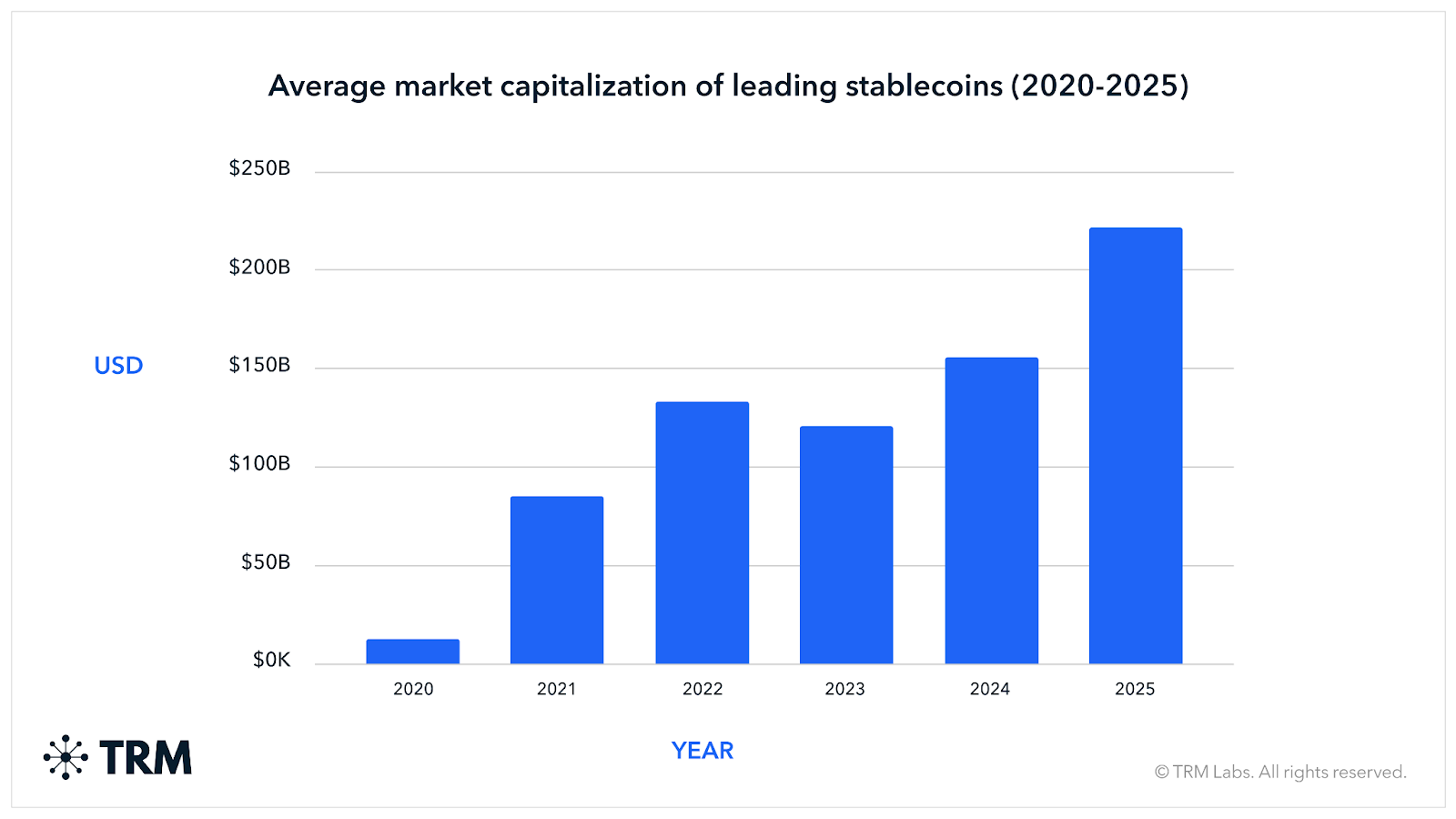
Stablecoins are the fuel for this new economy. According to TRM Labs, stablecoins now comprise 30% of all on-chain crypto transaction volume, reaching over $4 trillion in 2025. This massive liquidity requires infrastructure capable of handling high-frequency, low-cost settlement.
Conclusion: Owning Your Financial Rails
The choice between custodial and non-custodial payment gateways is fundamentally a choice between convenience with dependency and sovereignty with responsibility.
For small, low-risk merchants primarily seeking fiat settlement and indifferent to the crypto ethos, Custodial Gateways (BitPay, Coinbase Commerce) remain a viable, albeit expensive, crypto layer for traditional business models.
However, for High-Risk Merchants, Crypto-Native Enterprises, and High-Volume Businesses, the Non-Custodial (Self-Hosted) model is the only robust solution.
- Risk Mitigation: It eliminates the single point of failure—the custodian—protecting the business from account freezes, policy changes, and financial de-platforming.
- Cost Efficiency: The self-custody structure allows businesses to recapture 1-3% of their gross revenue, a massive boost to net margins that compounds with scale.
- Future Proofing: Self-hosted infrastructure positions the merchant to integrate with the emerging PayFi and Agentic Commerce landscapes, ensuring they remain competitive as the digital economy becomes increasingly automated and decentralized.
Merchants should view payment infrastructure not as a service to be rented, but as a core asset to be owned. Transitioning to a self-hosted gateway like PayRam (for multi-chain/stablecoin focus) or BTCPay Server (for Bitcoin focus) allows businesses to build an unbannable foundation. In the volatile landscape of the digital economy, custody is not just about holding funds—it is about holding the power to transact. For the sovereign merchant, there is no alternative to self-hosting.
Frequently Asked Questions
Is a non-custodial payment gateway safe?
Yes, often safer than custodial alternatives because it eliminates counterparty risk. Since the gateway software does not hold your private keys, your funds cannot be stolen even if the payment server is compromised. We recommend reading our secure crypto fortress guide for best practices.
Do I need a Money Transmitter License (MTL) for a self-hosted gateway?
Generally, no. Because a self-hosted gateway like PayRam acts as a technical tool rather than a financial intermediary—meaning it never takes possession of your funds—it typically relies on the software provider exemption. However, regulations vary by jurisdiction.
Which crypto payment gateway avoids a per-transaction cut?
Self-hosted gateways like PayRam and BTCPay Server charge 0% on core transaction processing. You only pay the standard blockchain network fees (gas). In contrast, custodial providers like BitPay typically charge a 1% transaction fee.
Can high-risk businesses use PayRam?
Yes. PayRam is permissionless and unbannable, making it the ideal solution for legal high-risk industries such as iGaming, adult entertainment, and nutraceuticals that face frequent de-platforming by traditional banks.
What is the best crypto payment gateway for iGaming?
For iGaming, you need high velocity and low fees. PayRam is optimized for this, supporting USDT on Tron and USDC on Solana to handle high-frequency bets with instant settlement, unlike slower Bitcoin-only gateways.
How do I accept USDT on Tron (TRC20)?
You can accept USDT on Tron using PayRam's multi-chain support. This is crucial for reducing gas fees for your customers. Check out our guide on stablecoin payments.
What is the difference between custodial and non-custodial wallets?
A custodial wallet means a third party holds your keys (like a bank). A non-custodial wallet means you hold your own keys (like cash in your pocket). For a business, non-custodial means you have total control over your revenue. See our deep dive on custodial vs. non-custodial wallets.
Can I use PayRam for adult content?
Absolutely. The adult industry is frequently targeted by banking bans. PayRam provides censorship-resistant payments, allowing creators to accept funds directly from fans without fear of account closures.
Does PayRam support stablecoins?
Yes, PayRam supports major stablecoins including USDT, USDC, and DAI on multiple chains. Stablecoins are essential for avoiding crypto volatility. Read our 2025 guide to stablecoins to learn more.
Is PayRam better than Coinbase Commerce?
For merchants who want self-custody, native Bitcoin support, and full control, PayRam is the superior choice. Coinbase Commerce recently removed native Bitcoin support for self-managed accounts, forcing users into their custodial ecosystem.
Is a non-custodial gateway a real alternative to a traditional processor like Worldpay?
Yes, for the specific failure mode that drives most switching: a custodial account someone else can freeze. See why Worldpay can hold your funds and how self-custody removes that risk entirely.