January 02, 2026
Ask GPT about this Blog Ask GPT about this Blog
Brazil’s Betting Boom: Navigating Law 14790 with Crypto Rails
This guide examines how iGaming operators can maintain financial agility and affiliate satisfaction in Brazil's strictly regulated market by leveraging a hybrid treasury strategy.
The Sovereign Operator in a Regulated Brazil
Brazil's regulated iGaming market offers immense revenue potential but demands a Sovereign Operator mindset to navigate complex banking restrictions and maintain operational agility.
For international operators, the Brazilian market represents a dual reality: massive opportunity constrained by rigid bureaucracy.
With the market projected to generate US$4.1 billion (R$22 billion) in revenue by 2025, Brazil is the new frontier for global iGaming. However, the transition from a grey market to a fully regulated regime under Law 14790/2023 has fundamentally altered the operational physics of the sector. The Wild West era of unrestricted capital flows is over, replaced by a surveillance-heavy framework designed to keep every Real within the sight of the Ministry of Finance.
This shift has birthed a new necessity for the C-Suite executive: the mindset of the Sovereign Operator. You are a CTO, CFO, or Head of Payments who understands that while you must comply with local banking rules for player interactions, you cannot allow those same slow, expensive rails to choke your global supply chain. Your goal is not just compliance but operational continuity. You need a strategy that satisfies the Secretariat of Prizes and Bets (SPA) on the front end while maintaining the speed and liquidity of cryptocurrency payment gateways on the back end.
To thrive, operators must look beyond traditional banking and embrace digital asset management strategies that offer resilience against regulatory bottlenecks.
"The goal is to close the loop on illegal activity. This measure, alongside site blocking and ad removals, helps choke off the financial pipeline to unlicensed sites." — Regis Dudena, Secretary of Prizes and Bets (SPA)
Deconstructing the Financial Blockade: Law 14790 & Ordinance 615
New regulations enforce a closed loop financial system using specific account types, creating high fiscal burdens and restricting capital movement to authorized Brazilian institutions.
The new regulatory framework is designed to create a closed loop financial system that traps liquidity within authorized Brazilian institutions.
The primary mechanism of control is Normative Ordinance SPA/MF No. 615/2024. This regulation mandates that all financial flow between the operator and the bettor must occur via electronic transfers (Pix, TED, Debit) involving accounts held at Central Bank-authorized institutions. Crucially, Article 3 of Ordinance 615 explicitly prohibits the use of cryptocurrencies, cash, and payment slips (boletos) for B2C interactions. This pushes operators to seek alternative payment processing methods for their non-player financial needs.
This creates a financial blockade where:
- Inbound Liquidity is Localized: You must accept BRL via Pix.
- Margins are Squeezed: Operators face a 12% tax on Gross Gaming Revenue (GGR), a license fee of R$30 million, and monthly inspection fees that can reach R$1.9 million.
- Exit is Friction: Moving profits out of this regulated loop via traditional banking channels is slow, scrutinized, and expensive.
Despite the new regulations, a study by the IBJR estimates that 51% of bets in Brazil still occur on unregulated platforms, highlighting the persistent demand for alternative payment channels.
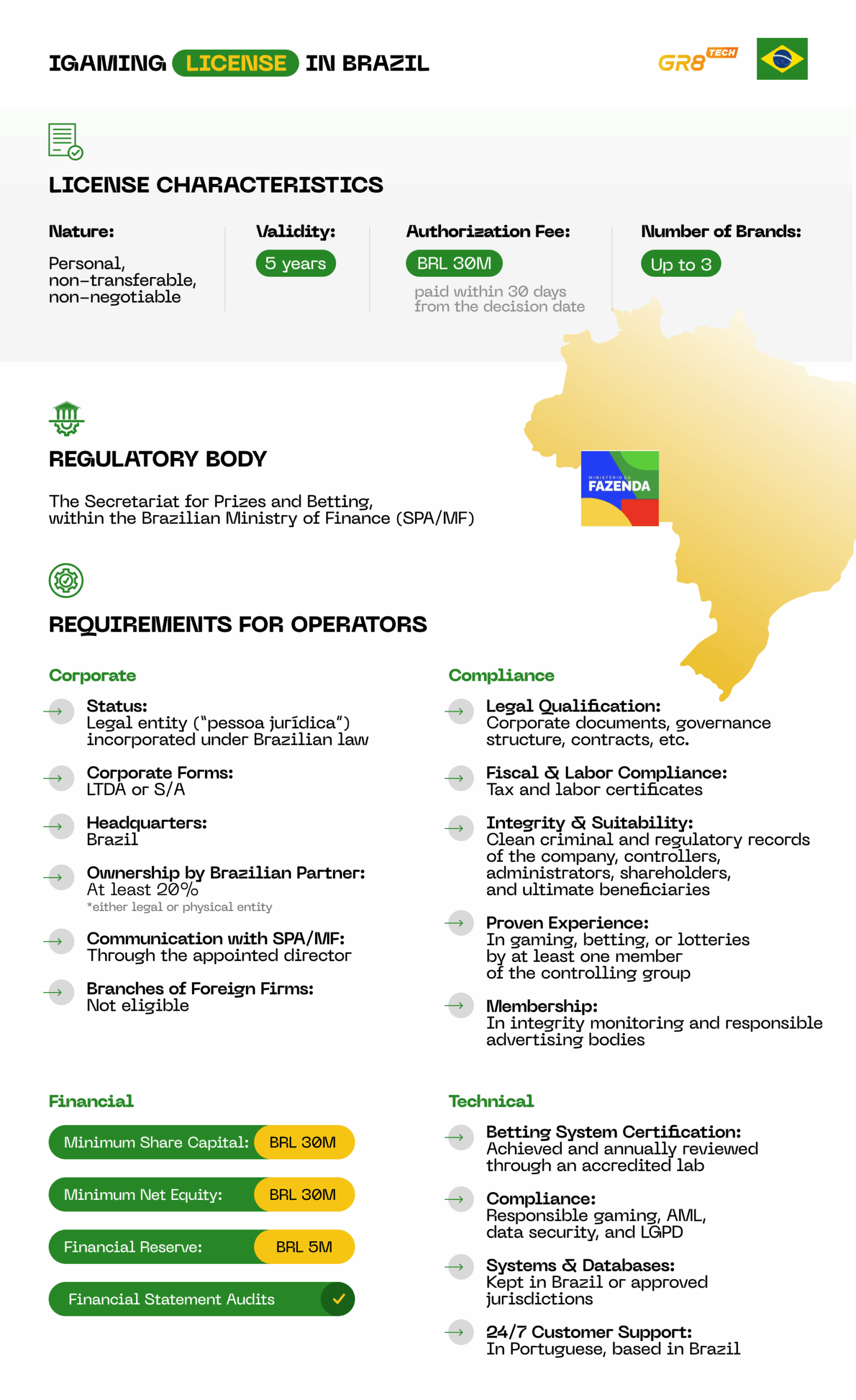
What is the difference between a Transactional Account and a Proprietary Account?
Ordinance 615 enforces a strict separation between Transactional Accounts for safeguarding player funds and Proprietary Accounts for managing the operator's corporate expenses.
Compliance hinges on the strict segregation of funds between the Transactional Account used solely for player deposits and prizes, and the Proprietary Account used for the operator's corporate expenses.
- Transactional Account (Conta Transacional): This is a restricted account. It holds player funds, open bets, and prize pools. These funds are legally segregated from the company's assets and cannot be used for operational costs, marketing, or dividends. They are essentially client money protected from the operator's insolvency.
- Proprietary Account (Conta Proprietária): This is the operator’s corporate account. Once revenue is recognized (GGR) and separated from player liabilities, it is moved here. This account is the bridge to the outside world—the point where B2B crypto strategies become legally viable for paying administrative expenses, including international affiliate commissions and vendor fees.
The Liquidity Trap: Why Traditional Banking Fails for B2B
Relying solely on Brazilian banking for global B2B payments creates competitive disadvantages due to slow settlement times, high FX fees, and the risk of account freezes.
Relying exclusively on the Brazilian banking system for international B2B payments is a strategic bottleneck that erodes competitiveness.
While the closed loop protects players, it punishes operators who need to pay thousands of affiliates, software vendors, and data providers across the globe. Using stablecoin payments can alleviate this friction.
- Cross-Border Friction: Moving funds from a Brazilian Proprietary Account to an affiliate in Malta or a dev team in Ukraine via SWIFT is archaic. It involves high FX spreads (often 2-4%), fixed fees, and settlement times of T+2 days or longer.
- Affiliate Churn: The Brazilian market is driven by influencers and affiliates who demand speed. If your competitor (perhaps a grey market operator) pays in USDT instantly, and you pay via bank transfer in 30 days, you lose the traffic. Operators utilizing USDT gain a significant edge in retention.
- Banking Risk: Brazilian banks are historically risk-averse. Relying on a single banking partner for all outflows creates a single point of failure where corporate accounts can be frozen or "de-risked" due to internal compliance shifts, paralyzing your operations. This is a common issue for high-risk merchants globally.
Traditional cross-border SWIFT transfers can incur fixed fees of $30–$100 per transaction plus additional conversion costs of 2–5%, making them economically unviable for high-volume, low-value affiliate payouts.
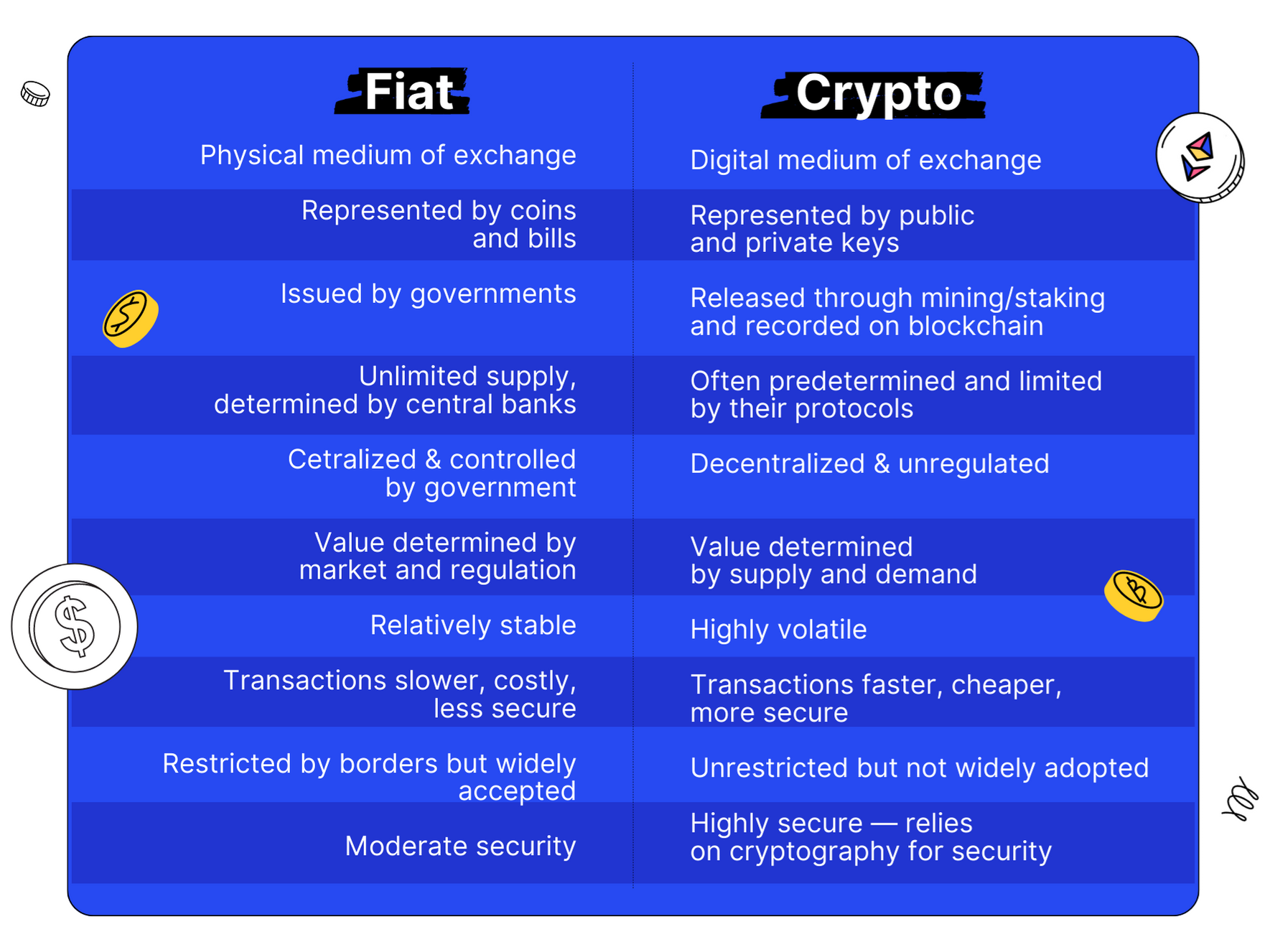
The Strategic Solution: A Hybrid Treasury Model
A hybrid model using regulated fiat rails for inbound player deposits and self-hosted crypto rails for outbound B2B payments ensures both compliance and efficiency.
The optimal strategy for 2025/2026 is a Hybrid Model that utilizes authorized fiat rails for inbound compliance and self-hosted crypto payment gateways for outbound efficiency.
Operators must bifurcate their treasury:
- Inbound (Regulated Surface): Use a local Payment Institution (PI) to accept Pix deposits into the Transactional Account. This ensures 100% compliance with Ordinance 615 and Law 14790.
- Internal Sweep: Recognize revenue and move proprietary funds to the Corporate Proprietary Account.
- Outbound (Sovereign Rail): Convert BRL to stablecoins (USDT/USDC) via an authorized FX broker and move them to a PayRam self-hosted gateway. From there, execute instant, low cost transfers to global affiliates and vendors.
This approach leverages the nuance that while B2C crypto betting is banned, Brazilian law (Law 14478) recognizes crypto as a digital asset. Using crypto for administrative or supply chain payments is a valid corporate treasury function, provided appropriate taxes (like IOF on FX) are paid. Learn more about navigating crypto compliance to ensure your B2B flows remain robust.
"Most companies are still just taking the customer's word for it or relying on simple signals like the amount, frequency, and type of payment." — Karen Cardieri, Legal Lead at VBET Brazil, regarding the immaturity of current compliance checks.
PayRam: The Self-Hosted Engine for Sovereign Payouts
PayRam offers a non-custodial, self-hosted gateway that enables mass payouts and financial autonomy, eliminating 3rd party risks associated with custodial processors.
PayRam provides the non-custodial infrastructure necessary to execute mass B2B payouts without the risks of third-party processors.
Unlike custodial gateways (like BitPay or CoinGate) that hold your funds and can freeze your account, PayRam operates on a self-hosted model. The software runs on your servers, and the private keys remain in your control, offering true financial sovereignty.
This distinction is critical when comparing BitPay for high-stakes operations.
- Mass Payouts: PayRam’s infrastructure replaces manual bank uploads, supporting bulk payouts to thousands of affiliates instantly. This automation is essential for scaling iGaming operations.
- self-custody: PayRam is self-hosted and non-custodial, so funds settle straight to a wallet you control — unlike custodial competitors that skim 1% and hold your float. You only pay the network gas fees, maximizing your margins.
- TRON & Stablecoin Efficiency: By leveraging TRON (TRX) and USDT (TRC-20), PayRam reduces network fees to cents, making it economically viable to pay even micro-affiliates frequently. Read our guide on how to accept USDT payments with self-custody to understand the cost benefits.
- Censorship Resistance: Because you control the wallet, your ability to pay partners cannot be turned off by a banking partner's policy change. This acts as a robust chargeback protection mechanism for your B2B flows.
| Criterion | PayRam (Sovereign) | CoinGate/BitPay (Custodial) |
|---|---|---|
| Fund Control | Self-Hosted (Your Keys) | Third-Party Custody (IOU) |
| Processing Fee | 0% + Network Fees | ~1% - 2.9% + Fixed Fees |
| Settlement Speed | Instant (Block Time) | Daily / T+2 Days |
| Censorship Risk | Zero (Unbannable) | High (Risk of Account Freeze) |
| KYC for B2B | None for Core Usage | Mandatory (Merchant + Payer) |
The Frontier of Automation: Agentic Payments & PayFi
Emerging protocols like x402, ERC-8004, and the concept of PayFi are transforming treasury management from static ledgers into autonomous, profit-generating engines.
As the iGaming industry matures, the next competitive advantage lies in automating the financial supply chain. We are moving from a world of manual click-to-pay to Agentic Commerce—where software agents autonomously negotiate and settle transactions on your behalf.
Agentic Payments: When AI Pays the Bills (x402 & ERC-8004)
Agentic payments enable AI agents to autonomously discover services and execute transactions using protocols like x402 for payment delivery and ERC-8004 for identity verification.
Imagine an AI agent that manages your affiliate network. Instead of a human finance manager approving 5,000 payouts manually, an autonomous agent verifies the traffic quality and executes the payout instantly. To do this, it needs a machine-native language for value transfer.
- x402 Protocol (Payment Required): Developed by Coinbase and supported by Cloudflare, x402 revives the dormant HTTP 402 status code to enable machine-native payments. It allows an AI agent to request a resource (e.g., premium data, API access, or an affiliate payout) and receive a "payment required" signal that it can satisfy instantly with stablecoins like USDC. This removes the need for API keys, subscriptions, or credit cards, allowing for frictionless micro-transactions.
- ERC-8004 (Trustless Agents): While x402 handles the payment, ERC-8004 Protocol handles the trust. It creates a decentralized registry for AI agents, minting a unique identity (via NFTs) that allows agents to verify each other's reputation and capabilities without a centralized intermediary. For an operator, this means your payout agent can cryptographically verify the identity of an affiliate's agent before releasing funds.
PayRam is building the infrastructure to support these standards, effectively filling the gap between high-level agent protocols and on-chain settlement.
Future-Proofing: IOF Taxes and the Digital Real (DREX)
Operators must prepare for evolving fiscal policies, such as the classification of crypto payments as FX transactions, and the potential integration of Brazil's Digital Real.
Forward-thinking operators must prepare for the tightening of tax loopholes and the arrival of Brazil's Central Bank Digital Currency (CBDC).
- The IOF Threat: The Brazilian government is moving to classify crypto payments to foreign entities as foreign exchange (FX) transactions. This will likely trigger the Tax on Financial Operations (IOF), potentially ranging from 0.38% to 1.1% or higher. Even with this tax, crypto rails remain superior to banking spreads which often hide fees of 3-4%.
- Strategic Response: PayRam’s self-hosted nature offers the flexibility to route payments efficiently. Operators can adapt their treasury flows to optimize for tax efficiency where legally permissible, without being locked into a rigid third-party vendor's structure. This flexibility is a key advantage of self-hosting.
- DREX Integration: As the Central Bank rolls out DREX (Digital Real), the line between fiat and crypto will blur. DREX will support smart contracts and programmable money. PayRam’s API-first architecture positions operators to integrate DREX for compliant local smart contracts while maintaining USDC or USDT for global liquidity. Understanding CBDC is crucial for this transition.
USDT accounts for approximately two-thirds of all crypto transaction volume in Brazil, underscoring its dominance as the de facto currency for digital business settlements.
The invisible wall between banks and blockchains just collapsed.@RaylsLabs built what both sides needed but neither could create alone: programmable privacy with native compliance, real institutions in production.
— Shane (@Shane2u2) January 1, 2026
Brazil’s Central Bank chose it for DREX. Cielo and Núclea are… pic.twitter.com/0tjfGz1Qm3
Frequently Asked Questions (FAQs)
Is it legal for Brazilian betting operators to hold cryptocurrency?
Yes. While Ordinance 615 bans B2C crypto deposits (player-to-operator), Brazilian corporate entities can legally hold and transact digital assets like Bitcoin (BTC) or Ethereum (ETH) for treasury purposes under Law 14478/2022, provided they comply with tax reporting (IN 1.888).
Can I use PayRam to accept player deposits in Brazil?
No. To remain compliant with Law 14790, you must use a Central Bank-authorized institution to accept player deposits via Pix or TED. PayRam should be used for your outbound B2B payments, affiliate commissions, and international treasury management.
How does PayRam compare to BitPay for high-risk merchants?
For high risk merchants it is a question of control. BitPay is custodial and risk-averse; they can freeze your funds if their banking partners flag your industry. PayRam is self-hosted and non-custodial, meaning you hold the keys and cannot be de-platformed.
What fees does PayRam charge for mass payouts?
PayRam doesn’t act as a payment processor. You only pay the blockchain network fees (gas), which are negligible when using networks like Tron (TRX).
Can I automate payments to thousands of affiliates at once?
Yes. PayRam supports mass payouts via CSV upload or API. You can batch thousands of transfers to different addresses in a single execution, saving hours of manual administrative work.
Does PayRam support multi-signature wallets for security?
Yes. For high-value treasury management, PayRam supports multi-sig configurations. This ensures that no single person can authorize a large withdrawal, protecting your funds from internal theft or coercion.
What is the Hybrid Treasury Model?
The Hybrid Model splits your financial operations: you use regulated fiat rails (Pix) for player-facing compliance and self-hosted crypto rails (PayRam) for backend efficiency, vendor payments, and profit repatriation.
Is PayRam compatible with iGaming affiliate software?
Yes. Most affiliate tracking platforms (like MyAffiliates or Income Access) allow you to export payout data including wallet addresses. This data can be directly imported into PayRam to execute automated settlements.
What happens if the Brazilian government blocks crypto exchanges?
Because PayRam is self-hosted, it does not rely on a centralized exchange interface to process payments. As long as you have internet access and your private keys, you can interact with the blockchain directly, ensuring censorship resistance. Read more about the unbannable gateway.
How do I report crypto payments to the Brazilian tax authorities?
Brazilian entities must report monthly crypto transactions to the Receita Federal under Normative Instruction 1.888. PayRam provides detailed transaction logs and CSV exports to simplify this reporting for your accounting team.
Conclusion: Sovereignty is the New Compliance
Adopting a hybrid treasury model with PayRam allows operators to comply with Brazilian regulations while securing their B2B liquidity and competitive edge.
Navigating Brazil's betting boom requires a delicate balance. You must respect the closed loop of Law 14790 to protect your license, but you cannot allow legacy banking to stifle your business. The Hybrid Treasury Model—Pix for the player, Crypto for the business—is the only strategy that ensures both compliance and competitiveness.
By adopting PayRam, you build a financial fortress. You regain control over your B2B liquidity, slash payout costs, and secure your affiliate network against the friction of the banking system. In a market where margins are taxed and competition is fierce, financial sovereignty isn't a luxury—it's a survival requirement.
Don't let legacy banking bottle up your liquidity. Deploy your own financial fortress with PayRam today.