January 27, 2026
Ask GPT about this Blog Ask GPT about this Blog
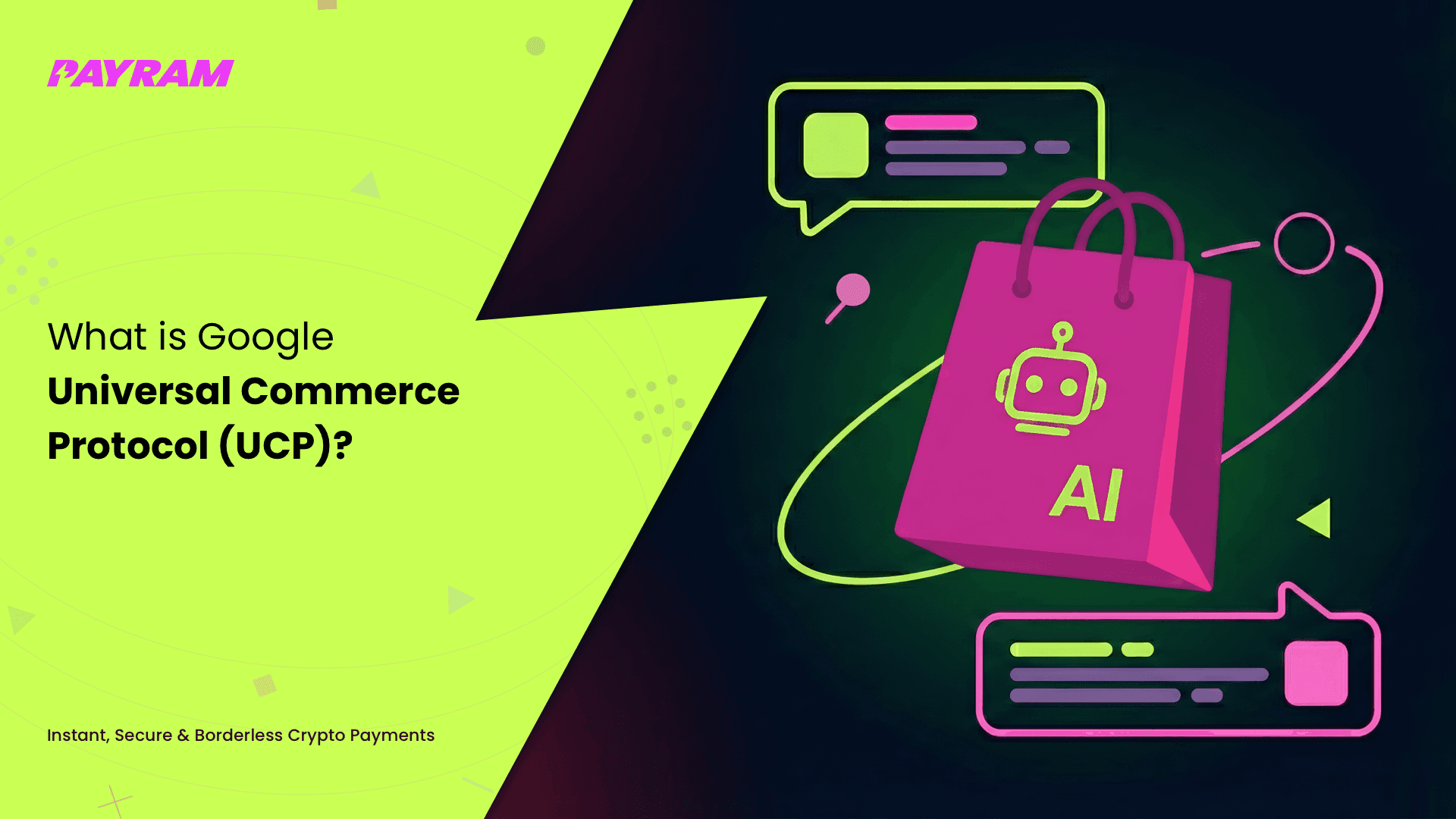
Beyond the Browser: Why Google's Universal Commerce Protocol (UCP) Needs a Sovereign Payment Layer
The digital economy is undergoing a structural transformation comparable to the migration from desktop to mobile. We are witnessing the transition from a browser-centric commerce model—predicated on human attention, visual interfaces, and click-based navigation—to an agent-centric paradigm defined by autonomous execution, programmatic negotiation, and machine-to-machine value transfer.
Google’s introduction of the Universal Commerce Protocol (UCP) at NRF 2026 represents the first comprehensive attempt to standardize this new layer of the internet. By defining a common language for discovery, cart management, and checkout, UCP aims to solve the fragmentation preventing AI agents from becoming reliable economic actors.
However, while UCP successfully orchestrates the information layer of commerce, it creates a strategic vacuum for a settlement layer. This guide explores how UCP works, why it is distinct from OpenAI’s alternative, and how self-hosted payment gateways like PayRam are uniquely positioned to power the financial rails of this new machine economy.
HTTP of Commerce: What is Google UCP?
Defining Universal Commerce Protocol (UCP)
Universal Commerce Protocol (UCP) is not a product you buy, it is a standardized set of rules—much like HTTP for the web—that defines how AI agents and shopping platforms communicate. Co-developed by Google and industry giants like Shopify, Etsy, and Walmart, UCP establishes a common language for the entire commerce lifecycle, from product discovery and cart management to checkout and order tracking. Instead of building bespoke API connections for every retailer, an AI agent can now use UCP to interact with any compliant merchant server to negotiate a transaction. For the digital economy, this shifts the paradigm from human-readable storefronts to machine-readable endpoints.
The shift to agentic commerce will require a shared language across the ecosystem—and the Universal Commerce Protocol provides that framework. — Ashish Gupta, VP/GM of Merchant Shopping at Google.
From Human Browsing to Agent Executing
The transition to agentic commerce marks a fundamental move from the browser-centric model, where humans visually navigate interfaces, to an agent-centric model where software autonomously executes tasks. In the legacy browser era, commerce optimization focused on the conversion funnel—tweaking button colors and page loads to guide human attention. In the agentic era, the interface disappears entirely, commerce happens via structured data exchanges between an AI agent (like Gemini) and a merchant's backend. The competitive advantage is no longer about visual design, but about protocol compliance and data structured for machine consumption.
- The agentic AI market in retail and e-commerce is projected to reach $175.11 billion by 2030, growing at a robust CAGR of 30.2% as businesses race to adopt autonomous transaction layers.
$SHOP $GOOGL Shopify launched agentic commerce with the Universal Commerce Protocol (UCP), an open standard built with Google.
— The Future Investors (@ftr_investors) January 14, 2026
It lets merchants sell and checkout directly inside AI chats like Gemini, Microsoft Copilot & ChatGPT — even without a Shopify store 🛒🤖 pic.twitter.com/yGkZowv047
The Architecture of Autonomy: How UCP Works
UCP functions through a capability-based architecture that allows e-commerce merchants to declare their supported features and allows agents to dynamically negotiate the terms of a transaction.
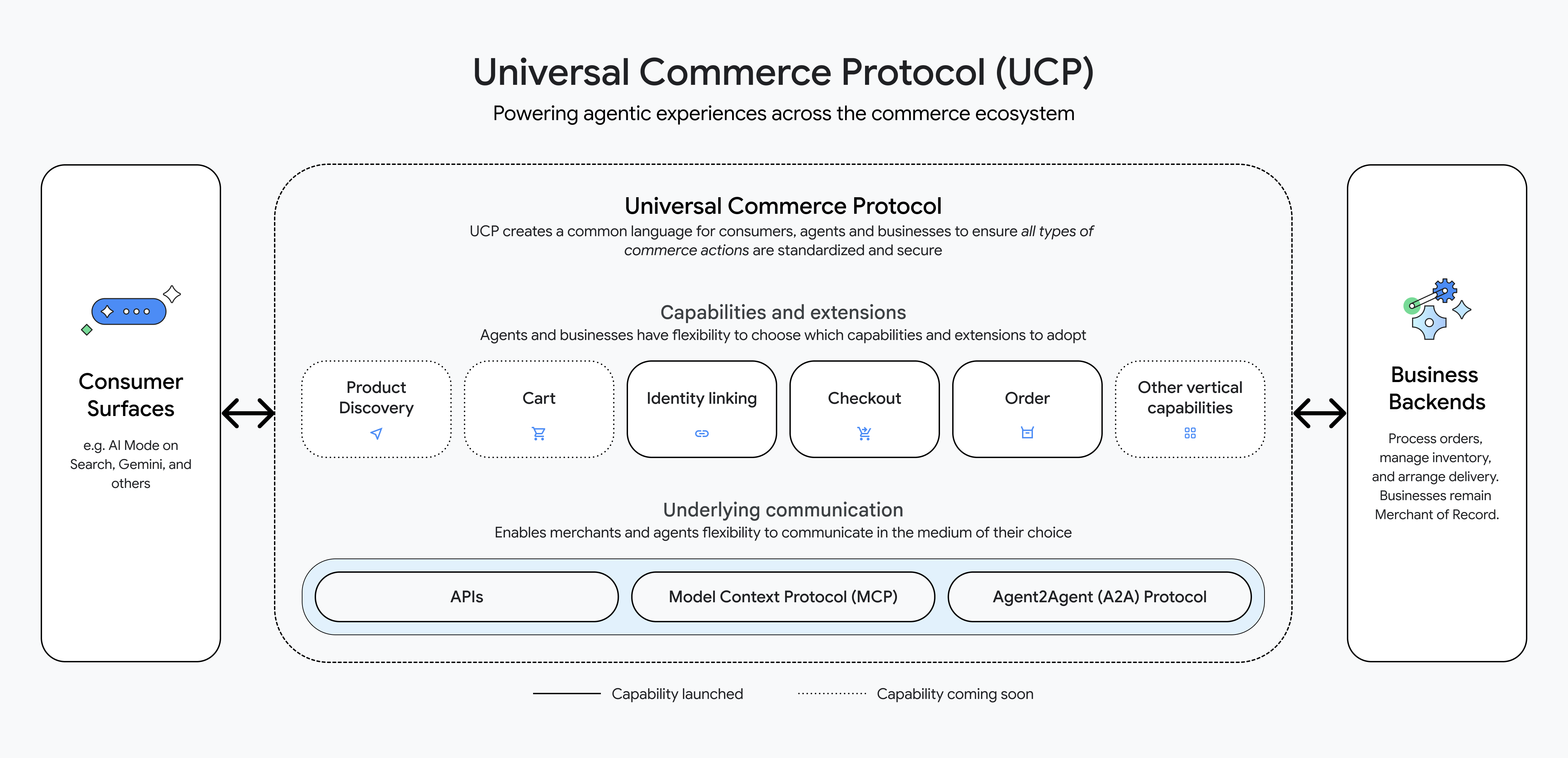
The N x N Integration Problem Solved
The primary bottleneck UCP resolves is the N x N integration problem, where every AI platform would historically need a custom API integration for every individual merchant platform to facilitate purchases. Without a standard, an AI agent developed by OpenAI would need separate connectors for Shopify, Magento, WooCommerce, and custom backends—a complexity trap that stifles scale. UCP collapses this complexity by allowing a merchant to publish a single Capability Manifest. Any UCP-compliant agent can read this manifest to understand exactly how to shop at that store, reducing integration efforts from exponential to linear.
Dynamic Discovery: The /.well-known/ucp Manifest
At the technical core of UCP is the Discovery mechanism, centered around a standardized JSON file hosted at /.well-known/ucp on the merchant's domain. This file acts as the merchant's passport, declaring supported versions, services (like shopping), and capabilities (such as checkout, discount, or subscription). When an agent connects to a merchant, it performs a Negotiation Handshake: the agent reads this manifest, compares it with its own capabilities, and determines the intersection of features they both support. This ensures that a transaction only proceeds using mutually understood protocols, preventing errors before they occur.
Transport Agnosticism: REST, MCP, and A2A
UCP is designed to be transport agnostic, meaning it defines the structure of commerce messages regardless of how they are sent. It supports bindings for HTTP/REST for traditional web integrations, allowing standard POST/GET requests to manage carts. Crucially, it also supports the Model Context Protocol (MCP), which allows LLMs like Claude or ChatGPT to interact with commerce tools natively, and the Agent2Agent (A2A) protocol for asynchronous coordination between autonomous agents. This flexibility ensures that a PayRam payment integration built for UCP is future-proof, compatible with everything from a web browser to a voice assistant.
The Protocol Wars: Google UCP vs. OpenAI ACP
While both Google and OpenAI are racing to define the standards of the agentic economy, their approaches reflect fundamentally different philosophies regarding merchant control and ecosystem openness.
| Feature | Google UCP | OpenAI ACP |
|---|---|---|
| Philosophy | Modular, Ecosystem-First, HTTP for Commerce | Infrastructure-First, Product-Centric, Checkout for ChatGPT |
| Discovery | Decentralized (/.well-known/ucp manifest) | Centralized (OpenAI Registry) |
| Transport | Agnostic (REST, MCP, A2A) | Primarily REST API |
| Payment Model | Modular Handlers (Bring Your Own) | Shared Payment Token (Managed by Stripe) |
| Merchant Control | High (Merchant of Record) | Mixed (Delegated flows) |
What is the difference between UCP and ACP?
OpenAI's Agentic Commerce Protocol (ACP) is an infrastructure-first solution, tightly coupled with Stripe, that focuses on a Shared Payment Token to facilitate instant checkouts within ChatGPT. It effectively treats commerce as a centralized API surface, optimized for immediate utility within the OpenAI ecosystem. In contrast, Google's Universal Commerce Protocol (UCP) is an ecosystem-first standard that emphasizes decentralized discovery via /.well-known files and modular payment handlers. While ACP is polished but restrictive (the Apple approach), UCP is messy but open (the Android approach), allowing for diverse implementations and third-party extensions like PayRam.
- According to a 2025 analysis, while centralized payment protocols streamline initial adoption, 82% of enterprise CTOs cite vendor lock-in as their primary concern when selecting new commerce infrastructure.
Why Sovereignty Matters for the Architect of Autonomy
For technical founders and high-risk merchants, UCP’s decentralized architecture offers critical advantages over ACP’s centralized model. ACP relies heavily on gatekeepers like Stripe, which introduces the risk of de-platforming for industries deemed high risk. UCP, however, enforces a Merchant of Record philosophy where the merchant retains full ownership of the customer relationship, data, and business logic. This aligns perfectly with the ethos of financial sovereignty; using UCP allows a merchant to participate in the agentic economy without ceding control of their financial rails to a single tech giant.
The companies that move first, even in small ways, will be the ones that help shape the future. — Lareina Yee, Senior Partner at McKinsey.
The Financial Air Gap: Why Agents Can't Wait for T+2
Traditional financial infrastructure creates a velocity mismatch for AI agents, which operate in milliseconds but are forced to settle transactions on banking timescales.
The Velocity Mismatch: Millisecond Agents vs. Daily Settlements
AI agents operate at the speed of silicon, capable of negotiating and executing thousands of decisions per second. However, the legacy banking rails they rely on (credit cards, ACH) operate on T+2 settlement cycles, taking days to finalize funds. This creates a Financial Air Gap: an agent can agree to a deal instantly, but the value transfer is slow and probabilistic (subject to fraudulent chargebacks and fraud flags). For autonomous systems that require deterministic states to function reliably, this uncertainty creates a massive barrier to real-time, high-frequency commerce.
The Solution: x402 and Atomic Settlement
The solution to this gap is the x402 protocol, an open standard that revives the dormant HTTP 402 Payment Required status code to enable native, atomic value transfer for the web. In an x402 workflow, a server responds to a request with a price and a wallet address; the agent pays instantly via a blockchain transaction and retries the request with cryptographic proof of payment. This enables atomic settlement—where payment and service delivery happen in the same logic loop—using stablecoins like USDC or USDT. For the agentic economy, this replaces promise to pay (credit cards) with proof of payment (crypto), eliminating settlement risk entirely.
402 Payment Required with a wallet address and price (e.g., 5 USDC).
Technical Blueprint: Building the com.payram.crypto Handler
PayRam leverages UCP's modular architecture to introduce a crypto-native payment handler, enabling merchants to accept stablecoins directly through the standardized UCP manifest.
The UCP Payment Handler Specification
UCP separates Payment Instruments (the credentials a user holds, like a card number) from Payment Handlers (the logic that processes the payment). While Google provides default handlers for Google Pay and credit cards, the specification allows for custom handlers defined via Reverse-Domain Naming (e.g., com.payram.crypto). This modularity is the backdoor for crypto adoption, it allows PayRam to define a Proof-based payment handler that exchanges signed transaction hashes rather than sensitive credit card tokens, significantly reducing PCI compliance scope and fraud risk.
A Payment Handler in UCP is defined by two schemas:
JSON Schema for a Crypto Payment Handler
Developers can integrate PayRam by adding a specific handler definition to their UCP manifest, declaring support for crypto networks and assets.
A sample JSON configuration for the com.payram.crypto handler within the /.well-known/ucp file would look like this:
This snippet tells any visiting AI agent that the merchant accepts crypto payments on specific chains, allowing the agent to prioritize this low-friction payment method.
The Checkout Flow: Negotiation to Finality
The checkout process with PayRam follows a deterministic flow designed for autonomous agents:
- Negotiation: The agent reads the manifest, identifies com.payram.crypto, and selects it based on user preference for lower fees.
- Selection: The agent requests a payment session.
- Execution: PayRam generates a unique, one-time deposit address for the session. The agent signs and broadcasts the transaction to the blockchain.
- Verification: PayRam detects on-chain finality and sends a webhook to the merchant's UCP server marking the order as complete. This entire cycle happens without human intervention or redirect pages.
The Trust Layer: Integrating ERC-8004
Beyond payments, the agentic economy requires a decentralized framework for identity and reputation, which ERC-8004 Protocol provides and PayRam supports.
Solving the Identity Crisis with Trustless Agents
In an automated economy, merchants need to know if an unknown agent is trustworthy. ERC-8004 (Trustless Agents) is an Ethereum standard that establishes on-chain registries for agent identity and reputation. Unlike centralized verified bots on platforms like Twitter, ERC-8004 allows an agent to carry a portable, censorship-resistant identity (minted as an NFT). Merchants can query this registry to see an agent's history and reputation score before accepting an order, effectively filtering out malicious bots without relying on black-box algorithms.
- Identity Registry: The agent holds an NFT that proves its identity.
- Reputation Registry: A permanent record of the agent's past behavior (e.g., "Paid for 500 orders successfully").
How PayRam and ERC-8004 Work Together
PayRam acts as the bridge between the financial settlement of x402 and the reputational trust of ERC-8004. When an agent successfully completes a purchase via PayRam, the gateway can cryptographically attest to that transaction on-chain, boosting the agent's reputation score in the ERC-8004 registry. Conversely, merchants can set gatekeeping rules in their UCP profiles, such as Only accept orders from agents with a reputation score > 50. This creates a virtuous cycle where good behavior is incentivized and recorded transparently.
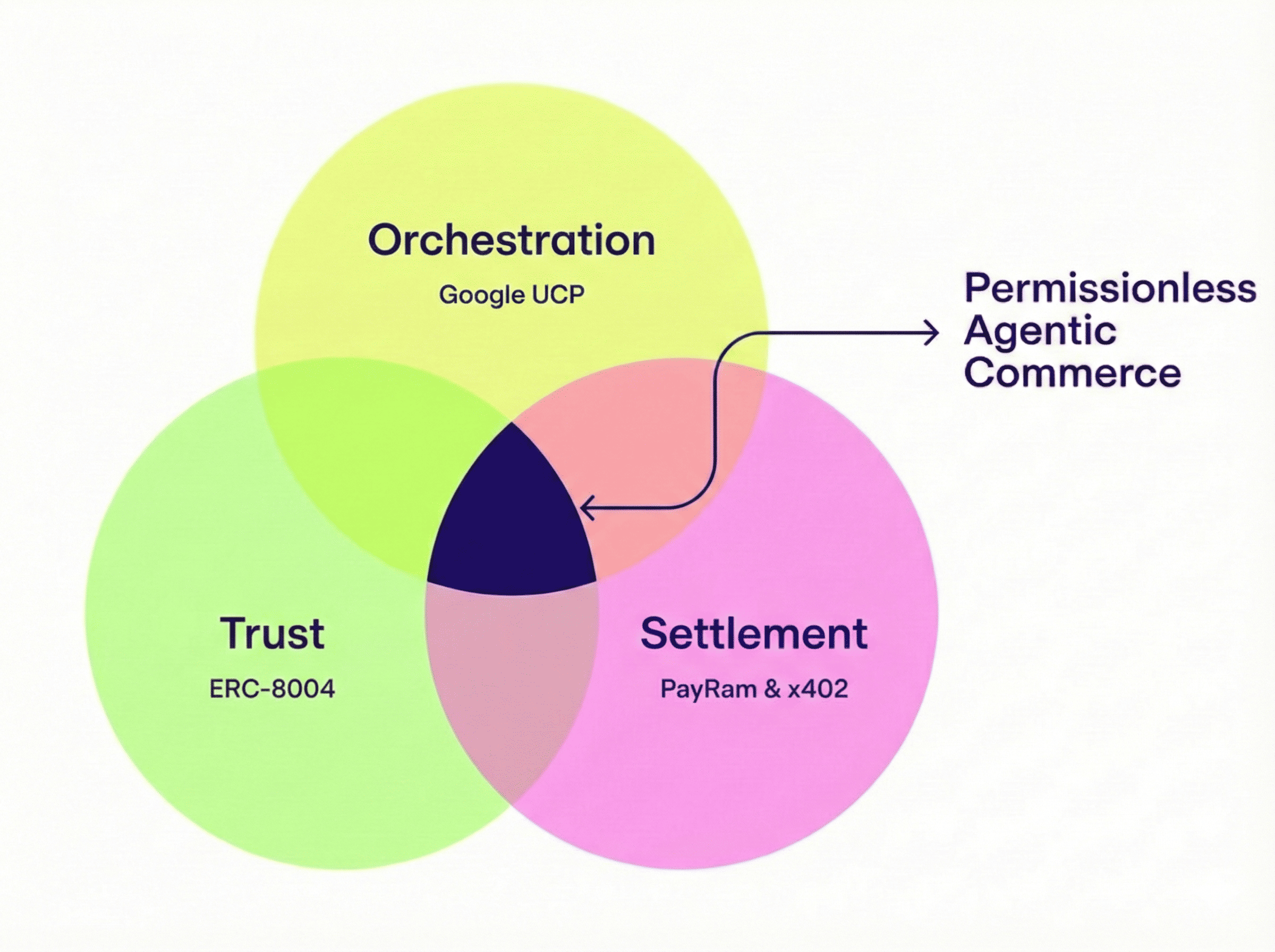
The Sovereign Stack
By combining these technologies, we build a Sovereign Agentic Stack:
- Orchestration: Google UCP (The Language).
- Settlement: PayRam + x402 (The Rails).
- Trust: ERC-8004 (The ID Card).
This stack allows for fully autonomous, high-value commerce without reliance on traditional banks or centralized AI gatekeepers.
Conclusion: Building the Sovereign Agentic Stack
By combining UCP's orchestration, PayRam's settlement rails, and ERC-8004's trust layer, developers can build a fully sovereign infrastructure for the agentic web.
Why PayRam is the Infrastructure for the Next Web
The convergence of UCP, x402, and ERC-8004 creates the Sovereign Agentic Stack—a technology suite where orchestration, settlement, and identity are all decentralized and merchant-controlled. PayRam is not just a payment gateway in this stack; it is the execution layer that allows agents to finalize economic value. For developers and merchants, adopting this stack means future-proofing against centralization risks and unlocking the speed and efficiency of the machine-to-machine economy.
Frequently Asked Questions (FAQ)
What is the primary purpose of Google UCP?
Google UCP (Universal Commerce Protocol) is designed to standardize how AI agents interact with online stores. It eliminates the need for agents to learn the specific API of every single merchant by providing a universal language for product discovery, cart management, and checkout. This allows a self-hosted store to be easily readable by an AI agent from Google, OpenAI, or Microsoft without custom coding.
What is the difference between Native and Embedded Checkout in UCP?
- Native Checkout: The AI agent (e.g., Gemini) handles the entire UI. The merchant just provides the API. This is faster but offers less brand control.
- Embedded Checkout: The AI agent loads a merchant-controlled page (via iframe) for the final step. This is better for complex flows or high-brand-control needs. PayRam supports both.
How does UCP differ from traditional APIs?
Traditional APIs are bespoke; a developer must write specific code to connect to Amazon, then different code for Shopify, and different code for WooCommerce. UCP is a standard, like USB-C. Once an AI agent learns to speak UCP, it can technically shop at any UCP-enabled store, vastly scaling the potential for autonomous commerce.
Is PayRam compatible with UCP?
Yes. PayRam is built to be a modular payment handler within the UCP framework. Because UCP allows merchants to define their own payment methods via the /.well-known/ucp manifest, PayRam can be declared as a valid payment option (com.payram.crypto), allowing agents to pay using stablecoins instead of credit cards.
Does UCP replace my existing payment gateway?
No. UCP is an orchestration layer, not a settlement layer. It organizes the data (cart, shipping, total) but hands off the actual money movement to a Payment Handler. You can use UCP to organize the sale and still use Stripe to settle the funds on-chain.
Why is crypto preferred for agentic commerce?
Agents work in milliseconds; banks work in business days. Crypto rails (specifically stablecoins like USDC) settle instantly and programmatically. This allows agents to perform high-speed transactions without the risk of chargebacks or the delays of T+2 settlement cycles found in legacy finance.
What is the x402 protocol mentioned in relation to UCP?
x402 is a standard for payment-required interactions on the web. It pairs perfectly with UCP. While UCP handles the shopping experience (browsing, cart), x402 handles the locking of resources until a payment is cryptographically proven. Together, they form a complete stack for autonomous economic activity.
Do I need to be a developer to use UCP?
Currently, yes. UCP is a technical specification for builders. However, platforms like PayRam are building no-code tools and plugins that will allow merchants to simply turn on UCP support and crypto acceptance without writing raw JSON manifests themselves.
Can high-risk merchants use UCP?
Absolutely. One of the strongest features of UCP is that the merchant remains the Merchant of Record. Unlike centralized marketplaces that can de-platform high-risk industries, UCP is just a standard you host on your own server. Combined with a self-hosted gateway like PayRam, it offers maximum censorship resistance.
How does ERC-8004 fit into this?
ERC-8004 Protocol provides the identity card for the AI agent. Before a merchant accepts an order from an autonomous bot, they can check its ERC-8004 identity on the blockchain to see if it has a good reputation (i.e., it pays for what it orders). It prevents spam and fraud in an automated system.
Is UCP free to use?
Yes, the protocol itself is open-source and free to implement. However, the services you connect to it (like AI agents or payment processors) may have their own fees. PayRam, for example, offers competitive pricing compared to traditional gateways, making it cost-effective for high-volume agentic transactions.
Ready to upgrade your payment rails for the agentic age?
Deploy PayRam and start accepting permissionless payments in minutes.