February 03, 2026
Ask GPT about this Blog Ask GPT about this Blog
Beyond MiCA: Why the 2026 Transfer of Funds Regulation (TFR) Demands Self-Hosted Infrastructure
This article explores why the 2026 Transfer of Funds Regulation (TFR) represents a pivotal shift for European crypto merchants, necessitating the adoption of self-hosted infrastructure to ensure regulatory compliance and operational resilience.
The digital finance ecosystem within the European Union is currently traversing a period of unprecedented structural realignment. While the Markets in Crypto-Assets (MiCA) regulation has historically garnered the majority of industrial attention, the true operational engine of crypto-asset surveillance is the recast Transfer of Funds Regulation (TFR), specifically Regulation (EU) 2023/1113.
As the industry approaches July 1, 2026, the transition from legislative debate to aggressive enforcement marks a decisive Regulatory Rubicon. This transition represents more than a mere administrative hurdle. It signifies a fundamental shift in the ontology of digital assets—from pseudonymous instruments of value to highly traceable assets that mirror traditional fiat wire transfers. For developers and merchants, the Transfer of Funds Regulation (TFR) 2026 landscape demands a move toward technical sovereignty, often referred to as Infrastructure Inversion, where owning the financial rails becomes the only viable path to survival in a world of institutional de-risking and mandatory surveillance.
The 2026 Regulatory Landscape: Why MiCA is Just the Beginning
While MiCA defines the licensing regime for service providers, the TFR acts as the technical surveillance engine, mandating the traceability of nearly every digital asset transfer.
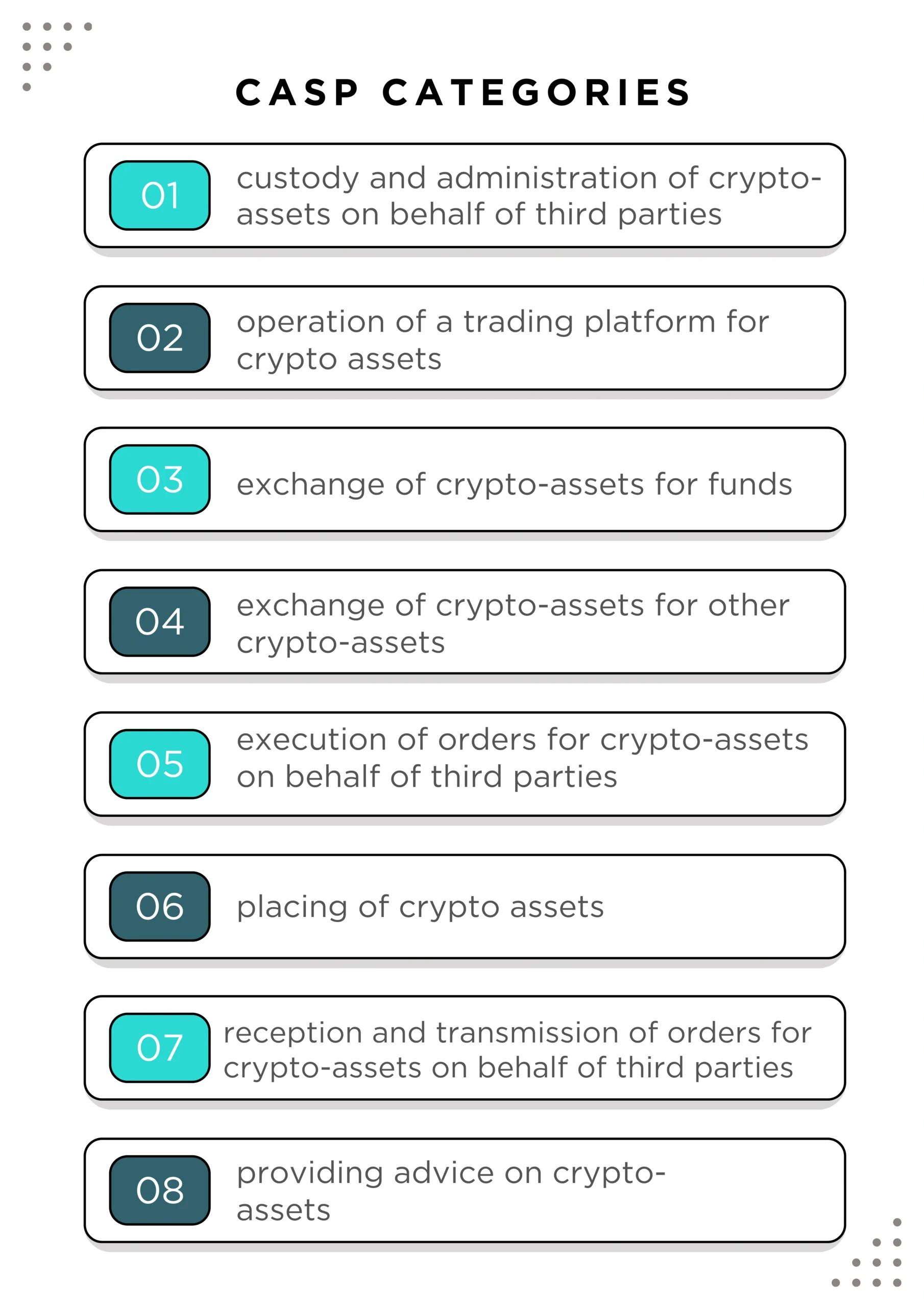
The regulatory framework governing European crypto-assets is constructed upon two primary pillars: MiCA, which establishes the licensing and conduct regimes for Crypto-Asset Service Providers (CASPs), and the TFR, which integrates the Travel Rule into the blockchain domain. While MiCA regulates who can provide services, the TFR dictates how those services must report transactional data. Understanding the comprehensive MiCA guidelines is essential, but it is only the first step in navigating regulatory compliance for a global business.
2026 is when major jurisdictions switch from debating what the rules should be to enforcing the rules they've written, and those rules were built specifically for crypto rather than borrowed from securities law or banking regulation. — Chainstack
Statistics indicate that 71.2% of European CASPs missed the initial TFR compliance windows, highlighting a massive gap between legislative intent and technical readiness.
What is the EU Transfer of Funds Regulation (TFR)? (Featured Snippet)
The EU Transfer of Funds Regulation (TFR) is a legislative framework that adapts global standards from the Financial Action Task Force (FATF) Recommendation 16 to the crypto-asset sector. It mandates that specific originator and beneficiary information must travel with every crypto-asset transfer facilitated by a regulated service provider to prevent money laundering and terrorist financing.
July 1, 2026: The End of Grace Periods and the Start of Aggressive Enforcement
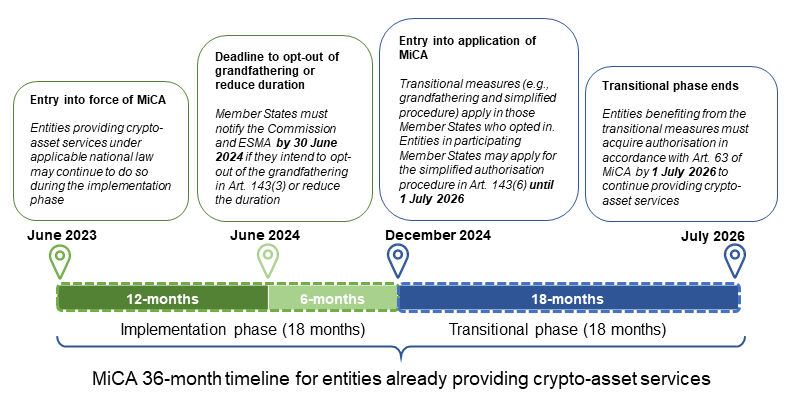
The implementation timeline for this dual framework reaches its final milestone in mid-2026 as transitional windows expire.
While many CASPs applied for licenses in early 2025, several Member States included grandfathering provisions allowing existing virtual asset service providers (VASPs) to continue operating under old national regimes for up to 18 months. July 1, 2026, is the hard deadline when these grace periods end across the European Union. At this point, any entity facilitating crypto-asset transfers without a formal MiCA license or falling behind on TFR data sharing will be ordered to cease operations.
The Travel Rule Mechanics: What Data Must Now Travel with Your Crypto?
The Travel Rule requires the mandatory collection and transmission of detailed personal information for every crypto-asset transfer facilitated by a service provider.
The core of the Transfer of Funds Regulation (TFR) 2026 is the mandate that specific information must accompany every transfer. Notably, the TFR removes the de minimis threshold for transfers between two CASPs. Unlike traditional finance where small transactions might be exempt, every inter-CASP crypto transfer must be accompanied by a required payload of personal data. Merchants must study FATF (Travel Rule) to understand their reporting obligations and implement on-chain risk management strategies to avoid transacting with illicit actors.
The text aims to ensure that crypto transfers, as is the case with any other financial operation, can always be traced and suspicious transactions blocked. — European Parliament
Evidence shows that the implementation of Recommendation 16 led to a 29.5% decline in illicit cryptocurrency transactions between 2022 and 2023, proving that surveillance infrastructure is successfully deterring criminal flows.
Mandatory Data Payloads: What Information Must CASPs Collect?
To comply with the TFR, the originating CASP must collect and transmit the following data to the beneficiary provider:
- Originator Name: The full clear name of the sender.
- Physical Address: Including country, or an official document number (passport/ID).
- Account/DLT Address: The originator’s distributed ledger address.
- Beneficiary Name: The full clear name of the recipient.
- Beneficiary DLT Address: The recipient’s distributed ledger address.
Understanding the EU Travel Rule: Why Your Funds May Be on Hold and How to Resolve It Quickly
byu/krakensupport inKrakenSupport
What are the limits on transferring funds between US bank accounts under federal law? (PAA)
Under US federal law and the Bank Secrecy Act (BSA), the FinCEN Travel Rule threshold for reporting international wire transfers is generally set at $3,000. However, the EU’s TFR is significantly stricter for crypto-assets, applying a €0 threshold for transfers between service providers, meaning even a transfer worth one cent must carry the full data payload. For global firms, this means stablecoins versus fiat payments will have entirely different compliance friction points.
The €1,000 Threshold: Why Your Self-Hosted Wallet Interactions are Under Scrutiny
Interactions between a regulated service provider and a self-hosted address are subject to enhanced verification once the transaction value exceeds €1,000.
While pure peer-to-peer (P2P) transfers—transactions between two individuals without a CASP—are exempt from the TFR, any interaction with the regulated perimeter is heavily scrutinized. For transfers exceeding €1,000 involving a self-hosted address, the CASP is required to take adequate measures to verify that the address is owned or controlled by their client. This makes it crucial to find paypal alternatives for high-volume transfers that can handle these verification flows natively.
Self-Hosted Gateways vs. Custodial Intermediaries: The Infrastructure Inversion
Switching to self-hosted infrastructure allows merchants to move from being clients of regulated service providers to owning the technology that facilitates their transactions.
For merchants, the decision between custodial and self-hosted infrastructure is no longer just about features. It is a fundamental choice regarding revenue sovereignty.
Custodial processors act as centralized gatekeepers and are definitively classified as CASPs, which mandates them to perform mandatory surveillance on every merchant and payer. Transitioning to a non-custodial payment gateway model is the only way to retain full control. Merchants should review a payram versus coingate comparison and a payram vs bitpay showdown to see how ownership changes the compliance burden.
Non-custodial gateways function as software infrastructure that monitors peer-to-peer transactions without ever taking possession of the merchant's private keys or funds.
The Non-Custodial Wallets Market is projected to grow from $6.43 billion in 2025 to $45 billion by 2035, reflecting a massive shift toward self-sovereign financial tools.

Is a self-hosted gateway a Crypto-Asset Service Provider (CASP)?
A self-hosted gateway is generally not classified as a Crypto-Asset Service Provider (CASP) under MiCA because it operates as Infrastructure as Code. In this model, the software provider does not take custody of funds or private keys. Instead, the merchant owns the infrastructure and manages the keys, shifting the software from a regulated service to a technological tool.
Why Custodial Gateways Are Becoming Compliance Liabilities in 2026
Custodial gateways introduce significant counterparty risk, as providers may freeze accounts or delay settlements to satisfy escalating TFR surveillance requirements.
Using a custodial provider means your funds are held as an IOU. In a post-2026 world, these providers face extreme regulatory pressure to de-risk certain industries or jurisdictions. Merchants using custodial gateways risk sudden account freezes or settlement lag while the provider manually verifies Travel Rule data. This is particularly dangerous for those in need of a crypto gateway for casinos or an ultimate adult tech stack guide that requires high uptime and censorship resistance.
Economic Sovereignty: Direct Settlement and Margin Preservation
Self-hosted gateways allow merchants to eliminate variable transaction fees and preserve their margins by transforming payment processing into a fixed infrastructure cost.
Traditional custodial gateways typically impose a variable tax of 1% to 3% on transaction volume. By contrast, self-hosted crypto payment processing like PayRam typically doesn’t act as a payment processor. Merchants can save an average of 80% to 90% on processing costs by transitioning to a model where funds land directly in their on-chain wallet. This allows businesses to reach new global markets without being bled dry by fees, leveraging various stablecoin business use cases to optimize their bottom line.
Technical Compliance for the Sovereign Merchant: Proof of Ownership Protocols
Merchants can satisfy TFR requirements through automated cryptographic methods like message signing or the Satoshi Test without sacrificing the benefits of non-custodial wallets.
The TFR’s demand for Proof of Ownership on self-hosted wallets over €1,000 can be automated via technical protocols. This allows merchants to remain compliant without reverting to a custodial model. Mastering digital sovereignty and self-hosting is essential for modern CTOs.
Verification of the ownership or control of the self-hosted wallet (proof of ownership) is mandatory for transfers exceeding €1,000. — KPMG
A standard Satoshi Test involves sending a micro-transaction, typically worth 5 USDC, to verify that the originator has actual control over the private keys of the address.
How do I verify if a money transfer service follows US financial regulations? (PAA)
In the US, you verify a service by checking its MSB registration with FinCEN. In the EU context, merchants should verify that their gateway provides the technical hooks to perform digital message signing or Satoshi Tests to satisfy TFR Article 14(5) requirements for verifying self-hosted address control. If you compare PayRam vs Coinbase Commerce, you will see that self-hosted options provide better transparency for these technical requirements.
Digital Message Signing vs. The Satoshi Test: Automating TFR Compliance
Two primary methods have emerged for verifying self-hosted wallet ownership:
| Criterion | Satoshi Test | Digital Signing |
|---|---|---|
| Mechanism | Micro-transaction of random amount | Cryptographic signature of a timestamp |
| Asset Transfer | Yes (Small funds must move) | No (Purely cryptographic) |
| User Friction | Medium (Requires valid balance) | High (Requires technical key knowledge) |
| Verification Time | Instant (Upon block confirmation) | Instant (Mathematical verification) |
Future-Proofing: Agentic Commerce and the Rise of AI Transactions
As AI agents become economic actors, the 2026 regulatory environment necessitates new standards to identify autonomous originators in on-chain commerce.
As we approach 2026, the digital economy is moving toward Agentic Commerce, where AI agents autonomously plan and execute transactions. Forward-thinking businesses are already reviewing their agentic commerce field manual to prepare.
Agentic commerce is where AI doesn't just suggest products, but actually helps complete the task of checking out. — Google
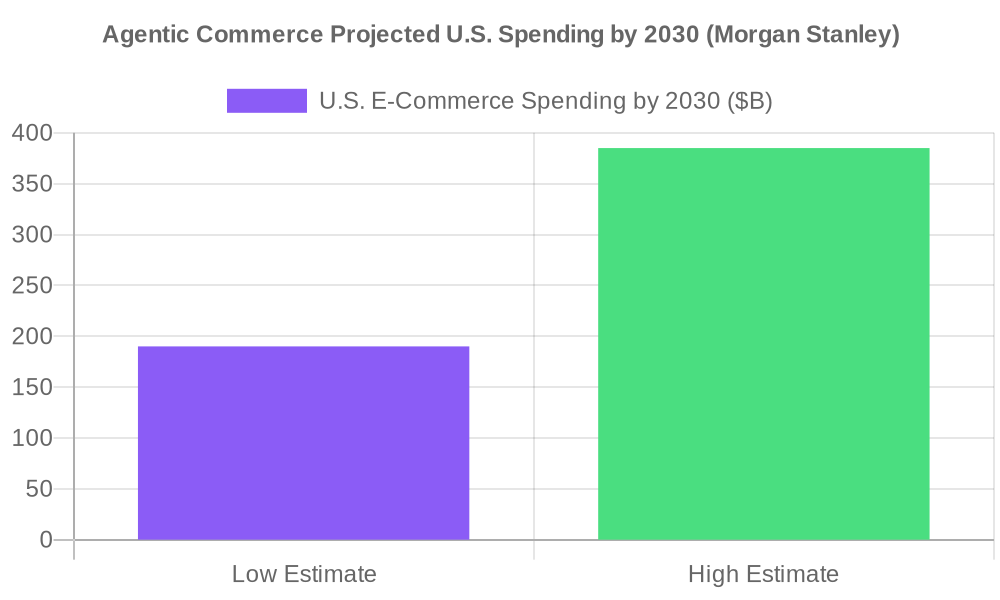
Research shows that 81% of consumers are willing to let AI shop on their behalf, a shift that will impact over $1.3 trillion in online spending by the end of the decade.
ERC-8004 and the Identity Layer for Autonomous Agents
The ERC-8004 Trustless Agents standard provides the necessary infrastructure for AI agents to have a persistent on-chain identity through three registries.
Developed to enable coordination in open environments, the erc-8004 trustless agent standard introduces on-chain Identity, Reputation, and Validation registries. These blockchain passports allow AI agents to be discovered and verified, providing a mechanism to identify the originator in an agent-initiated transaction—a critical requirement for TFR compliance.
Why Your Payment Gateway Must Support AI-Initiated Payments
Payment gateways in 2026 must be capable of recognizing agent metadata to prevent legitimate autonomous transactions from being flagged as suspicious by legacy fraud filters.
AI agents may transact at odd hours or across multiple geographies in rapid succession, which often triggers fraud declines in traditional systems. Modern gateways must accept stablecoin payments easily while integrating with protocols like x402 for micropayments and automated settlement. You should choose the right crypto rail to ensure your infrastructure can scale with machine-to-machine demands.
The Article 37 Threat: Will the EU Ban Self-Hosted Wallets in 2026?
Article 37 mandates a July 2026 report that could result in significant new restrictions or prohibitions on how regulated entities interact with self-hosted addresses.
The most significant long-term risk to the self-hosted ecosystem is Article 37 of the TFR. This article requires the European Commission, in consultation with the rulebook, to conduct a comprehensive risk assessment of transfers involving self-hosted addresses. Understanding The GENIUS Act will help you see how similar pressures are mounting globally.
The government does not agree that unhosted wallet transactions should automatically be viewed as higher risk; many persons who hold cryptoassets for legitimate purposes. — HM Treasury
Data from 2025 indicates that EU Travel Rule compliance was only 28.8% six months after the deadline, whereas the UK achieved 100% compliance using a risk-based, firm-level assessment model.
The July 2026 Commission Report: What to Expect from the Article 37 Assessment
The upcoming Article 37 assessment will determine if the EU introduces stricter verification mechanisms or an outright prohibition on CASP interactions with self-hosted wallets.
Expected by July 2026, this report could suggest bringing hardware and software wallet providers directly within the scope of the regulation. This presumptive threat philosophy in the EU contrasts sharply with other jurisdictions. To stay ahead, companies must focus on surviving the regulatory thunderdome by building flexibility into their tech stacks.
Transitioning to PayRam: Implementing a TFR-Ready Self-Hosted Stack
PayRam provides the technical framework for merchants to achieve compliant sovereignty through an Infrastructure as Code approach that minimizes third-party risk.
For merchants seeking to navigate the Transfer of Funds Regulation (TFR) 2026, PayRam offers a scalable, secure, and non-custodial solution. By operating as infrastructure rather than a service provider, PayRam's infrastructure empowers merchants to own the rails while maintaining the technical tools required for compliance.
Under MiCA, self-hosted software providers are generally exempt from CASP licensing because they provide technology rather than custody, shifting the compliance strategy to the operator.
The average cost for a CASP to upgrade their compliance infrastructure hit €2.1 million in 2025, a burden that self-hosted merchants can avoid by using off-the-shelf sovereign tools.
PayRam’s Infrastructure as Code Approach: Generic, Secure, and Sovereign
PayRam’s architecture aligns with the Digital Operational Resilience Act (DORA) by providing robust ICT risk management and ensuring that merchants retain sole control of their keys.
PayRam utilizes a no keys on server architecture, separating viewing keys from signing keys to ensure funds are unstealable even during a server breach. Additionally, supporting security controls like secure crypto multi-sig fortress setups allows merchants to inherit enterprise-grade resilience. Whether you need a crypto payment gateway for e-commerce or on telegram, owning your infrastructure is the only way to eliminate fraudulent chargebacks forever and maintain sovereignty.
Permissionless Commerce is Here.
— PayRam | Payments without Gatekeepers (@PayRamApp) November 14, 2025
🔹 Self-Custody: We're a software stack, not a middleman. Funds settle directly to your wallet.
🔹 10-Min Setup: Forget complex CLIs. It's a 1-line install & GUI setup.
🔹 Control: Non-custodial. Your keys, your server, your crypto.
🔹 Multi-Chain: Native… pic.twitter.com/mFc91NqVFh
TFR 2026 Compliance: FAQ
What is the main purpose of the Transfer of Funds Regulation (TFR)?
The TFR aims to combat money laundering and terrorist financing by ensuring that transfers of crypto-assets are accompanied by the same level of transparency and data as traditional wire transfers.
Is a self-hosted gateway legal under the new EU rules?
Yes, self-hosted gateways are legal and are generally classified as technology providers rather than service providers, meaning they fall outside the scope of MiCA licensing requirements as long as they do not take custody of funds.
What happens if a transaction exceeds €1,000?
For transfers over €1,000 involving a self-hosted address, the regulated service provider must take adequate measures to verify that the address is actually controlled by the client.
How do I verify my address with the Satoshi test?
The Satoshi Test is a verification method where the user sends a tiny, pre-defined amount of crypto to a service provider to prove they control the private keys of the sending address.
Does the TFR apply to transactions under €1,000?
Yes, the TFR applies to all transactions between regulated service providers starting from zero euros, but the enhanced verification for self-hosted addresses specifically triggers at the €1,000 mark.
Can I still use an anonymous wallet in the EU?
While you can own an anonymous wallet, you will likely be unable to interact with any regulated exchange or merchant gateway without undergoing identity verification and proving ownership of the wallet.
What is Article 37 and why is it important for 2026?
Article 37 mandates a major regulatory review by the European Commission in mid-2026 to decide if self-hosted wallets should be subject to even stricter controls or a total interaction ban.
Does PayRam store my private keys?
No, PayRam uses a No Keys on Server architecture, meaning your private signing keys are never stored on the payment server, protecting you from both hacks and regulatory overreach.
How does the TFR affect AI agents?
The TFR requires that the originator of a payment be identified, which is why new standards like ERC-8004 are being developed to provide AI agents with a verifiable on-chain identity for compliance.
What are the limits on transferring funds between US bank accounts under federal law?
The US FinCEN Travel Rule threshold is $3,000. In contrast, the EU TFR has a €0 threshold for transfers between service providers, representing a much stricter approach.
Conclusion
The 2026 implementation of the Transfer of Funds Regulation marks the end of anonymous commercial crypto transfers within the European Union. While this introduces significant compliance friction, it also creates an opportunity for merchants to reclaim their financial sovereignty. By moving Beyond MiCA and adopting self-hosted gateways like PayRam, businesses can maintain direct control over their revenue, eliminate custodial risk, and prepare for the autonomous future of agentic commerce. The July 2026 deadline is not just a regulatory hurdle. It is the final call for merchants to own their financial infrastructure.