January 30, 2026
Ask GPT about this Blog Ask GPT about this Blog
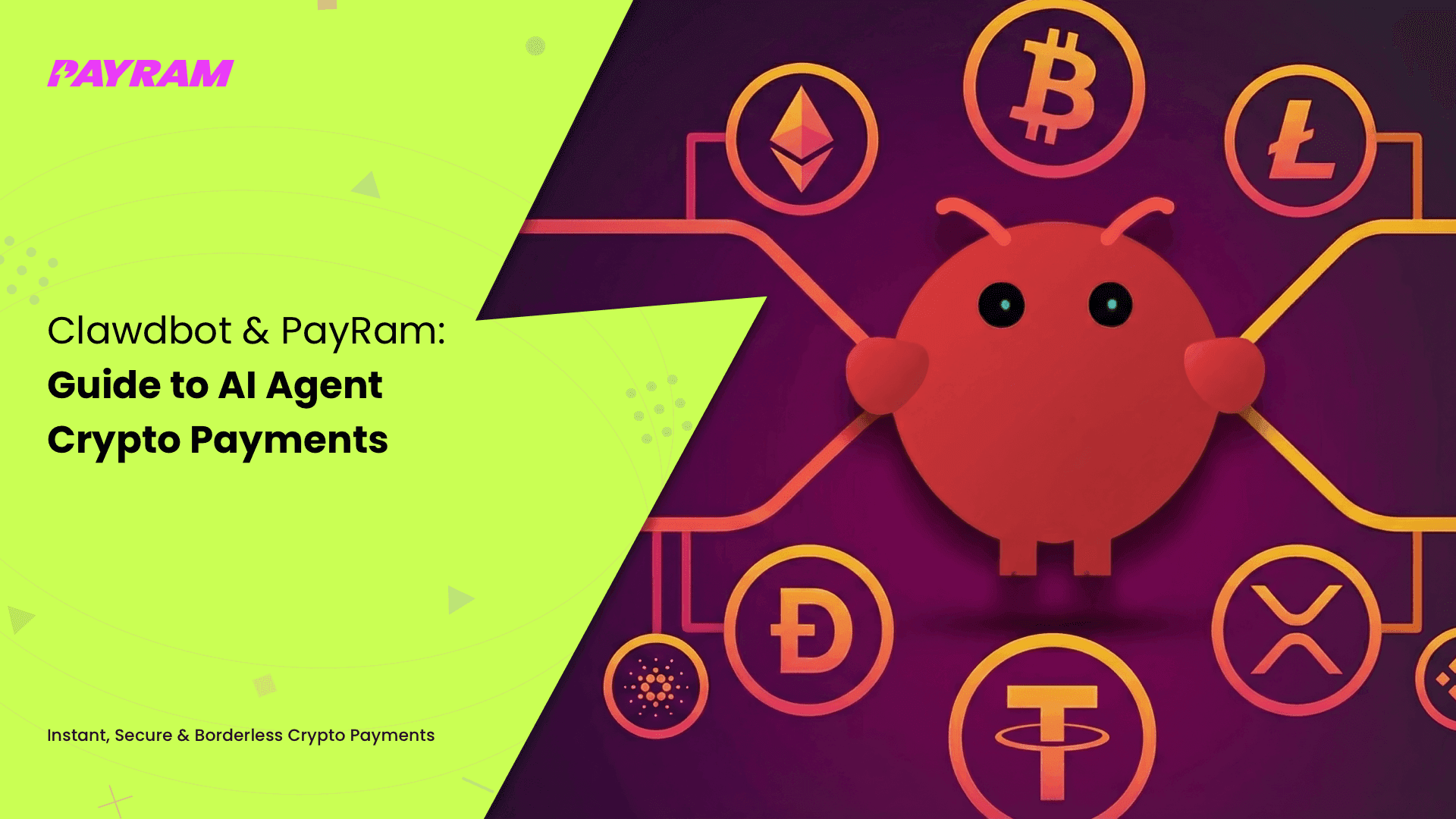
Architecting the Autonomous Economy: A Comprehensive Guide to Clawdbot and PayRam Payments
Autonomous agents are transitioning from conversational novelties into proactive AI employees that require a unified financial layer to achieve true operational independence.
The emergence of agentic artificial intelligence in 2026 represents a definitive shift in the digital landscape. We have moved past the era of the reactive chatbot—where a user must initiate every interaction—and entered the era of the Intelligence Orchestrator. As intelligence becomes a commodity, the focus for developers and sovereign founders has shifted toward autonomy: the ability of a system to reason, remember, and, most importantly, act. Clawdbot, now known as Moltbot, has emerged as the vanguard of this local-first AI revolution.
However, for an agent to truly function as an employee, it needs more than just a brain, it needs the ability to transact. This guide explores the evolution of the Clawdbot ecosystem and how you can build an unbannable business by providing the essential financial hands required to architect a truly autonomous economy. To understand the foundation of this shift, one must first look at PayRam and how it enables permissionless commerce via stablecoins.
What is Clawdbot? The History and Evolution of the Viral AI Assistant
Clawdbot is an open-source, local-first personal AI assistant that transformed from a personal developer project into a global phenomenon by enabling proactive task execution.
In mid-January 2026, the internet experienced a viral breakout centered around a project called Clawdbot. Created by veteran developer Peter Steinberger, the project was born not from a corporate boardroom, but from developer burnout and a desire for absolute digital sovereignty. Steinberger envisioned a digital lifeform that utilized a computer as its physical body. His work highlights the importance of what is self-hosting for modern innovators.
The response was unprecedented. Within weeks, the project’s official GitHub repository surged to over 60,000 stars as developers realized that Clawdbot wasn't just another chat window—it was an assistant that lived on your hardware and integrated directly into messaging apps like WhatsApp and Telegram. The demand for local execution environments was so high that it reportedly contributed to a global sell-out of Apple Mac mini hardware.
Moltbot's sudden rise showcases the evolution of personal projects into influential digital entities, according to recent reports on Binance.
Why did Clawdbot change its name to Moltbot?
Clawdbot rebranded to Moltbot following trademark concerns from Anthropic, adopting a lobster-molting metaphor to symbolize continuous AI growth and transformation.
The rapid ascent of the project eventually drew the attention of Anthropic, the creators of the Claude AI model that often powers the bot’s reasoning. Following a trademark request regarding the name's similarity to their brand, Steinberger rebranded the assistant to Moltbot. The new name leaned into the biological metaphor of a lobster molting or shedding its shell to grow, representing an AI that continuously evolves and adapts. Despite the legal friction and attempts by script bots to hijack the project's social presence during the transition, the core engineering remained resilient, cementing its status as the premier Intelligence Orchestrator for the 2026 tech stack. This resilience is a core trait for those looking to reclaim your financial destiny using the documentation.
Technical Architecture: How Moltbot Functions as an Intelligence Orchestrator
Moltbot utilizes a local-first, daemon-based architecture to provide secure and persistent AI orchestration across a user’s entire digital environment.
Moltbot is fundamentally different from Software-as-a-Service (SaaS) assistants because of its local-first architecture. It runs on your own hardware—whether that is a Mac, a Linux server, or a Windows machine via WSL2—ensuring that your data, context, and logs never leave your control. The technical stack is built on Node.js 22+ and TypeScript, utilizing secure transports like Server-Sent Events (SSE) and standard input/output (stdio) for internal communication. This mirrors the unbannable gateway architecture used by leading payment protocols. In fact, users like Federico Viticci have reportedly utilized 180 million tokens in a single month through these autonomous workflows.
Viticci noted that Moltbot has completely changed my perspective of what it means to have an intelligent personal AI assistant in 2026.
The Three-Layer System: Gateway, Pi Agent, and Channels Hub
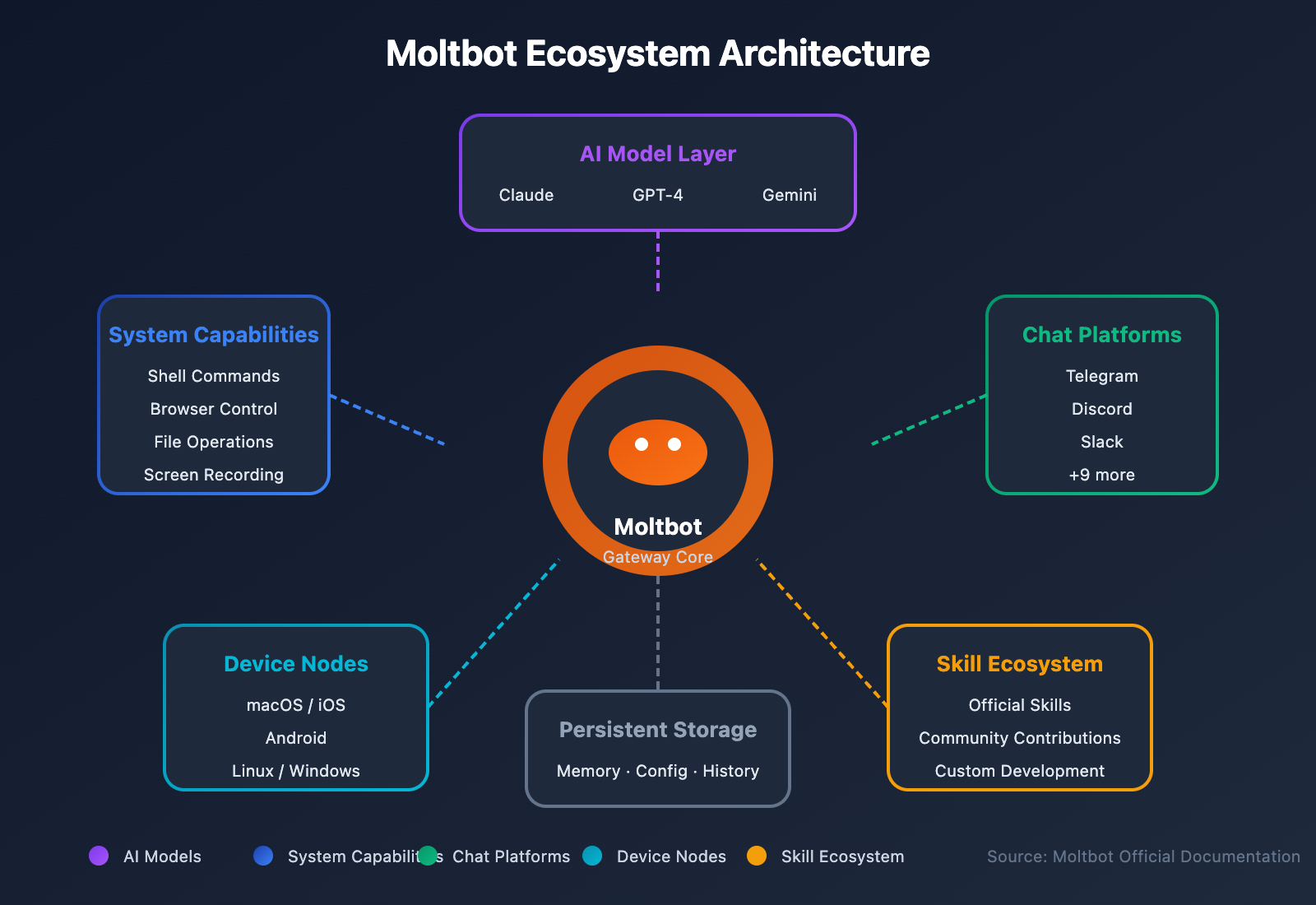
To deliver a 24/7 Jarvis experience, Moltbot operates through three primary layers:
- The Gateway (Control Plane): The central daemon that remains always-on to manage tool execution, authentication, and platform connections.
- The Pi Agent: The brain of the system. While model-agnostic, it features sophisticated failover logic and supports high-context models like Claude 3.5/4.5 or local models via Ollama.
- The Channels Hub: This allows the assistant to maintain a unified personality across WhatsApp, Telegram, Slack, and Discord. You can start a task on your phone and finish it on your desktop without losing context. This seamlessness is vital when managing ecommerce crypto bots across different storefronts.
Proactive Intelligence and Persistent Diary Files
Unlike reactive chatbots, Moltbot proactively initiates tasks and maintains long-term memory by storing interactions in local Markdown diary files.
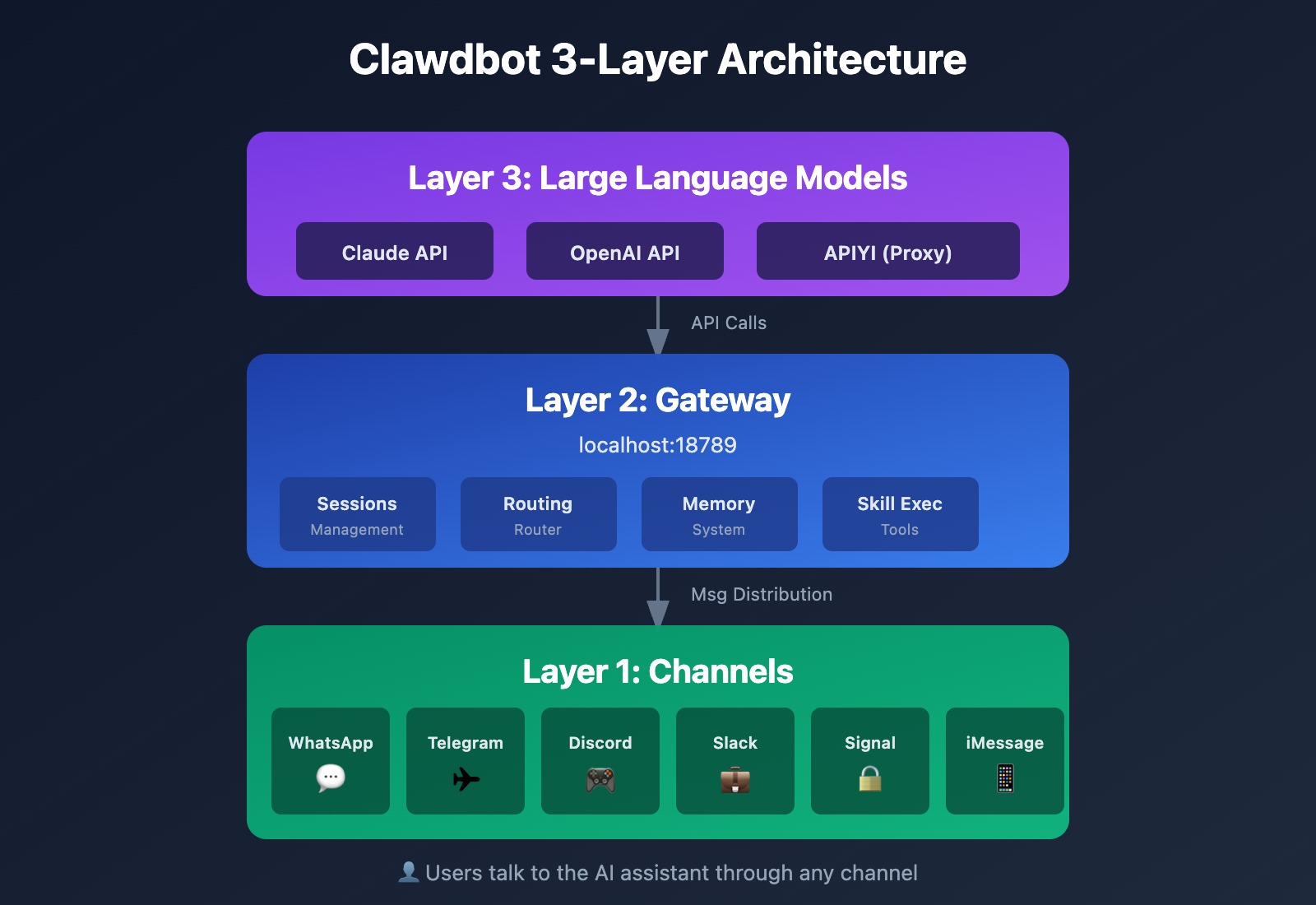
Two features define the Moltbot revolution: proactivity and persistent memory. Most AI waits for a prompt, but Moltbot is designed to find you. Through scheduled cron jobs and heartbeat check-ins, it can reach out with morning briefings, sales alerts, or system warnings. Furthermore, it records every interaction in Markdown diary files on your local disk. This allows the bot to remember casual mentions from weeks ago, making it a true partner that gets more personalized over time.
The Payment Bottleneck: Why AI Agents Need Financial Agency
Intelligence is no longer the limiting factor for AI, true autonomy requires financial agency to interact with the global economy without human intervention.
As we head deeper into 2026, the bottleneck for AI is no longer intelligence—it is financial agency. An autonomous agent can write code and manage workflows, but it remains an economic ghost if it cannot pay for its own API credits, provision its own servers, or settle invoices. Traditional financial institutions, with their multi-day settlement periods and high transaction fees (often 2.5% to 5%), are fundamentally incompatible with the machine-speed requirements of a self-hosted agent.
According to InFlow CEO Jim Nguyen, AI agents can already write code... but they still can't pay for anything on their own. That bottleneck is about to disappear.
Traditional Gatekeepers vs. Machine-Speed Settlement
Legacy financial systems are restricted by banking hours and centralized control, whereas autonomous agents require the near-instant, permissionless settlement provided by blockchain technology.
For a sovereign founder, relying on centralized gatekeepers introduces a single point of failure. These entities can freeze accounts without warning or deny services based on subjective risk assessments. An autonomous agent operating at machine speed requires a payment layer that matches its velocity. Many merchants are finding alternatives to PayPal to bypass these hurdles.
| Feature | Traditional Payments | Agentic AI Requirement |
|---|---|---|
| Fees | 2.5% – 5.0% | As low as 0.5% |
| Settlement | 2–5 Business Days | Near-Instant (minutes) |
| Control | Third-party can freeze funds | Non-custodial ownership |
| Interfacing | Manual forms/redirects | API-driven programmable settlement |
This shift effectively eliminates the Visa and Mastercard swipe fees that plague traditional retail.
Protocols of the Agent Economy: MCP, ACP, and ERC-8004
To solve the N x M integration problem—where every new tool once required a custom connector for every model—the industry has moved toward standardization. Key players like Anthropic, OpenAI, Stripe, and the Ethereum Foundation are establishing the rules of the agentic road. Research indicates that the AI sector is projected to exceed $1 trillion by 2031, necessitating these standardized trust mechanisms.
What is the Model Context Protocol (MCP)?
Introduced by Anthropic, the Model Context Protocol is often called the USB-C for AI. It provides a standardized, two-way connection for LLMs to interact with external data. MCP servers expose specific capabilities (like searching files or calling APIs), which MCP clients (the AI) can then discover and use. This protocol turns bespoke development into simple configuration, allowing agents to adapt to new tools without being retrained. You can explore the full MCP vs A2A protocol breakdown to see how these standards interact.
Agentic Commerce Protocol (ACP) and ERC-8004 Trustless Agents
While MCP handles the connection, other protocols handle the trust. The Agentic Commerce Protocol (ACP), co-developed by OpenAI and Stripe, defines how agents securely perform actions like buying and quoting using tokenized authorization.
Meanwhile, the Ethereum standard ERC 8004 Protocol establishes on-chain registries for agent identity and reputation. An Ethereum Foundation engineer noted that civilizations scale because humans are capable of implicit trust. AI agents are not. This trust is further bolstered by the x402 protocol for automatic payments.
Clawdbot is LITERALLY PRINTING!!
— Mugi (@reMugi3) January 27, 2026
I'm actually shaking looking at this PnL
I managed to track down a whale wallet that has been quietly running this bot for months, and the results are absolute insanity
While everyone on the TL is busy vibe coding with Claude trying to build… https://t.co/7BmTz6YQM1 pic.twitter.com/DZY609MTiT
Connecting PayRam: The Self-Hosted Financial Hand for Moltbot
PayRam is a self-hosted PayFi platform designed specifically for the autonomous economy. It allows users to accept crypto payments without third-party services while maintaining full custody of their funds. For a Moltbot user, PayRam is the unbannable business stack. It allows for unlimited transactions and scales effortlessly from 10 to 10,000 payments daily, making it the perfect match for a local-first AI assistant. By using a non-custodial crypto payment gateway, you ensure that your funds are never subject to the whims of a centralized entity.
PayRam represents more than efficient payments—it embodies fundamental principles of human freedom.
Step 1: Deploying the Sovereign Payment Node
Before integration, a PayRam node must be active. Users typically deploy this on a Linux VPS (Ubuntu 22.04) with at least 4 CPU cores and 4GB of RAM.
- Installation: A one-line curl command installs the PayRam environment via Docker.
- Wallet Connection: Founders connect non-custodial wallets like MetaMask or Phantom via the PayRam GUI, ensuring they maintain full control of private keys.
Step 2: Configuring the PayRam MCP Server
The bridge between the AI and the node is the PayRam Helper MCP Server. This smart server acts as an AI development assistant, helping the agent understand the project's financial requirements.
- Registration: In the Moltbot configuration (typically
mcp.json), the user adds the PayRam MCP endpoint.
- Tool Discovery: Once registered, Moltbot discovers new capabilities, such as
create-payee,send-payment, andget-balance.
Step 3: Enabling x402 Handshake Workflows
PayRam explicitly adopts the x402 protocol, an open standard that enables native value transfer for the web.
- The Mechanism: When an agent requests a resource or service, the PayRam-powered server issues a 402 Payment Required challenge with a price and a wallet address.
- Autonomous Execution: Moltbot signs a blockchain transaction using the PayRam node's credentials and resubmits the request with cryptographic proof of payment, completing the trade without human intervention.
Strategic Use Cases for the Clawdbot-PayRam Stack
Combining Moltbot's reasoning with PayRam's settlement capabilities allows founders to automate complex financial workflows. Many find that stablecoin use cases are the fastest way to achieve this. Studies show that companies using AI agents report efficiency boosts of over 30%.
- Natural Language Payouts: A founder can message their bot on Telegram: "Pay our server bill of 50 USDC using the Base wallet." The bot calculates the gas, prepares the transaction via the Payouts API, and provides a transaction link for confirmation.
- Proactive Invoicing: Through scheduled heartbeat check-ins, the agent can monitor a project management tool like GitHub. When a task is marked complete, the bot automatically generates a crypto-payment link via PayRam and sends it to the client.
- Automated Treasury Management: Using the Analytics MCP, the agent can query the node's ledger: "Summarize my P&L for the last 24 hours." It then uses programmed policies to SmartSweep profits from hot wallets to cold storage based on user-defined thresholds.
Autonomous Service Agencies and Invoicing
AI agents can autonomously manage the entire service lifecycle, from monitoring task boards to generating and verifying crypto-invoices.
In an autonomous agency model, Moltbot acts as the project manager. It can monitor platforms like GitHub or Upwork for tasks, complete the work, and use the PayRam Invoice API to generate a crypto-payment link. This allows you to accept payments for adult content or other high-demand services without fear of deplatforming. Once PayRam detects the payment on-chain, it notifies Moltbot, which can then automatically send a thank-you note and archive the transaction for accounting. This process can be up to 25x faster than manual handling.
Algorithmic Trading and Global Payroll Automation
Autonomous agents can execute high-frequency trades on prediction markets and manage cross-border payroll with instant blockchain settlement.
The potential for profit is already being proven. One Clawdbot user recently demonstrated a self-trading experiment on Polymarket, turning $100 into $347 overnight by analyzing Bitcoin price momentum and sentiment on X. Beyond trading, the stack simplifies global payroll. Moltbot can verify task completion and trigger PayRam's Payouts API to distribute stablecoins across chains like Ethereum, Solana, and Base instantly. This allows you to reach new global markets without traditional banking friction.
Security and Sovereignty: Protecting Your AI-Powered Business
Granting AI agents financial access requires robust security measures like sandboxing, least privilege API keys, and human-in-the-loop protocols.
Granting an AI agent system access and a digital wallet is powerful but inherently risky. Careless setup can lead to the exfiltration of wallet secrets or unauthorized command execution. In fact, 80% of payment professionals agree that fraud detection is the primary use case for AI in the current financial landscape. Steinberger himself warned that running an AI agent with shell access on your machine is… spicy. This makes on-chain risk management a non-negotiable part of your tech stack.
Sandboxing and Least Privilege API Keys
Isolating AI agents in sandboxed environments and using restricted API keys limits the potential blast radius of a security breach.
Experts recommend running agents in isolated environments like Docker to prevent them from accessing your primary system files. Additionally, when connecting Moltbot to PayRam, always use least privilege API keys that are restricted only to the specific functions the agent needs. This is the cornerstone of building a secure crypto multi-sig fortress.
Human-in-the-Loop (HITL) for Financial Authorization
Implementing human approval gates for high-value transactions provides a necessary layer of oversight for autonomous financial workflows.
For transactions exceeding a certain limit, you should implement Human-in-the-Loop (HITL) controls. Moltbot can be configured to send a message to your WhatsApp or Telegram asking for a thumbs up or a pairing code before PayRam executes a payout. This ensures that while the agent does the heavy lifting, you remain the final authority on your capital. This level of control is essential for high-risk merchant survival.
FAQ: Common Questions - AI Agents & Payments
What is the main difference between Clawdbot and a standard chatbot?
Unlike reactive chatbots like ChatGPT, Clawdbot is proactive and local-first. It runs on your own hardware, has full system access, and can initiate conversations or execute tasks via messaging apps without being prompted.
Is Moltbot just a new name for Clawdbot?
Yes. The project was renamed to Moltbot following a trademark request from Anthropic regarding the Clawd name. The functionality remains focused on autonomous orchestration.
How does PayRam help AI agents make payments?
PayRam provides an MCP server that acts as a financial interface. This allows the AI agent to use natural language to check balances, generate invoices, and execute crypto payouts autonomously.
Do I need to be a developer to use Moltbot?
While the setup process is becoming more user-friendly, it still requires familiarity with the command-line interface and basic server management. It is primarily designed for builders and power users.
Can Moltbot trade cryptocurrency?
Yes. Users have successfully configured Moltbot to trade on prediction markets like Polymarket using technical indicators and real-time sentiment analysis.
Is my data safe with a self-hosted assistant?
Because the data stays on your local hardware, you have much greater privacy than with cloud-based assistants. However, granting the bot shell access requires strict security measures like sandboxing.
What coins does PayRam support?
PayRam supports over 20 tokens, including Bitcoin (BTC), Ethereum (ETH), and stablecoins like Tether (USDT) and USD Coin (USDC) across networks like Base, Tron, and Solana.
What are the diary files in Moltbot?
Moltbot records every interaction in Markdown diary files stored locally. This gives the assistant persistent memory, allowing it to recall details from previous weeks of conversation.
How do I prevent my AI agent from spending too much?
You can implement Human-in-the-Loop (HITL) approvals and set spending limits within the PayRam API configuration to ensure the agent only transacts within set boundaries.
Why is the Mac mini selling out?
Due to the high demand for local-first AI, many users are buying Mac mini hardware to serve as dedicated 24/7 hosts for their Moltbot assistants.
Conclusion: Building for the Genesis Month of Agentic AI
We are approaching what many experts call the Genesis Month of the agentic economy—February 2026—when standards like ERC-8004 are expected to hit the mainnet. This is the moment when AI agents will move from being isolated tools to interconnected economic actors. By deploying a self-hosted stack of Moltbot and PayRam today, you aren't just trying a new tool, you are reclaiming your financial sovereignty and building an unbannable business. Whether you are looking for the best crypto payment gateway for casinos or a way to automate stablecoin swaps, the sovereign stack is your future.
Ready to give your AI agents the power to pay?
Get started with PayRam today!